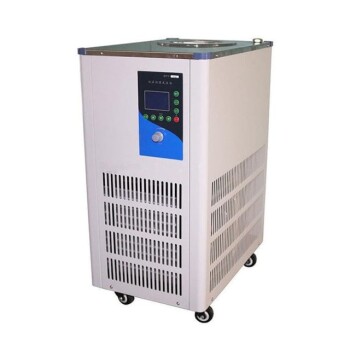
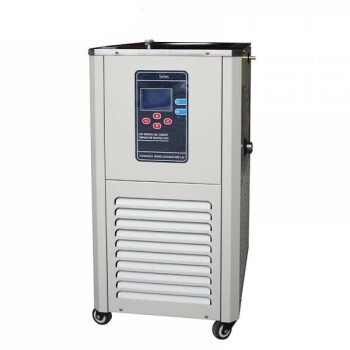
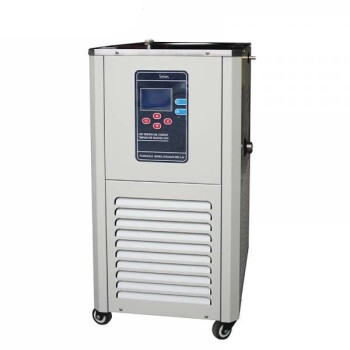
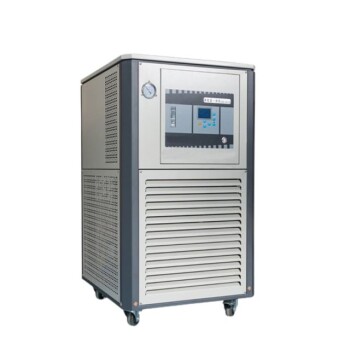
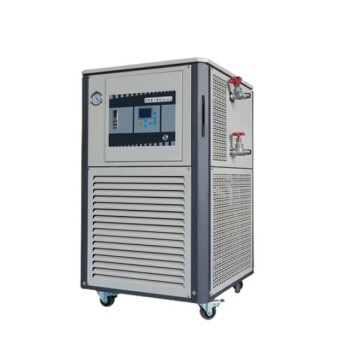
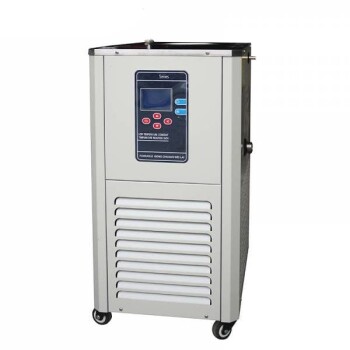
The circulating cooling system is the critical stabilizer in Plasma Electrolytic Oxidation (PEO) because the fundamental mechanism of the process—micro-arc discharge—generates substantial Joule heat. Without active heat removal, the electrolyte temperature spikes rapidly, destabilizing the chemical environment necessary for effective coating. By maintaining the electrolyte temperature generally below 40°C, the system prevents coating burnout and bath deterioration, ensuring the resulting porous ceramic layer achieves the correct morphology and uniformity.
The PEO process relies on high-energy micro-discharges that create extreme localized heat; without a cooling system to dissipate this energy, the electrolyte degrades and the ceramic coating suffers from burnout, cracks, and structural inconsistencies.
The Thermodynamics of the PEO Process
The Source of Thermal Load
The core of the PEO process involves high-voltage electrical inputs that trigger micro-arc discharges on the surface of the metal.
These discharges act as intense, localized energy release points. While they are necessary to form the ceramic layer, they produce a significant amount of Joule heat as a byproduct.
From Micro-Heat to Bulk Heat
While the localized temperature in a micro-discharge zone can instantaneously exceed 4000K, this heat does not stay contained.
It rapidly transfers into the surrounding electrolyte bath. Without intervention, this cumulative heat transfer causes the bulk temperature of the fluid to rise uncontrollably.
Critical Functions of Temperature Control
Preserving Electrolyte Chemistry
The chemical properties of the electrolyte are highly sensitive to thermal fluctuations.
A circulating cooling system maintains the bath in a stable low-temperature range (often below 40°C, and sometimes as low as 5–20°C). This stability prevents chemical decomposition and excessive evaporation of the solution.
Ensuring Coating Uniformity
For a TiO2 porous ceramic layer to grow evenly, the electrical discharge modes must remain continuous and stable.
Thermal instability disrupts these modes. By locking in a specific temperature range, the cooling system ensures the uniform growth of the oxide layer and prevents the formation of structural irregularities.
Common Pitfalls of Inadequate Cooling
Coating Burnout and Ablation
When the electrolyte temperature exceeds the critical threshold (typically >40°C), the coating process enters a destructive phase.
Excessive heat leads to coating burnout, where the layer is destroyed faster than it can be formed. In severe cases, high thermal stress causes ablation, stripping the coating from the substrate entirely.
Micro-Cracking and Structural Defects
Heat induces stress within the forming ceramic layer.
If the bulk temperature is not managed, the disparity between the super-heated discharge zones and the surrounding bath creates excessive thermal stress. This frequently results in micro-cracks that compromise the mechanical integrity and corrosion resistance of the final part.
Making the Right Choice for Your Goal
To ensure the success of your PEO workflow, you must align your cooling strategy with your specific quality targets.
- If your primary focus is Chemical Stability: Prioritize maintaining the bath below 40°C to prevent electrolyte decomposition and extend the lifespan of the chemical bath.
- If your primary focus is Coating Microstructure: Aim for lower temperature ranges (e.g., 5°C to 20°C) to minimize thermal stress and reduce the probability of micro-cracking or ablation.
Effective thermal management transforms the chaotic energy of plasma discharge into a precise tool for surface engineering.
Summary Table:
| Feature | Function in PEO Process | Impact of Poor Temperature Control |
|---|---|---|
| Temperature Target | Maintain electrolyte < 40°C (ideally 5-20°C) | Chemical decomposition & bath deterioration |
| Heat Dissipation | Removes Joule heat from micro-arc discharges | Coating burnout, ablation, and stripping |
| Structural Control | Manages thermal stress during layer growth | Micro-cracks and structural inconsistencies |
| Process Stability | Stabilizes electrical discharge modes | Non-uniform growth and irregular morphology |
Maximize the precision of your surface engineering with KINTEK’s advanced cooling solutions. Whether you are performing Plasma Electrolytic Oxidation or sophisticated battery research, our high-performance cooling solutions (ULT freezers, cold traps, freeze dryers) and electrolytic cells provide the thermal stability required for superior ceramic coating morphology. From high-temperature furnaces to specialized hydraulic presses, KINTEK specializes in laboratory equipment designed for the most demanding research environments. Contact us today to optimize your PEO workflow!
References
- Limei Ren, Lihe Qian. Self-Lubricating PEO–PTFE Composite Coating on Titanium. DOI: 10.3390/met9020170
This article is also based on technical information from Kintek Solution Knowledge Base .
Related Products
- 100L Chilling Circulator Cooling Water Circulator for Low Temperature Constant Temperature Reaction Bath Water Bath Cooling
- 40L Chiller Water Bath Cooling Circulator Low Temperature Constant Temperature Reaction Bath
- Chemical Vapor Deposition CVD Equipment System Chamber Slide PECVD Tube Furnace with Liquid Gasifier PECVD Machine
- 50L Chiller Water Bath Cooling Circulator Low Temperature Constant Temperature Reaction Bath
- 10L Chilling Circulator Cooling Water Bath Low Temperature Constant Temperature Reaction Bath
People Also Ask
- What function does a circulating cooling chiller perform during the gas adsorption isotherm testing of nanoporous carbon?
- Why is a circulating water chiller required for Prussian Blue nanoparticles? Ensure Stability & Batch Reproducibility
- What is the purpose of a cooling circulation water bath system in electrochemical experiments? Enhance Lab Precision
- How does a constant temperature circulator support the leaching reaction of gold scrap? Optimize Gold Recovery Results
- How do constant temperature circulators impact weight-loss immersion tests? Ensure Precision in Corrosion Analysis