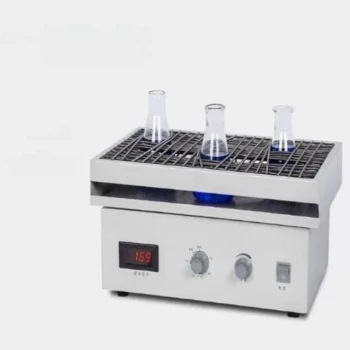
A constant temperature orbital shaker is the foundational tool for enargite bioleaching research because it simultaneously addresses the biological, chemical, and physical requirements of the process. It serves as a miniature bioreactor, creating a dynamic environment where temperature control facilitates bacterial metabolism, while continuous motion prevents sedimentation and drives essential gas exchange.
Core Takeaway
Successful bioleaching requires transforming a static mixture into a homogeneous, living system. The orbital shaker achieves this by synchronizing precise thermal regulation with mechanical agitation, ensuring that acidophilic bacteria have the consistent oxygen, nutrient contact, and temperature needed to oxidize minerals effectively.
The Role of Mechanical Motion
Facilitating Gas Mass Transfer
For bioleaching to occur, the microorganisms involved must have a continuous supply of metabolic gases. The orbital shaker’s continuous motion significantly enhances the transfer of oxygen and carbon dioxide from the air into the liquid leaching system.
This mechanical agitation ensures that dissolved oxygen levels remain high enough to meet the metabolic demands of acidophilic microorganisms. Without this active aeration, the bacteria would suffocate, halting the oxidation process.
Preventing Material Sedimentation
Enargite is introduced to the system as a mineral powder, which naturally wants to settle at the bottom of the flask due to gravity. If the material precipitates, the surface area available for bacterial attack is drastically reduced.
The shaker creates a hydrodynamic environment that keeps the mineral powder in constant suspension. This maintains thorough contact between the solid ore, the liquid leaching medium, and the bacteria, ensuring the reaction proceeds efficiently across the entire sample.
The Necessity of Thermal Control
Defining the Biological Operating Window
Bioleaching is not merely a chemical reaction; it is a biological process driven by living entities. Different strains of bacteria, classified as mesophiles or thermophiles, have specific "optimal activity ranges" where they function most effectively.
Stabilizing Metabolic Activity
The precise temperature control function of the shaker creates a stable thermal environment, often set to specific points like 40 °C for bacteria such as Acidithiobacillus caldus. By locking in the temperature, the shaker prevents fluctuations that could slow down bacterial growth or cause thermal shock, ensuring consistent enzymatic activity.
Understanding Operational Trade-offs
Balancing Agitation and Shear Stress
While agitation is critical for mixing, there is a limit to how much force can be applied. A typical setting might be around 180 rpm to ensure suspension, but excessive speed can generate shear forces.
The Risk of Cell Damage
If the rotational speed is too high, the physical force of the fluid and colliding particles can damage the cell walls of the bacteria. Researchers must calibrate the shaker to provide just enough energy to suspend the solids without physically destroying the microbial population required to leach the metal.
Making the Right Choice for Your Research
To maximize the efficiency of your enargite bioleaching experiments, align your equipment settings with your specific biological targets.
- If your primary focus is optimizing bacterial growth: Prioritize temperature stability to match the specific strain's optimal range (e.g., mesophilic vs. thermophilic) to maximize metabolic output.
- If your primary focus is reaction kinetics: Focus on optimizing the rotation speed to maximize dissolved oxygen saturation and solid-liquid contact without inducing cell lysis.
Ultimately, the orbital shaker transforms a standard flask into a high-performance environment where biology and geology can interact seamlessly.
Summary Table:
| Feature | Function in Bioleaching | Impact on Research |
|---|---|---|
| Temperature Control | Maintains metabolic window (e.g., 40°C) | Ensures consistent bacterial growth & enzyme activity |
| Orbital Agitation | Facilitates O2/CO2 mass transfer | Prevents bacterial suffocation and oxidation stalls |
| Mineral Suspension | Keeps enargite powder in motion | Maximizes surface area contact between bacteria and ore |
| Adjustable RPM | Balances mixing vs. shear stress | Protects delicate microbial cell walls from physical damage |
Elevate Your Bioleaching Research with KINTEK Precision
Unlock the full potential of your mineral oxidation studies with KINTEK’s advanced laboratory solutions. Whether you are optimizing bacterial metabolism or refining reaction kinetics, our high-performance constant temperature orbital shakers, shakers, and homogenizers provide the stability and control your research demands.
Beyond agitation, KINTEK specializes in a comprehensive range of lab equipment including high-temperature furnaces, crushing and milling systems, and high-pressure reactors tailored for the most demanding geochemistry and material science workflows.
Ready to achieve superior leaching efficiency? Contact our technical experts today to discover how KINTEK can equip your lab for success.
References
- José Díaz, Eduardo Leiva. Bioleaching of Arsenic-Bearing Copper Ores. DOI: 10.3390/min8050215
This article is also based on technical information from Kintek Solution Knowledge Base .
Related Products
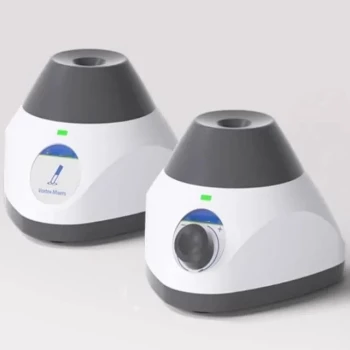
- Laboratory Vortex Mixer Orbital Shaker Multifunctional Rotation Oscillation Mixer
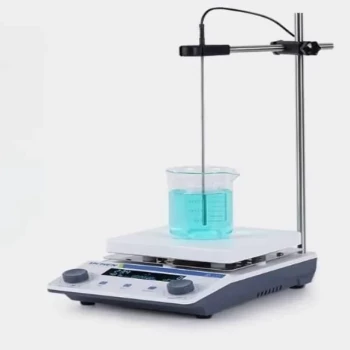
- Laboratory Small Constant Temperature Heated Magnetic Stirrer Heater and Stirrer
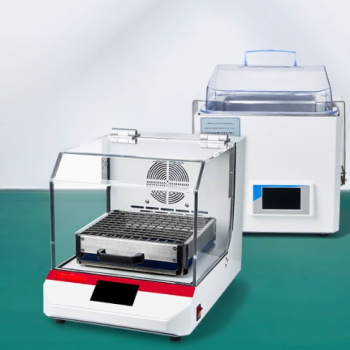
- Shaking Incubators for Diverse Laboratory Applications
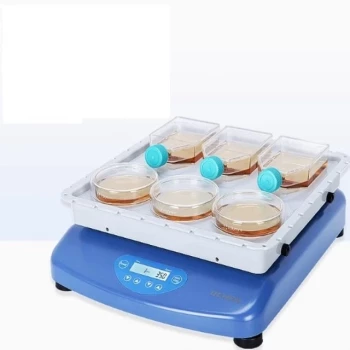
- Laboratory Oscillating Orbital Shaker
- High Temperature Constant Temperature Heating Circulator Water Bath Chiller Circulator for Reaction Bath
People Also Ask
- What is the role of a laboratory orbital shaker in copper recovery? Optimize Industrial Waste Liquid Processing
- What is the role of a laboratory orbital shaker in activated carbon synthesis? Maximize Pore Depth & Surface Area
- What is a laboratory mixer used for? Choose the Right Tool for Liquids or Solids
- What is a laboratory mixer? A Guide to Achieving Perfect Sample Homogeneity
- What are laboratory mixers used for? Achieve Perfect Sample Homogeneity and Reliable Results