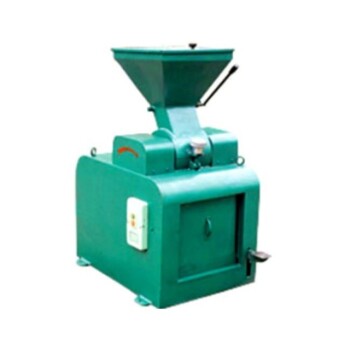
A double-roll crusher is utilized for secondary processing to refine pre-crushed slate particles to a precise size below 0.841 mm (20 mesh). By employing two counter-rotating rollers that generate compression and shear forces, this equipment ensures a tight particle size distribution essential for the production of high-quality slate ceramsite.
Ideally, secondary crushing is about uniformity, not just size reduction. The double-roll crusher provides the precise gap control necessary to homogenize the powder, ensuring consistent chemical reactions during the subsequent sintering process.
The Mechanics of Precision Refinement
Counter-Rotating Extrusion
The core mechanism involves two rollers rotating in opposite directions. This action draws the material in, subjecting it to "double roll extrusion" rather than simple impact.
Applying Compression and Shear
Unlike jaw crushers that rely primarily on compression, the double-roll crusher utilizes a combination of compression and shear forces. This dual action effectively breaks down the slate structure without creating excessive dust or fines.
Achieving Target Granularity
The primary goal of this stage is to achieve a particle size strictly below 0.841 mm (20 mesh). This specific threshold is vital for the material's behavior in later processing stages.
Why Uniformity Matters for Ceramsite
Precise Gap Control
The equipment allows operators to mechanically adjust the gap between the rollers. This feature grants direct control over the maximum particle size allowed to pass through, ensuring strict adherence to specifications.
Homogenization of the Powder
A consistent particle size distribution allows the slate powder to be mixed more thoroughly. Homogenization prevents segregation of materials, which is a common issue with irregular particle sizes.
Consistency in Sintering
The ultimate value of the double-roll crusher lies in its impact on the sintering process. Uniform particles react chemically at the same rate and temperature, preventing defects caused by uneven melting or expansion.
Understanding Operational Trade-offs
Feed Size Limitations
This equipment is designed strictly for secondary or tertiary processing. It requires pre-crushed material as an input; feeding it large, raw ore will damage the rollers or stall the machine.
Throughput vs. Control
While highly effective for medium and fine crushing, the double-roll crusher prioritizes precision over volume. It is less suitable for massive bulk processing where size consistency is secondary to speed.
Optimizing the Preparation Process
To ensure the highest quality slate ceramsite, you must match your equipment settings to your specific production goals.
- If your primary focus is Chemical Consistency: Prioritize a tighter gap setting to ensure all particles are below the 0.841 mm threshold for uniform sintering reactions.
- If your primary focus is Process Stability: Use the gap control to maintain a uniform size distribution, which aids in the physical homogenization of the raw powder.
The double-roll crusher acts as the critical gatekeeper of quality, transforming raw slate into a predictable, uniform material ready for high-performance sintering.
Summary Table:
| Feature | Double-Roll Crusher Detail |
|---|---|
| Primary Force | Compression & Shear |
| Target Particle Size | Below 0.841 mm (20 Mesh) |
| Core Benefit | Uniform Particle Size Distribution |
| Key Outcome | Consistent Chemical Sintering Reactions |
| Input Requirement | Pre-crushed material (Secondary/Tertiary) |
| Control Mechanism | Adjustable roller gap for granularity |
Elevate Your Material Preparation with KINTEK
Precision is the foundation of high-performance slate ceramsite. KINTEK specializes in advanced laboratory and industrial equipment, providing the crushing and milling systems you need to achieve strict particle size control.
Whether you are refining raw slate or optimizing sintering consistency, our expertise in crushing systems, sieving equipment, and high-temperature furnaces ensures your laboratory or production line achieves peak efficiency. From sample preparation with pellet presses and crucibles to final-stage thermal processing, KINTEK offers the comprehensive support your research demands.
Ready to optimize your material refinement? Contact our experts today to find the perfect solution for your processing goals.
References
- Zhen Li, Xiao-Wei Duan. Manufacturing of Ultra-light Ceramsite from Slate Wastes in Shangri-la, China. DOI: 10.4191/kcers.2018.55.1.02
This article is also based on technical information from Kintek Solution Knowledge Base .
Related Products
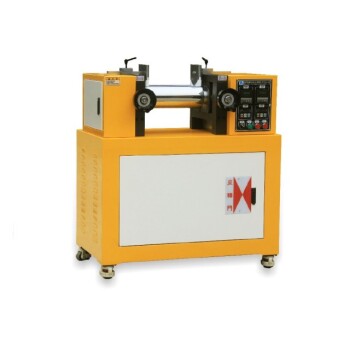
- Open Type Two Roll Mixing Mill Machine for Rubber Crusher
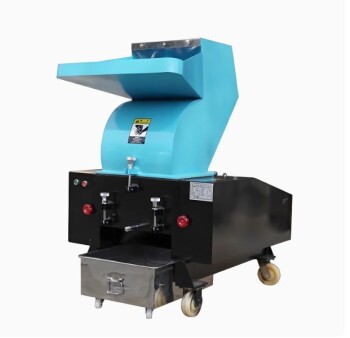
- Powerful Plastic Crusher Machine
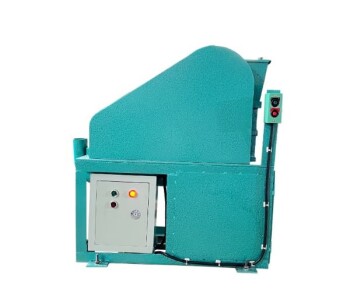
- Sealed Jaw Crusher High Efficiency Environmental Protection Safe and Reliable
- Laboratory Jaw Crusher
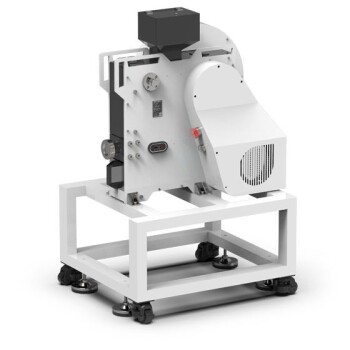
- Laboratory Sealed Hammer Crusher for Efficient Sample Preparation
People Also Ask
- What is a two roll mill for rubber compounding? A Foundational Tool for Polymer Processing
- What is the use of two roll mill? Essential for Polymer Mixing, R&D, and Quality Control
- What is the two roll mill mixing process? Master Polymer Compounding with High Shear
- What is the disadvantage of a two-roll mill? Limited Thickness Reduction Due to Roll Flattening
- What are the advantages of a two roll mill? Achieve Superior Polymer Mixing & Quality Control