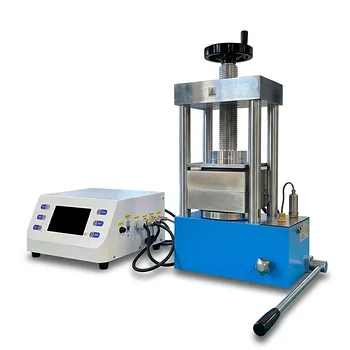
The primary purpose of using a heated hydraulic press is to densify the material structure before it enters the furnace. By applying simultaneous heat (e.g., 100°C) and pressure (e.g., 50 MPa) to NASICON green tapes, you force ceramic particles into much closer physical contact than is possible with pressure alone. This pre-treatment step is essential for creating a "green body" with high packing density, which sets the stage for successful high-temperature sintering.
The warm pressing process minimizes void space early in the fabrication cycle. By increasing the initial packing density, you ensure that the subsequent sintering stage results in a robust, low-porosity electrolyte structure with optimal grain growth.
The Mechanics of Warm Pressing
Improving Particle Contact
The fundamental challenge with "green" (unfired) ceramic tapes is the natural spacing between particles.
A heated hydraulic press applies uniaxial pressure to overcome friction between these particles. This mechanical force physically rearranges the material, reducing the distance between grains and eliminating large air pockets.
The Synergy of Heat and Pressure
Pressure alone is often insufficient to achieve maximum packing density.
By introducing moderate heat (such as 100°C to 140°C), the material becomes more compliant. This thermal energy, combined with pressure, facilitates a mechanism where particles can slide past one another more easily.
This "warm" environment allows for significant densification without triggering the chemical reactions reserved for the final firing.
Impact on Sintering and Final Structure
Promoting Grain Growth
The quality of the final ceramic is determined before it ever reaches the sintering furnace.
The primary reference notes that warm pressing significantly promotes grain growth during the subsequent sintering stage. Because the particles are already tightly packed, the atomic diffusion required for grain growth occurs more efficiently once high heat is applied.
Reducing Final Porosity
Porosity is the enemy of ionic conductivity in solid electrolytes like NASICON.
If the green tape enters the furnace with low density, the final product will likely contain voids that impede ion flow. Warm pressing creates a denser starting matrix, resulting in a final structure with lower porosity and higher integrity.
Understanding the Process Variables
Specificity of Parameters
Success in this stage relies on adhering to specific process windows.
The references highlight specific conditions, such as 50 MPa to 780 MPa for pressure and 100°C to 140°C for temperature. Deviating significantly from these parameters can lead to insufficient density (if too low) or potential structural damage to the green tape (if excessive).
The Limits of Pre-Treatment
It is critical to remember that this is a pre-treatment, not a replacement for sintering.
While the heated press increases density, it does not remove organic binders or activate liquid-phase sintering mechanisms. Those chemical changes require the much higher temperatures (850°C - 1200°C) achieved in a sintering furnace.
Making the Right Choice for Your Goal
To maximize the performance of your NASICON electrolyte, align your processing parameters with your specific objectives.
- If your primary focus is Structural Integrity: Ensure your warm pressing pressure is high enough (e.g., 50+ MPa) to eliminate large voids that could become stress concentrators.
- If your primary focus is Ionic Conductivity: Prioritize the combination of heat and pressure to maximize packing density, as this directly correlates to better grain boundary contact after sintering.
By treating the warm pressing stage as a critical quality control step, you ensure the highest possible performance for your final solid electrolyte.
Summary Table:
| Parameter | Typical Range | Role in NASICON Processing |
|---|---|---|
| Temperature | 100°C - 140°C | Increases material compliance and particle mobility |
| Pressure | 50 MPa - 780 MPa | Mechanically reduces void space and improves particle contact |
| Outcome | High Packing Density | Minimizes final porosity and promotes efficient grain growth |
| Next Step | Sintering (850°C+) | Final chemical bonding and organic binder removal |
Maximize Your Material Performance with KINTEK Precision
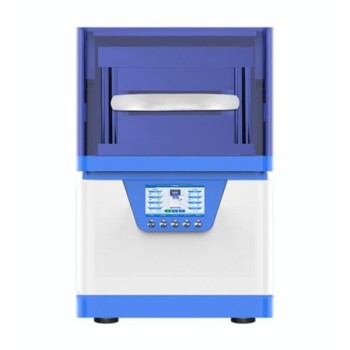
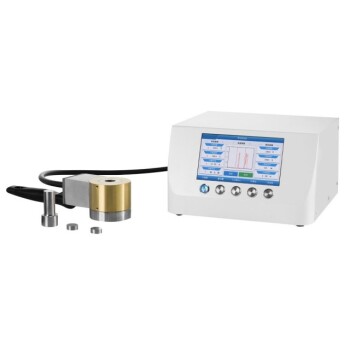
High-performance NASICON electrolytes require the perfect balance of heat and pressure. KINTEK specializes in advanced laboratory solutions, offering a comprehensive range of heated hydraulic presses (pellet, hot, and isostatic) specifically designed to achieve the high packing densities your research demands.
Our expertise extends beyond pressing; we provide a complete ecosystem for battery research and advanced ceramics, including:
- High-temperature furnaces (muffle, tube, and vacuum) for precise sintering.
- Crushing and milling systems for optimal particle preparation.
- Essential consumables like high-purity ceramics, crucibles, and PTFE products.
Don't let porosity compromise your ionic conductivity. Partner with KINTEK to ensure every stage of your fabrication cycle—from green body preparation to final firing—is optimized for success.
Contact our technical experts today to find the right equipment for your lab!
Related Products
- 24T 30T 60T Heated Hydraulic Press Machine with Heated Plates for Laboratory Hot Press
- Heated Hydraulic Press Machine with Integrated Manual Heated Plates for Lab Use
- Automatic Heated Hydraulic Press Machine with Heated Plates for Laboratory Hot Press 25T 30T 50T
- Heated Hydraulic Press Machine with Heated Plates for Vacuum Box Laboratory Hot Press
- Automatic High Temperature Heated Hydraulic Press Machine with Heated Plates for Lab
People Also Ask
- What role does a heated hydraulic press play in Cold Sintering (CSP)? Enhancing LATP-Halide Densification
- Why is the heating function of a laboratory hydraulic press essential for MEA assembly in DEFC? Optimize Cell Bonding
- What technical conditions does a heated hydraulic press provide for PEO batteries? Optimize Solid-State Interfaces
- How is a heated hydraulic press used for Li-LLZO batteries? Optimize Interfacial Bonding with Thermal-Pressure
- What is the core function of a laboratory heated hydraulic press in CSP? Revolutionize Low-Temp Ceramic Sintering