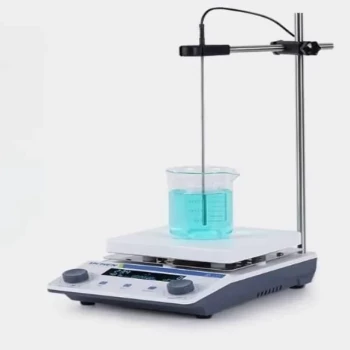
A heating stage is a critical component in Laser Chemical Vapor Deposition (LCVD) because it elevates the substrate to a stable initial temperature, typically around 773 K, before the deposition begins. This pre-process step establishes a consistent thermal baseline, which significantly lowers the laser power required to reach reaction temperatures and protects the substrate from structural damage.
Core Takeaway By decoupling the baseline temperature from the reaction energy, the heating stage minimizes thermal shock and ensures that the laser energy is used efficiently for deposition rather than bulk heating, resulting in superior film uniformity and stability.
The Physics of Thermal Management in LCVD
Establishing a Consistent Thermal Field
The primary function of the heating stage is to create a uniform thermal environment. By bringing the entire substrate to a known, stable temperature (such as 773 K), you eliminate cold spots that could disrupt the process.
This ensures that when the laser is applied, it interacts with a thermally predictable surface.
Reducing Laser Power Requirements
Without a heating stage, the laser must supply enough energy to heat the substrate from room temperature and drive the chemical reaction. This places a heavy load on the laser source.
Preheating the substrate bridges this gap. It allows the laser to operate at lower power levels, focusing solely on providing the localized energy needed for the deposition reaction.
Ensuring Material Integrity and Quality
Mitigating Internal Thermal Stress
One of the most significant risks in LCVD is the creation of steep temperature gradients. If a high-energy laser hits a cold substrate, the rapid expansion can cause severe internal stress.
The heating stage acts as a buffer. By raising the background temperature, it reduces the difference between the laser spot and the surrounding material, effectively mitigating stress and preventing cracking or delamination.
Guaranteeing Film Uniformity
Thermal fluctuations lead to inconsistent deposition rates. If the substrate temperature varies, the resulting thin film will likely have uneven thickness or structural defects.
A heating stage ensures thermal stability throughout the process. This stability is the key factor in achieving a thin film that is uniform in both thickness and composition across the entire coated area.
Understanding the Risks of Omission
The Trade-off: Energy vs. Integrity
Omitting the heating stage might seem like a way to simplify the hardware setup or save time, but it introduces a critical trade-off. You are effectively trading structural integrity for process simplicity.
Without preheating, you are forced to use higher laser intensity to achieve deposition. This aggressive approach increases the likelihood of "thermal shock," where the material fails mechanically before the chemical deposition can stabilize.
Thermal Field Instability
Relying solely on the laser for heat creates an unstable thermal field. The heat dissipates rapidly into the cold bulk of the substrate.
This dissipation makes it difficult to maintain the steady-state temperature required for high-quality crystalline growth, often resulting in films with poor adhesion or unpredictable physical properties.
Making the Right Choice for Your Goal
To optimize your LCVD process, consider your specific priorities:
- If your primary focus is Film Quality: Prioritize the preheating stage to ensure thermal uniformity and prevent defects caused by internal stress.
- If your primary focus is Equipment Longevity: Use the heating stage to lower the required laser power, thereby reducing the operational load on your laser source.
Integrating a heating stage is the definitive method for transforming a volatile, high-stress deposition process into a controlled and reliable manufacturing technique.
Summary Table:
| Feature | Function in LCVD | Impact on Final Product |
|---|---|---|
| Thermal Baseline | Elevates substrate to stable temperature (e.g., 773 K) | Establishes a consistent reaction environment |
| Power Reduction | Lowers the laser intensity required for deposition | Reduces equipment load and prevents substrate damage |
| Stress Mitigation | Decreases the temperature gradient (Thermal Shock) | Prevents cracking, delamination, and internal stress |
| Thermal Stability | Maintains steady-state heat across the substrate | Ensures uniform film thickness and crystalline growth |
Precision Heat Control for Advanced Material Research
Unlock the full potential of your Laser Chemical Vapor Deposition (LCVD) and thin-film processes with KINTEK’s high-performance laboratory equipment. Our specialized high-temperature furnaces (CVD, PECVD, MPCVD) and heating stages provide the thermal stability required to eliminate internal stress and guarantee film uniformity.
From high-temperature reactors and vacuum systems to essential consumables like ceramics and crucibles, KINTEK offers a comprehensive portfolio designed for research excellence. Don’t compromise on material integrity. Let our experts help you select the ideal thermal management or crushing and milling system for your laboratory needs.
Contact KINTEK Today for a Professional Consultation
References
- Dongyun Guo, Lianmeng Zhang. Preparation of rutile TiO2 thin films by laser chemical vapor deposition method. DOI: 10.1007/s40145-013-0056-y
This article is also based on technical information from Kintek Solution Knowledge Base .
Related Products
- Multi Heating Zones CVD Tube Furnace Machine Chemical Vapor Deposition Chamber System Equipment
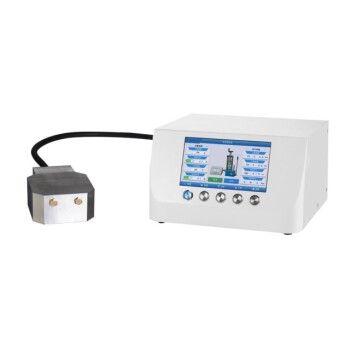
- 24T 30T 60T Heated Hydraulic Press Machine with Heated Plates for Laboratory Hot Press
- Automatic High Temperature Heated Hydraulic Press Machine with Heated Plates for Lab
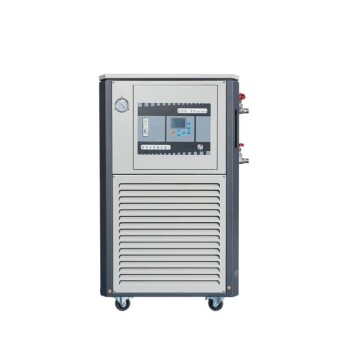
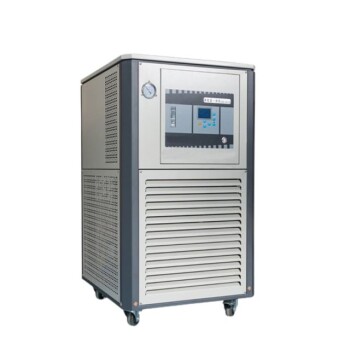
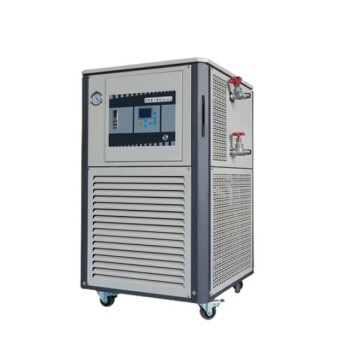
- 10L Heating Chilling Circulator Cooling Water Bath Circulator for High and Low Temperature Constant Temperature Reaction
- 50L Heating Chilling Circulator Cooling Water Bath Circulator for High and Low Temperature Constant Temperature Reaction
People Also Ask
- What are the advantages of a multi-zone tube furnace for Sb2S3? Unlock Superior Semiconductor Thin Film Purity
- What are the advantages of using a Multi-zone Tube Furnace? Enhanced Thermal Uniformity for Diffusion Research
- What is a CVD tube furnace? A Complete Guide to Thin-Film Deposition
- What are the technical advantages of using a CVD tube furnace? Optimize Silicon-Carbon Battery Anodes
- What is the function of a high-temperature CVD tube furnace in 3D graphene foam prep? Master 3D Nanomaterial Growth