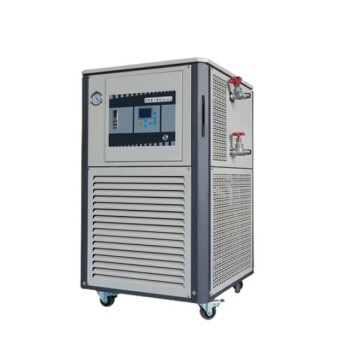
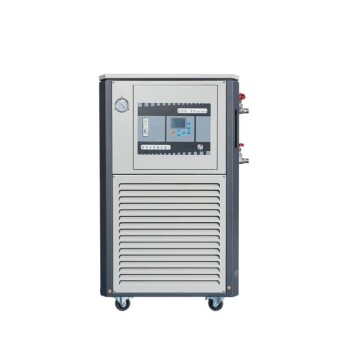
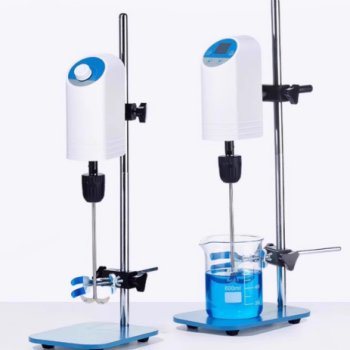
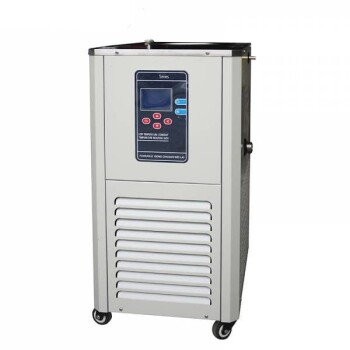
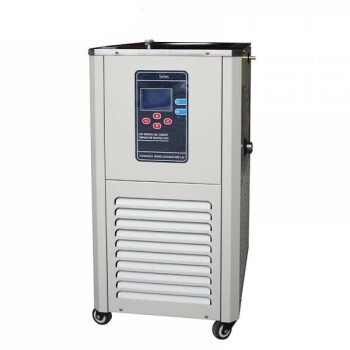
A high-precision constant temperature stirring reaction device is strictly necessary because it creates the specific thermodynamic and kinetic environment required for successful free radical polymerization. By maintaining a stable temperature (e.g., 70°C) and providing continuous mechanical agitation, the device prevents the Boron Nitride Nanosheets (BNNS) from settling or aggregating. This dual control is the primary mechanism for ensuring that functional groups, such as GMA, are grafted uniformly across the nanosheet surface.
Achieving high-quality functionalized BNNS is less about the reagents and more about process control. This device bridges the gap between chemical potential and physical reality by synchronizing thermal energy input with mechanical dispersion to guarantee uniform reaction rates.
The Role of Thermal Precision
Driving Free Radical Polymerization
The grafting of agents like GMA onto BNNS is typically a free radical polymerization reaction. This chemical process requires a stable, specific input of thermal energy to initiate and sustain the reaction chain.
Maintaining Reaction Continuity
A high-precision device ensures the temperature does not fluctuate. It holds the environment at a specific set point, such as 70°C.
If the temperature drops, the reaction may stall; if it spikes, it may degrade the reagents. Constant thermal input ensures the polymerization continues uninterrupted until completion.
The Critical Necessity of Stirring
Maximizing Reagent Contact
Thermal energy alone is insufficient if the materials do not physically interact. Continuous stirring forces the functionalization reagents into frequent contact with the surface of the nanosheets.
Preventing Precipitation and Aggregation
Boron Nitride Nanosheets have a natural tendency to clump together or settle out of the solution (precipitation). Without active intervention, the nanosheets would stack, reducing the available surface area for the reaction.
Ensuring Uniform Grafting Rates
By keeping the BNNS suspended and dispersed, the device ensures that every nanosheet is equally exposed to the grafting agent. This eliminates "hot spots" or uncoated areas, resulting in a uniform grafting rate across the entire batch.
Risks of Inadequate Control
The Consequence of Thermal Instability
Without high-precision temperature control, the polymerization process becomes unpredictable. This often leads to incomplete grafting or inconsistent molecular weights in the polymer chains attached to the BNNS.
The Impact of Poor Agitation
If the stirring mechanism is inconsistent or too slow, the nanosheets will aggregate during the reaction. This results in bulk material that is functionalized only on the outer edges of the clumps, leaving the inner sheets pristine and effectively wasting the reagents.
Optimizing Your Experimental Setup
To ensure the success of your grafting reaction, you must match your equipment settings to your specific chemical goals.
- If your primary focus is surface uniformity: Prioritize the stirring speed and torque. Ensure the agitation is vigorous enough to prevent any sedimentation of the BNNS without damaging the sheet structure.
- If your primary focus is reaction efficiency: Prioritize thermal stability. Verify that your device can maintain the target temperature (e.g., 70°C) with minimal deviation to drive the free radical polymerization.
The integration of precise heating and constant stirring is not a luxury; it is the fundamental requirement for transforming raw BNNS into a high-performance functionalized material.
Summary Table:
| Feature | Function in BNNS Grafting | Critical Benefit |
|---|---|---|
| Thermal Precision | Sustains 70°C for radical polymerization | Prevents reaction stall or reagent degradation |
| Continuous Stirring | Maintains mechanical dispersion of nanosheets | Prevents aggregation and ensures uniform contact |
| Process Synchronization | Balances heat input with kinetic energy | Guarantees consistent grafting rates across the batch |
| System Stability | Eliminates thermal/mechanical fluctuations | Ensures predictable molecular weight and surface quality |
Elevate Your Materials Research with KINTEK Precision
Achieving uniform functionalization of Boron Nitride Nanosheets requires the perfect synergy of thermal stability and mechanical dispersion. At KINTEK, we specialize in high-performance laboratory equipment designed to bridge the gap between chemical potential and physical reality.
Whether you are performing complex grafting reactions or advanced material synthesis, our comprehensive range of high-temperature furnaces, high-pressure reactors, and precision shakers provides the exact process control your research demands.
Our value to you:
- Precision Control: Maintain exact temperatures for sensitive free radical polymerization.
- Versatile Solutions: From ultrasonic homogenizers to vacuum furnaces, we equip your entire workflow.
- Expert Support: Tailored consumables including PTFE products and crucibles to match your specific chemical environment.
Don't let inadequate process control compromise your results. Contact our technical experts today to find the ideal stirring and heating solution for your laboratory.
References
- Yang Soo Kim, Jong Seok Kim. Enhancing Thermal Conductivity in Epoxy Composites with Functionalized Boron Nitride Nanosheets. DOI: 10.3740/mrsk.2023.33.12.503
This article is also based on technical information from Kintek Solution Knowledge Base .
Related Products
- High Temperature Constant Temperature Heating Circulator Water Bath Chiller Circulator for Reaction Bath
- Laboratory Small Constant Temperature Heated Magnetic Stirrer Heater and Stirrer
- 5L Heating Chilling Circulator Cooling Water Bath Circulator for High and Low Temperature Constant Temperature Reaction
- 20L Heating Chilling Circulator Cooling Water Bath Circulator for High and Low Temperature Constant Temperature Reaction
- 100L Heating Chilling Circulator Cooling Water Bath Circulator for High and Low Temperature Constant Temperature Reaction
People Also Ask
- What is the necessity of a circulating water bath in chlorate production? Optimize Yield & Purity with Precision
- How does a constant temperature circulator support the leaching reaction of gold scrap? Optimize Gold Recovery Results
- How do constant temperature circulators impact weight-loss immersion tests? Ensure Precision in Corrosion Analysis
- Why is a constant temperature water bath used for precursor storage in CVD? Achieve Stable Nanocrystalline SiC Deposition
- Why is a high-precision constant temperature water bath necessary for anaerobic digestion? Ensure Success at 37±0.02°C