Applying a massive pressure of 700 MPa is imperative to overcome the inherent lack of fluidity in solid materials, forcing the composite cathode and solid electrolyte into a unified, dense structure. Unlike liquid electrolytes that naturally wet surfaces, solid-state components require this extreme force to physically eliminate microscopic pores and maximize the contact area necessary for ion transport.
The Core Challenge In the absence of a liquid medium, ions cannot traverse air gaps or voids between particles. The application of 700 MPa acts as a mechanical bridge, effectively crushing the interface pores to minimize impedance and ensure the battery functions as a cohesive unit.
The Physics of Solid-Solid Interfaces
Overcoming the "Wetting" Limitation
In traditional batteries, liquid electrolytes naturally flow into porous electrodes, ensuring ions can move freely. Solid-state batteries lack this advantage.
Without external force, the interface between the cathode and the solid electrolyte is plagued by microscopic voids. These voids act as insulators, blocking the path of lithium ions and rendering parts of the active material useless.
Maximizing Contact Area
The primary goal of the 700 MPa application is to maximize the physical contact area.
By compressing the materials, you increase the number of pathways available for ions to travel between the cathode and the electrolyte. This is directly responsible for reducing interfacial impedance, which is often the bottleneck in solid-state battery performance.
The Specific Role of 700 MPa
Co-Pressing the Bilayer
This specific pressure value is targeted at the co-pressing of the composite cathode and the solid electrolyte layer.
This step creates a dense bilayer structure. The intensity of 700 MPa is required to deform the solid particles sufficiently so they lock together, eliminating the "dead space" that kills efficiency.
Ensuring Structural Density
Beyond just surface contact, this pressure consolidates the materials into a monolithic structure.
This density is critical for creating an environment where ion transport is efficient and uniform, mimicking the conductivity found in liquid-based systems.
Understanding the Trade-offs: Assembly vs. Operation
Differentiating Pressure Stages
It is vital to distinguish between the pressure used to make the component and the pressure used to operate it.
The 700 MPa figure is an assembly pressure used to form the initial cathode-electrolyte interface. Once this structure is formed, lower pressures are often used for subsequent steps to avoid damaging the existing layers.
The Anode Nuance
While the cathode/electrolyte bilayer requires 700 MPa, the attachment of the anode (such as a Li-In alloy) often requires significantly less pressure.
Supplementary data indicates that a pressure of roughly 150 MPa is used for the anode-electrolyte interface. This ensures optimal contact without crushing or deforming the previously solidified cathode-electrolyte bilayer.
Operational Pressure (Cycling)
During actual battery usage (charging and discharging), the pressure requirements change again.
To maintain performance during cycling, a constant external pressure of 50 to 150 MPa is typically applied. This counteracts the natural volume expansion and contraction of electrode materials, preventing delamination over time.
Making the Right Choice for Your Goal
To optimize the assembly and testing of Li8/7Ti2/7V4/7O2 batteries, you must apply the correct pressure at the correct stage.
- If your primary focus is creating the Cathode/Electrolyte Bilayer: Apply 700 MPa to eliminate pores and minimize interfacial impedance for maximum ion conductivity.
- If your primary focus is attaching the Anode: Reduce pressure to approximately 150 MPa to ensure uniform contact without compromising the integrity of the underlying bilayer.
- If your primary focus is Long-Term Cycle Stability: Maintain a constant external pressure of 50–150 MPa during testing to prevent contact failure caused by material volume changes.
Success in solid-state assembly relies on using extreme pressure to mechanically force a conductive pathway where a liquid would naturally flow.
Summary Table:
| Stage of Battery Life | Recommended Pressure | Primary Purpose |
|---|---|---|
| Cathode/Electrolyte Assembly | 700 MPa | Eliminates voids, ensures dense interface & ion flow |
| Anode Attachment | ~150 MPa | Secures contact without damaging existing bilayer |
| Operational Cycling | 50 – 150 MPa | Maintains contact during volume expansion/contraction |
Elevate Your Battery Research with KINTEK Precision
Achieving the extreme pressures required for solid-state battery breakthroughs demands reliable, high-performance equipment. KINTEK specializes in advanced laboratory solutions, offering a comprehensive range of isostatic and hydraulic pellet presses designed to reach 700 MPa and beyond with absolute precision.
From high-temperature furnaces and crushing systems to specialized battery research tools and consumables, we provide the end-to-end infrastructure necessary for material innovation. Whether you are assembling Li8/7Ti2/7V4/7O2 cells or developing next-generation electrolytes, our technical experts are ready to match you with the right equipment to ensure structural density and superior ion transport.
Ready to optimize your assembly process? Contact KINTEK today for a consultation!
Related Products
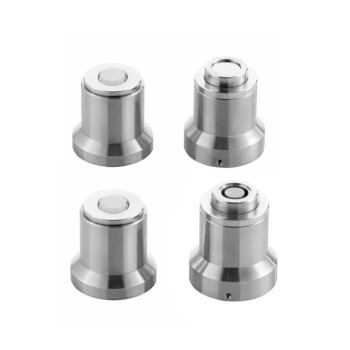
- Button Battery Disassembly and Sealing Mold for Lab Use
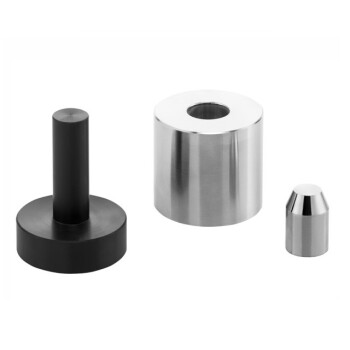
- Button Battery Tablet Press Sealing Mold for Lab Use
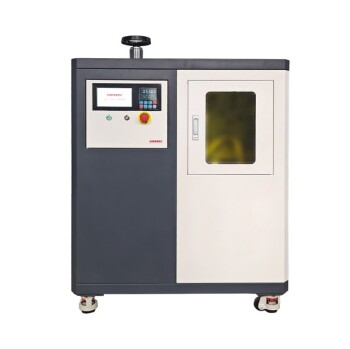
- Warm Isostatic Press for Solid State Battery Research
- Lithium Battery Tab Tape for Battery Lab Applications
- Laboratory Hydraulic Press Lab Pellet Press for Button Battery
People Also Ask
- What role do battery test molds or coin cell cases play? Optimize Your All-Solid-State Battery Assembly Today
- What are the parts of a mold assembly? A Guide to Injection Mold Components
- What is a molding tool used for? A Guide to Mass Production Efficiency
- What is a mold assembly? The Critical Final Step to a Functional Injection Mold
- What advantages do standardized laboratory compression-cell molds provide for c-LLZO? Optimize Battery Data Accuracy