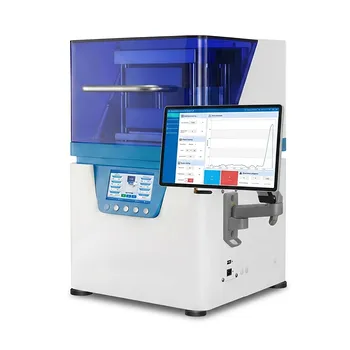
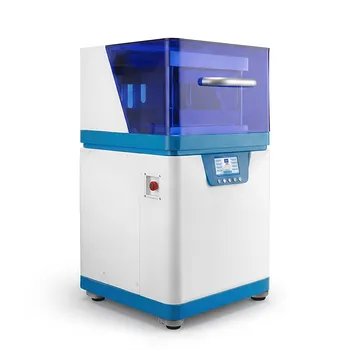
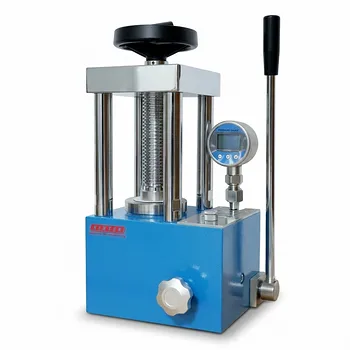
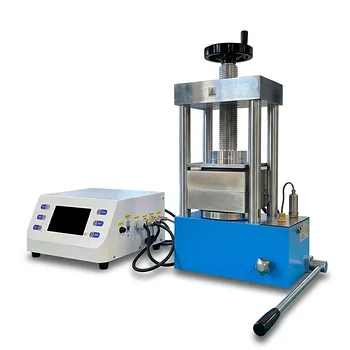
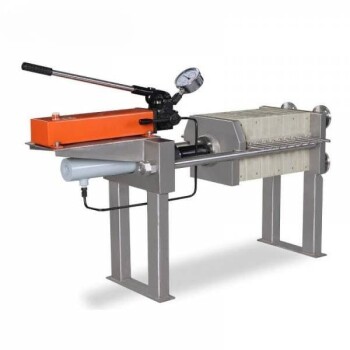
The hydraulic or mechanical sealing press is the critical bridge between raw battery components and a functional electrochemical cell. It provides the precise, constant mechanical force required to deform the sealing gasket, ensuring a hermetic seal while establishing the high-pressure physical contact necessary for electron and ion transport. Without this controlled application of force, researchers face inconsistent data, electrolyte leakage, and premature cell failure.
Core Takeaway: A sealing press is essential because it guarantees the airtight integrity of the battery casing and enforces uniform physical contact between internal layers. This mechanical consistency is the prerequisite for accurate electrochemical measurements and long-term cycling stability.
Ensuring Hermetic Integrity and Safety
Preventing Volatile Electrolyte Leakage
Lithium-sulfur batteries typically utilize volatile carbonate or ether-based electrolytes that are highly prone to evaporation. A hydraulic press applies powerful, monitorable pressure (often around 500 psi) to ensure the battery casing and gaskets are tightly bonded. This prevents the loss of electrolyte, which would otherwise lead to rapid cell dry-out and failure.
Isolating the Internal Environment
The internal chemistry of a lithium-sulfur cell is extremely sensitive to moisture and oxygen ingress. The press facilitates the plastic deformation of the sealing gasket, creating a perfect mechanical seal against the stainless steel casing. This isolation is vital for protecting the lithium anode from degradation caused by external atmospheric contaminants.
Optimizing Physical and Electrical Contact
Minimizing Interfacial Contact Resistance
For a battery to function, electrons must flow efficiently between the current collectors, active materials, and the lithium foil. The press applies uniform and balanced pressure to compress the spring sheets and electrode stacks, significantly reducing interfacial contact resistance. This ensures that the measured capacity reflects the material's potential rather than poor physical assembly.
Regulating Structural Density and Porosity
Controlled pressure from a hydraulic system helps regulate the porosity of the electrodes and the density of the overall stack. This compression ensures the electrolyte fully wets the electrode pores, improving ion transport. By maintaining a consistent physical foundation, the press allows for the collection of reproducible data across multiple test samples.
Driving Precise Electrochemical Performance
Supporting In-Situ Interphase Formation
The sealing press is critical for the in-situ formation of a compact and stable cathode electrolyte interphase (CEI). Proper mechanical pressure keeps the cathode and electrolyte in intimate contact during the initial cycles. This contact is a fundamental requirement for the chemical reactions that build a protective layer on the electrode surfaces.
Ensuring Stable EIS and Cycling Data
Reliable Electrochemical Impedance Spectroscopy (EIS) results depend entirely on stable internal interfaces. A precise sealing machine eliminates mechanical variables, allowing researchers to attribute changes in impedance to chemical processes rather than shifting components. This consistency is the only way to obtain accurate specific capacity data and verify long-term cycling stability.
Understanding the Trade-offs and Risks
The Danger of Excessive Pressure
While high pressure is necessary for a seal, excessive force can lead to internal short circuits. If the press applies too much weight, it can cause the wave spring to collapse or the separator to be punctured by the electrode edges. Finding the specific "sweet spot" for pressure is a requirement for every unique cell chemistry and housing type.
Inconsistency in Manual Mechanical Presses
Manual mechanical crimpers are often more affordable but lack the pressure monitoring capabilities of hydraulic systems. Variations in the operator's strength can lead to "loose" cells with high resistance or "over-tightened" cells with crushed components. In high-stakes research, the reproducibility offered by a calibrated hydraulic system usually outweighs the cost savings of manual tools.
How to Apply This to Your Research Goal
Choosing the Right Tool for Your Objectives
The selection of a sealing press should be dictated by the sensitivity of your battery chemistry and the required precision of your data.
- If your primary focus is high-precision data and EIS: Use a hydraulic press with a pressure gauge to ensure every cell in your batch is assembled under identical force conditions.
- If your primary focus is rapid prototyping or educational demos: A manual mechanical crimper may suffice, provided the operator follows a strict, repeatable physical protocol.
- If your primary focus is long-term cycling and shelf-life studies: Prioritize a hydraulic sealer that guarantees hermetic integrity to prevent electrolyte evaporation over months of testing.
Effective battery research begins with mechanical consistency, as a perfectly formulated cathode cannot overcome the failures of a poorly sealed cell.
Summary Table:
| Key Requirement | Technical Function | Impact on Battery Testing |
|---|---|---|
| Hermetic Integrity | Prevents electrolyte evaporation and moisture ingress | Ensures long-term cycling stability and safety |
| Interfacial Contact | Minimizes resistance between electrode layers | Delivers accurate capacity and EIS measurements |
| Pressure Control | Regulates electrode porosity and structural density | Provides reproducible data across test batches |
| Mechanical Safety | Prevents internal shorts from component collapse | Protects sensitive lithium-sulfur cell chemistry |
Elevate Your Battery Research with KINTEK Precision
Achieving reproducible results in lithium-sulfur battery testing requires more than high-quality materials; it demands the mechanical consistency only professional-grade assembly equipment can provide. KINTEK specializes in advanced laboratory solutions, offering high-precision hydraulic presses (pellet, hot, isostatic) and specialized battery research tools and consumables designed to eliminate assembly variables.
From ensuring airtight hermetic integrity to optimizing interfacial electrical contact, our range of sealing presses and coin cell tools empowers your lab to deliver accurate, high-impact electrochemical data. Don't let assembly inconsistencies compromise your breakthroughs.
Contact KINTEK for Precision Sealing Solutions
References
- Chang‐Ding Qiu, Fu‐Sheng Ke. Engineering Peculiar Cathode Electrolyte Interphase toward Sustainable and High‐Rate Li–S Batteries. DOI: 10.1002/aenm.202300229
This article is also based on technical information from Kintek Solution Knowledge Base .
Related Products
- Fully Automatic Heated Hydraulic Lab Press for Materials Sintering and Sample Preparation
- Automatic Hydraulic Hot Press with 500x500mm Heating Plates and Multi Stage PLC Control for Material Sintering
- Laboratory Hydraulic Pellet Press for XRF KBR FTIR Lab Applications
- Laboratory Hydraulic Press Split Electric Lab Pellet Press
- Laboratory Manual Hydraulic Pellet Press for Lab Use
People Also Ask
- How is a laboratory hydraulic press used in the preparation of modified biochar samples for FTIR analysis? Expert Guide
- How does a laboratory heating hydraulic press contribute to the preparation of recycled graphite green bodies? - Optimize Density.
- How does the laboratory hydraulic press contribute to the preparation of solid targets for laser ablation?
- What role does a laboratory hydraulic press play in perovskite-MOF glass fabrication? Master Material Densification
- Why use a laboratory hydraulic press for Fe2O3-CoP conductivity? Achieve Precise Material Characterization