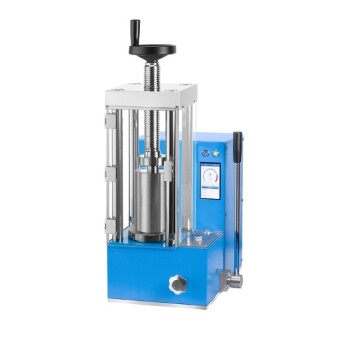
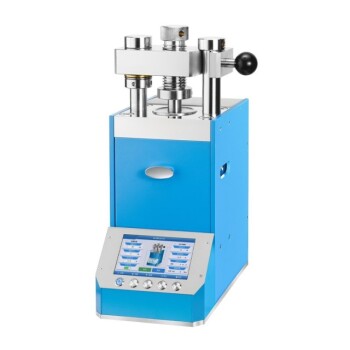
A laboratory hydraulic press acts as the critical preparatory step in the manufacturing of Al-Ti composites, bridging the gap between raw materials and high-temperature processing. Specifically, it is utilized to compress loose Aluminum-Titanium mixed powders into a cohesive, solid form known as a "green billet" or "green compact."
This cold pressing stage transforms volatile, loose powder into a manageable shape with sufficient structural strength, allowing for safe handling and efficient loading into the vacuum furnace for the subsequent hot press sintering.
Core Takeaway: The hydraulic press does not sinter the material; rather, it establishes the necessary physical foundation for sintering. By converting loose powder into a dense, air-free green compact, it ensures the material remains stable during transfer and allows the vacuum hot press to focus energy on chemical bonding rather than initial volume reduction.
Transforming Powder into Processable Units
Creating the "Green Billet"
The primary function of the hydraulic press is to apply sufficient force to loose Al-Ti powders to create a green billet. This compact retains a specific shape and possesses enough mechanical strength to hold together without an external container. Without this step, the loose powder would be difficult to contain and prone to segregation.
Facilitating Safe Handling and Loading
Loose powders are notoriously difficult to load directly into vacuum furnaces, particularly when transferring between mold types. Cold pressing allows you to safely transfer the material from a steel pre-forming mold into the graphite molds typically used for hot pressing. This prevents material loss and ensures precise positioning within the furnace.
Optimizing the Sintering Foundation
Increasing Tap Density
The press significantly increases the tap density (packing density) of the Al-Ti mixture before heat is ever applied. By mechanically forcing particles closer together, you reduce the initial volume of the sample. This optimizes the displacement control during the hot pressing stage, as the furnace plungers have less travel distance required to achieve final compaction.
Expelling Entrapped Air
Loose powder mixtures contain significant amounts of air between particles, which can be detrimental to vacuum processes. Applying initial pressure (often between 10 to 18 MPa) expels the majority of this air. This results in initial densification and prevents issues such as voids or "blowouts" that can occur if air expands rapidly during the heating cycle.
Establishing Particle Contact
For Al-Ti powders to react and bond correctly during sintering, the Aluminum and Titanium particles must be in intimate contact. Cold pressing forces these particles to touch, establishing a foundation for effective reaction bonding. This pre-contact improves the efficiency of the diffusion process once high temperatures are introduced.
Understanding the Limitations
Cold Pressing is Not Final Densification
It is critical to understand that the hydraulic press only achieves initial densification. The green billet is still porous and lacks chemical bonds; it relies solely on mechanical interlocking and friction. It is fragile compared to the final product and must still be handled with care to avoid crumbling edges.
The Risk of Over-Pressing
While density is the goal, applying excessive pressure during the cold stage can lead to "lamination" or capping. This occurs when air is trapped under high pressure or the material springs back unevenly, causing horizontal cracks in the green billet that may not heal during sintering.
Making the Right Choice for Your Goal
To maximize the utility of your laboratory hydraulic press in this workflow:
- If your primary focus is Process Efficiency: Prioritize compressing the billet to a "manageable form" that fits perfectly into your graphite hot-press die to minimize setup time.
- If your primary focus is Final Material Density: Focus on applying enough pressure to maximize air expulsion and particle contact, ensuring the highest possible starting density for the sintering reaction.
By standardizing the green billet's density and shape, you remove variables from the complex variable equation of vacuum hot press sintering.
Summary Table:
| Feature | Function in Cold Pressing | Benefit for Sintering |
|---|---|---|
| Green Billet Formation | Converts loose powder to solid shape | Allows safe handling and precise mold loading |
| Air Expulsion | Removes air between powder particles | Prevents voids and blowouts during vacuum heating |
| Particle Contact | Forces Al and Ti particles together | Establishes foundation for effective reaction bonding |
| Initial Densification | Increases tap density mechanically | Reduces furnace plunger travel and optimizes process time |
Elevate Your Materials Research with KINTEK Precision
From creating high-strength green compacts to achieving final material density, KINTEK provides the essential tools for advanced powder metallurgy. Our specialized range of laboratory hydraulic presses (pellet, hot, isostatic) and high-temperature furnaces (vacuum, hot press, muffle) are designed to ensure consistency and precision in every Al-Ti composite you develop.
Whether you need robust crushing and milling systems for powder preparation or sophisticated cooling solutions for post-processing, KINTEK is your partner in laboratory excellence. Contact us today to discover how our comprehensive equipment portfolio can streamline your sintering workflow and enhance your research outcomes.
Related Products
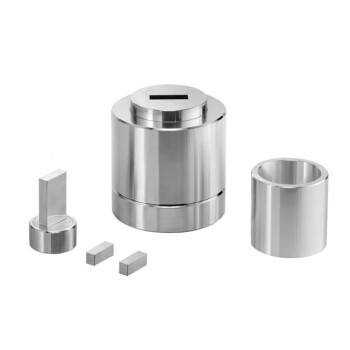
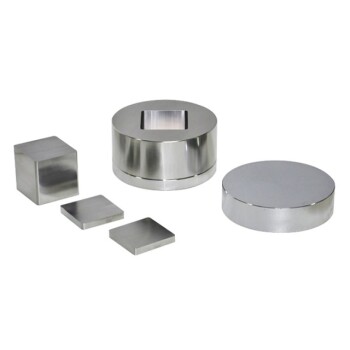
- Assemble Square Lab Press Mold for Laboratory Applications
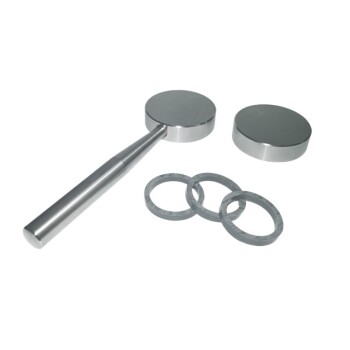
- Round Bidirectional Press Mold for Lab
- Laboratory Manual Hydraulic Pellet Press for Lab Use
- Automatic Laboratory Hydraulic Pellet Press Machine for Lab Use
- Laboratory Manual Hydraulic Pellet Press for Lab Use
People Also Ask
- How to use a press mold? Master the Art of Creating Consistent Ceramic Forms
- What is a laboratory press? Achieve Precise Sample Preparation for Reliable Analysis
- How does a laboratory press contribute to the initial forming of a porous copper wick? Optimize Wick Pore Architecture
- What is the press mould method? A Guide to Consistent, Detailed Ceramic Forms
- What is the process of mold press? A Step-by-Step Guide to Compression Molding