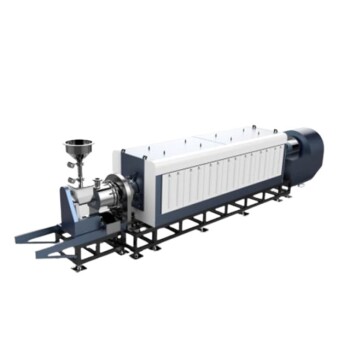
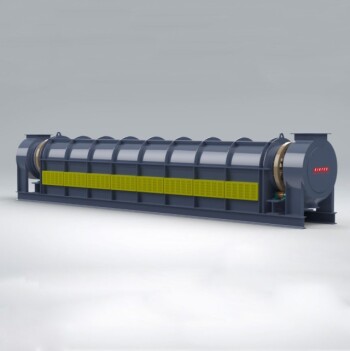
A laboratory tube furnace is the definitive tool for producing fiber biochar because it establishes the strictly controlled, oxygen-free environment necessary for carbonization. By displacing oxygen with an inert gas like nitrogen, the furnace allows raw biomass to withstand temperatures as high as 800°C without combusting into ash. This precise atmospheric control is the fundamental requirement for converting organic fiber into a stable carbon structure.
The Core Takeaway Pyrolysis is not merely burning; it is thermochemical degradation in the absence of oxygen. The tube furnace is essential because it isolates the biomass, enabling the engineering of specific material traits—such as high electrical conductivity and developed porosity—that are impossible to achieve in an open-air environment.
The Critical Role of Atmospheric Control
Preventing Combustion
The most immediate function of the tube furnace is the prevention of combustion. In the presence of oxygen, high heat simply burns biomass.
Creating an Inert Environment
By pumping a continuous flow of nitrogen into the chamber, the furnace creates an anaerobic (oxygen-free) zone. This forces the material to undergo pyrolysis, chemically decomposing into biochar rather than oxidizing.
Facilitating Volatile Removal
The flow of carrier gas does more than displace oxygen; it helps move volatile byproducts away from the solid material. This directional movement prevents the re-deposition of tars, ensuring the final biochar retains a clean pore structure.
Precision Temperature Regulation
Achieving High-Temperature Carbonization
Fiber biochar often requires treatment at temperatures around 800°C to maximize its potential. The tube furnace provides the thermal power necessary to reach these extremes, which triggers the transformation of the fiber's internal structure.
Controlling Heating Rates
The quality of biochar is heavily influenced by how fast it is heated. Advanced tube furnaces allow for programmable heating rates (up to 300ºC/min). This control is vital for researchers studying how thermal shock versus gradual heating affects the yield of bio-oil and char.
Ensuring Thermal Uniformity
High-purity alumina tubes and insulation act as thermal shields within the furnace. This ensures a uniform heat field, meaning every part of the fiber sample experiences the exact same temperature, leading to consistent data and reproducible results.
Engineering Material Properties
Developing Porosity
The specific combination of heat and gas flow drives the formation of a highly developed microporous structure. This porosity is what gives biochar its vast surface area, making it effective for applications like filtration or carrying catalysts.
Enhancing Electrical Conductivity
As the tube furnace maintains high temperatures (e.g., 800°C), the carbon structure becomes more ordered/graphitic. This significantly increases the electrical conductivity of the final material, a key requirement for electronic or electrode applications.
Preserving Surface Chemistry
Precise temperature control allows for the retention of specific functional groups, such as carboxyl and phenolic hydroxyl groups. These chemical features are essential if the biochar is intended for environmental remediation tasks, such as arsenic removal via ion exchange.
Understanding the Trade-offs
Volume Limitations
While excellent for precision, laboratory tube furnaces are inherently limited by volume. The reaction chamber (the tube) restricts the sample size, making this equipment ideal for research and characterization but unsuitable for mass production.
Sensitivity to Gas Flow
The outcome is highly sensitive to the rate of inert gas flow. Excessive flow can cool the reaction zone and disrupt temperature stability, while insufficient flow may fail to fully evacuate oxygen or volatile gases, compromising the purity of the biochar.
Making the Right Choice for Your Goal
To maximize the utility of a tube furnace for your specific research needs, consider these distinct operational focuses:
- If your primary focus is high electrical conductivity: Target higher temperatures (around 800°C) to maximize carbonization and structural ordering.
- If your primary focus is surface adsorption (e.g., pollutant removal): Maintain moderate temperatures (400ºC–600ºC) to develop pore structures while preserving essential surface functional groups.
- If your primary focus is process efficiency: Utilize high heating rates to study the kinetics of rapid cracking and volatile release.
The laboratory tube furnace is the only instrument capable of balancing the thermal intensity and atmospheric purity required to turn raw fiber into advanced functional materials.
Summary Table:
| Feature | Function in Biochar Pyrolysis | Benefit for Researchers |
|---|---|---|
| Inert Atmosphere | Displaces oxygen with Nitrogen/Argon | Prevents combustion; ensures high-purity carbonization |
| Thermal Uniformity | Even heat distribution across the tube | Produces consistent material properties and reproducible data |
| Temperature Range | Reaches up to 800°C and beyond | Facilitates graphitization and enhances electrical conductivity |
| Flow Control | Removes volatile byproducts/tars | Prevents pore clogging; creates high surface area structures |
| Heating Rates | Programmable ramp-up (up to 300°C/min) | Allows study of thermal shock vs. gradual carbonization |
Elevate Your Biochar Research with KINTEK Precision
Unlock the full potential of your carbon materials with KINTEK’s advanced laboratory tube furnaces. Whether you are engineering high-conductivity electrodes or high-porosity filtration media, our equipment provides the precise atmospheric control and thermal uniformity essential for successful pyrolysis.
Why choose KINTEK?
- Comprehensive Range: From high-temperature tube and vacuum furnaces to CVD systems and hydraulic pellet presses.
- Precision Engineering: Achieve exact heating rates and oxygen-free environments for superior biochar yields.
- Full Lab Support: We also provide essential consumables like alumina tubes, crucibles, and cooling solutions to streamline your workflow.
Ready to transform your biomass into advanced functional materials? Contact our technical experts today to find the perfect furnace solution for your laboratory!
References
- Meixiang Gao, Jiaqi Xiao. Application of Fiber Biochar–MOF Matrix Composites in Electrochemical Energy Storage. DOI: 10.3390/polym14122419
This article is also based on technical information from Kintek Solution Knowledge Base .
Related Products
- Vertical Laboratory Tube Furnace
- Electric Rotary Kiln Small Rotary Furnace Biomass Pyrolysis Plant
- 1400℃ Laboratory High Temperature Tube Furnace with Alumina Tube
- 1700℃ Laboratory High Temperature Tube Furnace with Alumina Tube
- 1200℃ Split Tube Furnace with Quartz Tube Laboratory Tubular Furnace
People Also Ask
- What is the function of a laboratory vertical tube furnace in microalgae catalytic pyrolysis? Optimize Your Bio-Fuel.
- How does a laboratory tube furnace provide atmospheric control during the sintering of glass-ceramics? Achieve Precision
- How does a laboratory tube furnace provide precise temperature control? Expert Simulation for Steam Cracking
- Why is a laboratory tube furnace required for LMTP0.1/CA materials? Achieve Precise Carbon Coating & Crystal Growth
- What role does a laboratory tube furnace play in the high-temperature calcination of LaPrO3+x catalyst precursors? Guide