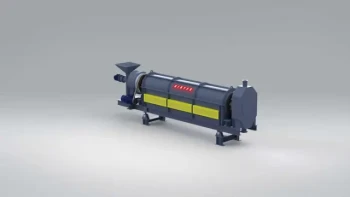
To accurately simulate the harsh realities of industrial application, a Solar Furnace is essential because it generates the high-flux concentrated solar radiation required to replicate extreme, real-world operating conditions. It allows researchers to stress-test critical components—specifically Silicon Carbide decomposers, ceramic foams, and catalysts—against dynamic solar fluctuations, ensuring they can withstand the rigorous environment of an industrial solar tower.
Core Takeaway Moving from the laboratory to the field requires bridging the gap between controlled testing and dynamic solar exposure. The Solar Furnace serves as this critical validation bridge, proving that components can maintain thermomechanical integrity and reaction yields under the intense, fluctuating heat necessary for scalable hydrogen production.
Replicating Real-World Extremes
High-Flux Radiation
A Solar Furnace does not merely heat components; it subjects them to high-flux concentrated solar radiation.
This environment mimics the intensity found in large-scale operations, which cannot be adequately simulated by standard electric heating elements.
Dynamic Solar Fluctuations
Real-world solar energy is never static; it varies with weather and time of day.
Testing in a Solar Furnace exposes components to dynamic solar fluctuations. This ensures that the system can handle rapid changes in energy input without failing.
Validating Critical Component Performance
Thermomechanical Integrity
Components used in sulfuric acid decomposition must endure immense physical and thermal stress.
The furnace validates the thermomechanical performance of these parts, ensuring they do not crack, warp, or degrade under concentrated heat.
Efficiency and Yields
Beyond structural survival, the system must remain efficient.
Researchers use the furnace to measure heat transfer efficiency and reaction yields. This verifies that the chemical decomposition process remains viable even under fluctuating solar conditions.
Specific Materials Tested
The primary reference highlights specific technologies that require this rigorous validation.
These include Silicon Carbide (SiC) decomposers, ceramic foams, and specialized catalysts. Each material interacts differently with concentrated solar flux, making empirical testing mandatory.
Understanding the Risks of Scaling
The Gap Between Lab and Industry
A technology that works in a controlled laboratory setting often fails when exposed to the variability of the outdoors.
The primary "trade-off" here is the risk of premature scaling. Attempting to bypass Solar Furnace testing risks deploying components that cannot survive the dynamic thermal shocks inherent to solar towers.
The Mandatory Validation Step
According to the primary reference, this testing is not optional.
Verification in a Solar Furnace is cited as a mandatory step for scaling laboratory technology to industrial-scale solar tower hydrogen production. Without it, the reliability of the system cannot be guaranteed.
Making the Right Choice for Your Project
To ensure your sulfuric acid decomposition components are ready for deployment, align your testing strategy with your ultimate goals:
- If your primary focus is Industrial Scaling: You must validate your technology in a Solar Furnace to prove it can withstand the dynamic fluctuations of a real solar tower.
- If your primary focus is Component Durability: Use the high-flux environment to stress-test the thermomechanical limits of SiC decomposers and ceramic foams.
Success in solar hydrogen production depends on proving that your components can handle the heat before they ever leave the ground.
Summary Table:
| Feature | Laboratory Testing | Solar Furnace Testing | Industrial Solar Tower |
|---|---|---|---|
| Heat Source | Electric Elements | Concentrated Solar Flux | High-Intensity Solar Array |
| Thermal Dynamics | Static/Stable | Dynamic Fluctuations | Real-time Variability |
| Material Stress | Low to Moderate | High Thermomechanical | Extreme Operational |
| Primary Goal | Proof of Concept | Performance Validation | Large-scale Production |
Elevate Your Research with KINTEK’s Advanced Thermal Solutions
Transitioning from laboratory proof-of-concept to industrial-scale hydrogen production requires equipment that can withstand the most rigorous thermomechanical stresses. KINTEK specializes in high-performance laboratory equipment and consumables designed for the front lines of renewable energy and materials science.
Whether you are testing Silicon Carbide (SiC) decomposers, optimizing ceramic foams, or evaluating catalysts, our comprehensive portfolio—including high-temperature furnaces (vacuum, tube, and atmosphere), high-pressure reactors, and precision ceramics and crucibles—provides the reliability you need to bridge the gap between testing and deployment.
Don't risk your scale-up on unverified components. Contact KINTEK today to discover how our expert heating and material solutions can ensure your project survives the heat of industrial application.
References
- Martin Roeb, Marc Ferrato. Sulphur based thermochemical cycles: Development and assessment of key components of the process. DOI: 10.1016/j.ijhydene.2013.01.068
This article is also based on technical information from Kintek Solution Knowledge Base .
Related Products
- Graphite Vacuum Furnace High Thermal Conductivity Film Graphitization Furnace
- High Temperature Muffle Oven Furnace for Laboratory Debinding and Pre Sintering
- Electric Rotary Kiln Small Rotary Furnace for Activated Carbon Regeneration
- 1200℃ Controlled Atmosphere Furnace Nitrogen Inert Atmosphere Furnace
- 1700℃ Controlled Atmosphere Furnace Nitrogen Inert Atmosphere Furnace
People Also Ask
- What is the use of graphite furnace? Achieve Extreme-Temperature Processing for Advanced Materials
- What is the disadvantage of graphite furnace? Managing Reactivity and Contamination Risks
- What is the temperature range of a graphite furnace? Unlock up to 3000°C for advanced materials processing.
- What are the interferences of graphite furnace? Overcome Matrix & Spectral Issues for Accurate GFAAS
- What does a graphite furnace do? Achieve Extreme Heat and Ultra-Sensitive Analysis