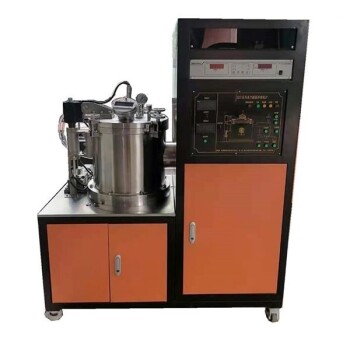
A vacuum annealing furnace is the critical control step for isolating permanent material damage in hydrogen-exposed metals. It is utilized to bake specimens at approximately 250 °C, a specific temperature range designed to diffuse and remove dissolved atomic hydrogen from the metal matrix without altering the underlying microstructure.
Core Takeaway The de-hydrogenation process eliminates the interference of reversible hydrogen embrittlement (HE). By removing dissolved hydrogen, engineers ensure that any failure during destructive testing is strictly attributable to irreversible High-Temperature Hydrogen Attack (HTHA), such as internal micro-cracks or decarburization.
The Mechanism of De-hydrogenation
Extracting Atomic Hydrogen
The primary function of the furnace in this context is extraction. Atomic hydrogen is highly mobile within a metal lattice.
By holding the specimen at 250 °C, the thermal energy increases the mobility of these atoms, encouraging them to diffuse to the surface and exit the material.
The Role of the Vacuum
Conducting this process in a vacuum is essential for two reasons.
First, it creates a pressure differential that aids in drawing the hydrogen out of the metal. Second, it prevents surface oxidation or contamination that could occur if the metal were heated in air, ensuring the specimen remains pristine for mechanical testing.
Distinguishing Between Damage Types
Reversible vs. Irreversible Damage
Hydrogen damage typically falls into two categories. Reversible Hydrogen Embrittlement (HE) occurs simply because hydrogen atoms are present in the lattice, interfering with dislocation movement. If you remove the hydrogen, the ductility often returns.
Irreversible High-Temperature Hydrogen Attack (HTHA) involves permanent physical damage. This occurs when hydrogen reacts with carbides to form methane bubbles, leading to internal fissures and decarburization. This damage cannot be fixed by baking.
Isolating the Variable
To evaluate a material's structural integrity, you must know what caused the failure.
If a specimen is tested while still saturated with hydrogen, the results will show a mix of temporary brittleness (HE) and permanent damage (HTHA). The vacuum annealing process removes the "noise" of the temporary embrittlement, leaving behind only the permanent structural damage for accurate measurement.
Understanding the Trade-offs
Temperature Precision
The temperature of 250 °C is a calculated compromise.
If the temperature is too low, the hydrogen may not diffuse out effectively within a reasonable timeframe. If the temperature is significantly higher, you risk annealing the metal itself, which could alter the grain structure or relieve stresses that you actually intend to measure.
The Risk of False Positives
Skipping this step is a common analytical pitfall.
Without de-hydrogenation, a perfectly sound material might fail a ductility test simply because of reversible hydrogen content. This leads to false alarms regarding the material's permanent structural life and potential over-estimation of HTHA severity.
Making the Right Choice for Your Goal
Whether or not you use this treatment depends entirely on what you are trying to measure.
- If your primary focus is Detecting Permanent Damage (HTHA): You must use the vacuum annealing furnace to remove dissolved hydrogen, ensuring the test reveals only irreversible voids and cracks.
- If your primary focus is Assessing In-Service Brittleness: You should skip this process, as you want to test the material in its hydrogen-charged state to understand its behavior under active operating conditions.
This process ensures that your data reflects the physical reality of the metal, not just the transient presence of a gas.
Summary Table:
| Feature | De-hydrogenation Specification | Purpose in Testing |
|---|---|---|
| Temperature | Approximately 250 °C | Maximizes hydrogen diffusion without altering microstructure |
| Environment | High Vacuum | Prevents oxidation and creates pressure differential for extraction |
| Damage Isolated | Irreversible HTHA | Identifies permanent cracks, voids, and decarburization |
| Variable Removed | Reversible HE | Eliminates temporary brittleness caused by dissolved atomic hydrogen |
| Outcome | Accurate Data | Prevents false positives in destructive performance evaluations |
Precision Heat Treatment for Critical Material Analysis
Ensure the integrity of your destructive testing with KINTEK’s high-performance vacuum annealing furnaces. Designed for precise thermal control and superior vacuum levels, our systems are the gold standard for isolating permanent material damage like HTHA from reversible hydrogen embrittlement.
From high-temperature tube and muffle furnaces to specialized vacuum and atmosphere systems, KINTEK provides the advanced laboratory equipment needed to prepare your specimens with zero contamination. Whether you are conducting metallurgy research or industrial failure analysis, our comprehensive range of crushing, milling, and high-pressure reactors supports every stage of your workflow.
Eliminate analytical noise and achieve definitive results. Contact KINTEK today to find the perfect thermal solution for your lab!
References
- Kioumars Poorhaydari. A Comprehensive Examination of High-Temperature Hydrogen Attack—A Review of over a Century of Investigations. DOI: 10.1007/s11665-021-06045-z
This article is also based on technical information from Kintek Solution Knowledge Base .
Related Products
- Vacuum Heat Treat Furnace with Ceramic Fiber Liner
- Vacuum Sealed Continuous Working Rotary Tube Furnace Rotating Tube Furnace
- Vacuum Heat Treat Sintering Brazing Furnace
- Vacuum Heat Treat and Pressure Sintering Furnace for High Temperature Applications
- Vacuum Heat Treat Furnace and Levitation Induction Melting Furnace
People Also Ask
- What is a vacuum heat treatment furnace? The Ultimate Guide to Controlled Atmosphere Processing
- What is a vacuum heat treatment furnace? Achieve Unmatched Purity and Control
- What is vacuum heat treatment process? Achieve Superior Control, Cleanliness, and Quality
- How does a vacuum heat treatment work? Achieve Superior Material Properties in a Pristine Environment
- What is the temperature of vacuum heat treatment? Achieve Superior Material Properties & Pristine Finishes