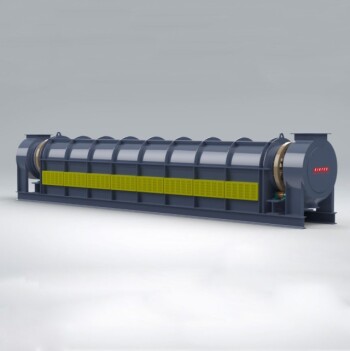
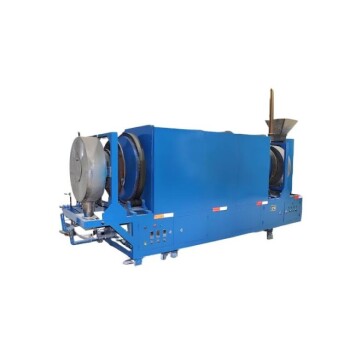
The pyrolysis of SiBCN precursors demands a high-precision vacuum or atmosphere furnace because the conversion from polymer to ceramic is chemically sensitive and structurally volatile. This equipment allows you to maintain a strict nitrogen protection environment to prevent oxidation while regulating temperature with extreme accuracy to manage volume shrinkage and prevent catastrophic cracking.
The success of SiBCN pyrolysis hinges on synchronizing chemical preservation with mechanical stress management. Precise atmosphere control ensures the material remains pure, while exact thermal regulation dictates the rate of shrinkage to maintain structural integrity.
Preserving Chemical Composition
The primary challenge in converting precursors to SiBCN ceramics is preventing environmental contamination during high-temperature phases.
Preventing Unintended Oxidation
The pyrolysis process reaches temperatures as high as 1000°C. At these thermal extremes, the material becomes highly reactive to oxygen.
A high-precision furnace creates and maintains a stable nitrogen protection environment. This barrier is critical to ensure the final product retains the intended SiBCN chemistry rather than degrading into unwanted oxides.
Controlling the Reaction Environment
Standard furnaces often suffer from atmosphere fluctuations.
High-precision units ensure that the inert gas flow is constant and uniform. This stability is required to support the inorganic transformation of the precursor without introducing impurities that would weaken the ceramic matrix.
Ensuring Structural Integrity
The physical transformation of the material is just as critical as its chemical evolution. The conversion involves significant volume changes that must be managed kinetically.
Managing Polymer Shrinkage
As the precursor converts to ceramic, it undergoes "steady polymer shrinkage."
If the temperature fluctuates or ramps up too quickly, this shrinkage becomes uneven. Precise temperature control forces the shrinkage to occur at a manageable rate, preventing the buildup of internal stresses.
Eliminating Macroscopic Cracks
The direct consequence of uncontrolled volume change is macroscopic cracking.
By strictly adhering to a programmed thermal profile, the furnace prevents intense, sudden volume changes. This preserves the structural integrity of the ceramic matrix, resulting in a crack-free component.
Navigating Critical Process Stages
The conversion is not a single-step event; it involves distinct stages with unique thermal requirements.
For example, the material undergoes low-temperature cross-linking at roughly 170°C before reaching inorganic pyrolysis at 1000°C. High-precision control ensures the transition between these vastly different thermal regimes is smooth and controlled.
Common Pitfalls to Avoid
Using equipment with insufficient control capabilities introduces significant risks to the final material properties.
The Risk of Thermal Gradients
Inaccurate furnaces often have "hot spots" or "cold spots."
Local overheating can trigger abnormal structural changes or excessive reactions in specific areas of the part. Conversely, insufficient heat leads to incomplete densification or under-cured regions. Uniform heating is non-negotiable for consistent mechanical performance.
The Danger of Atmosphere Leaks
Even a minor breach in the atmosphere seal during the high-temperature phase can compromise the entire batch.
If oxygen enters the chamber at 1000°C, surface oxidation will occur immediately. This alters the surface properties and can create defects that act as initiation points for mechanical failure.
Making the Right Choice for Your Goal
To maximize the quality of your SiBCN ceramics, prioritize furnace specifications based on your specific critical quality attributes.
- If your primary focus is Structural Integrity: Prioritize thermal uniformity and precise ramp-rate control to manage shrinkage and eliminate cracking during the polymer-to-ceramic transition.
- If your primary focus is Chemical Purity: Prioritize chamber sealing quality and gas flow precision to guarantee a contamination-free nitrogen environment throughout the 1000°C cycle.
investing in precision control is not an optional upgrade; it is a fundamental requirement for producing viable SiBCN ceramics.
Summary Table:
| Key Requirement | Critical Function | Impact on SiBCN Ceramic |
|---|---|---|
| Nitrogen Atmosphere | Prevents high-temp oxidation | Ensures high chemical purity & retention of SiBCN matrix |
| Precise Ramp Rates | Manages polymer shrinkage | Prevents internal stresses and macroscopic cracking |
| High Thermal Uniformity | Eliminates hot/cold spots | Guarantees consistent densification and mechanical strength |
| Vacuum Sealing | Isolates reaction environment | Protects against impurities and environmental contamination |
Elevate Your SiBCN Ceramic Research with KINTEK
Producing high-performance SiBCN ceramics requires no less than perfection in thermal and atmosphere control. At KINTEK, we specialize in high-precision vacuum, atmosphere, and tube furnaces designed to meet the rigorous demands of precursor pyrolysis.
Our equipment provides the stable nitrogen environments and uniform temperature profiles necessary to manage complex volume shrinkage and ensure chemical purity. Beyond furnaces, we offer a comprehensive suite of laboratory solutions, including crushing and milling systems, hydraulic presses, and high-temperature reactors, to support every stage of your material synthesis.
Ready to achieve crack-free, high-purity results? Contact our technical experts today to find the ideal equipment for your laboratory.
References
- Chaokun Song, Nan Chai. Enhanced mechanical property and tunable dielectric property of SiCf/SiC-SiBCN composites by CVI combined with PIP. DOI: 10.1007/s40145-021-0470-5
This article is also based on technical information from Kintek Solution Knowledge Base .
Related Products
- 1200℃ Controlled Atmosphere Furnace Nitrogen Inert Atmosphere Furnace
- 1400℃ Controlled Atmosphere Furnace with Nitrogen and Inert Atmosphere
- 1700℃ Controlled Atmosphere Furnace Nitrogen Inert Atmosphere Furnace
- Dental Porcelain Zirconia Sintering Ceramic Vacuum Press Furnace
- Controlled Nitrogen Inert Hydrogen Atmosphere Furnace
People Also Ask
- What is the necessity of a controlled atmosphere furnace for corrosion research? Replicating Realistic Industrial Risks
- What is controlled atmosphere furnace? Precision Heating Without Oxidation for Superior Materials
- Why is a high-temperature furnace with a controlled atmosphere required for S@MMPC? Master Precision Synthesis
- What is a controlled atmosphere furnace? Achieve Purity and Precision in High-Temp Processing
- What are the two primary purposes of using a controlled atmosphere? Master Protection vs. Material Modification