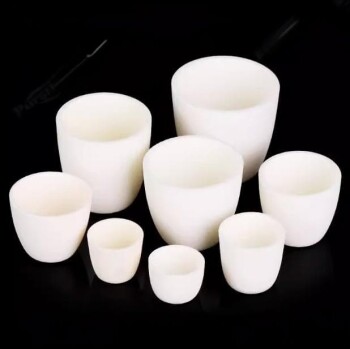
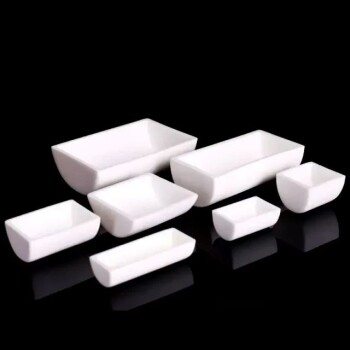
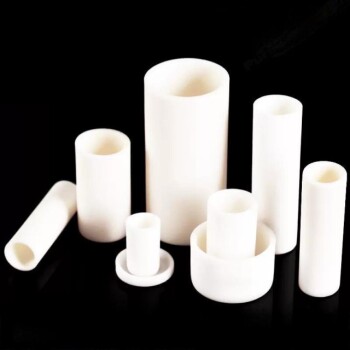
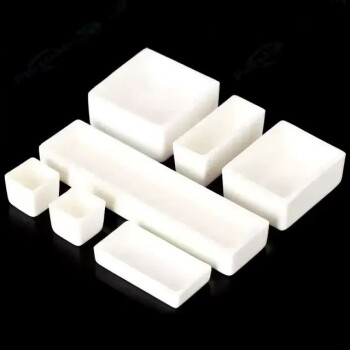
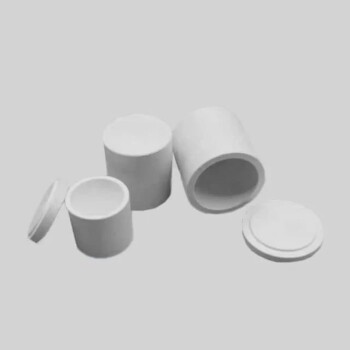
The primary reason for selecting an alumina crucible for the pre-calcination of LAGP (Lithium Aluminum Germanium Phosphate) precursor powders is its unique combination of thermal endurance and chemical inertness. At the target temperature of 700°C, high-purity alumina remains structurally rigid and chemically neutral, ensuring that the vessel does not degrade or contaminate the sensitive precursors during the reaction.
Core Takeaway Successful LAGP synthesis relies on maintaining a precise chemical composition. Alumina crucibles act as a stable, non-reactive barrier that isolates the precursor powders, preventing the vessel itself from becoming a variable in the chemical equation.
The Critical Role of Chemical Inertness
Preventing Contamination
The most significant risk during calcination is the introduction of impurities. LAGP precursors are sensitive to foreign elements, which can alter the final material's performance.
Alumina (aluminum oxide) is chemically stable in the oxidizing environments typically used for this process. This stability prevents the diffusion of crucible material into the reactants.
Preserving Stoichiometry
Solid-state synthesis requires precise ratios of ingredients (stoichiometry). If the reaction vessel interacts with the powder, these ratios shift.
By using an alumina crucible, you ensure that the lithium salts and other precursors react only with each other, not with the container. This preserves the strict stoichiometric ratio required for high-purity LAGP.
Thermal Endurance and Structural Integrity
Withstanding High Temperatures
While 700°C is the specific target for this pre-calcination step, alumina is capable of withstanding significantly higher temperatures (up to 1150°C and beyond) without softening.
This provides a high safety margin. The crucible maintains its physical shape and structural integrity throughout the heating cycle, preventing physical collapse or deformation that could ruin the sample.
Stability in Oxidizing Atmospheres
Pre-calcination often occurs in an oxidizing atmosphere (air or oxygen). Some crucible materials degrade or oxidize under these conditions.
Alumina is already an oxide, making it immune to further oxidation. It provides a consistent, clean environment for the solid-phase reactions to occur without interference from the furnace atmosphere.
Understanding the Trade-offs
The Importance of Purity
Not all alumina crucibles are created equal. The benefits described above rely on the use of high-purity alumina.
Lower-grade crucibles may contain binders or silica impurities. At 700°C, these impurities can leach into the LAGP powder, negating the benefits of using alumina in the first place.
Thermal Shock Sensitivity
While alumina has excellent heat resistance, it can be susceptible to thermal shock if cooled or heated too rapidly.
Operators must ensure that temperature ramps are controlled. Rapid changes in temperature can cause the crucible to crack, potentially spilling the precursors or exposing them to the furnace heating elements.
Making the Right Choice for Your Goal
When setting up your calcination process, select your equipment based on your specific synthesis requirements:
- If your primary focus is Phase Purity: Ensure you are using high-purity (>99%) alumina crucibles to eliminate any risk of diffusion or chemical cross-talk.
- If your primary focus is Process Consistency: Implement controlled heating and cooling rates to protect the alumina crucible from thermal shock, ensuring it can be reused for multiple cycles.
Summary: Alumina is the industry standard for LAGP pre-calcination because it provides the necessary thermal stability and chemical isolation to transform raw precursors into pure ceramic powder without contamination.
Summary Table:
| Feature | Alumina Crucible Property | Benefit for LAGP Synthesis |
|---|---|---|
| Chemical Stability | High-purity Al₂O₃ (Inert) | Prevents contamination and preserves stoichiometry. |
| Thermal Resistance | Stable up to 1150°C+ | Maintains structural integrity at 700°C target. |
| Atmospheric Compatibility | Oxidizing resistant | Ensures a clean environment in air or oxygen. |
| Purity Grade | >99% Alumina | Eliminates leaching of binders or silica impurities. |
Elevate Your Material Research with KINTEK
Precision in LAGP synthesis starts with the right vessel. KINTEK specializes in high-performance laboratory equipment and consumables designed for demanding thermal processes. From high-purity alumina crucibles and ceramics to advanced high-temperature furnaces (muffle, vacuum, and tube), we provide the tools necessary to maintain strict stoichiometry and phase purity.
Whether you are performing pre-calcination or complex solid-state reactions, our range of crushing and milling systems, high-pressure reactors, and specialized consumables ensures your lab achieves consistent, repeatable results.
Ready to optimize your calcination process? Contact KINTEK today to find the perfect equipment for your research needs.
Related Products
- Arc-Shaped Alumina Ceramic Crucible High Temperature Resistant for Engineering Advanced Fine Ceramics
- Alumina Al2O3 Ceramic Crucible Semicircle Boat with Lid for Engineering Advanced Fine Ceramics
- Engineering Advanced Fine Ceramics Alumina Al2O3 Crucible With Lid Cylindrical Laboratory Crucible
- Engineering Advanced Fine Ceramics Alumina Crucibles (Al2O3) for Thermal Analysis TGA DTA
- Engineering Advanced Fine Alumina Al2O3 Ceramic Crucible for Laboratory Muffle Furnace
People Also Ask
- Why Use Alumina Crucibles & Powder Burial for NaSICON? Ensure Phase Purity and Prevent Elemental Volatilization
- What is the primary purpose of using alumina crucibles for LLTO ceramics? Optimize Your High-Temperature Sintering
- Why are alumina crucibles and mother powder essential for LATP sintering? Optimize Your Solid Electrolyte Performance
- Why are high-purity alumina crucibles used for liquid lead corrosion experiments? Ensure Data Accuracy at 550°C
- Primary considerations for choosing alumina crucibles and quartz tubes in indium intercalation: Ensure Material Purity