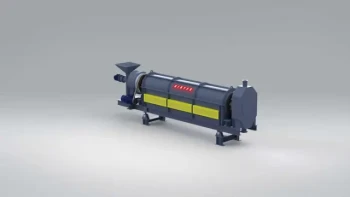
The primary function of an atmosphere furnace using an argon-hydrogen mixture is to create a precisely controlled reducing environment. By utilizing a blend typically composed of 95% Argon and 5% Hydrogen during high-temperature sintering, the process prevents the vanadium within the VPO4 intermediate from undergoing excessive oxidation. This protection is vital for stabilizing the material's chemical composition and ensuring the successful synthesis of Na3(VOPO4)2F.
The argon-hydrogen atmosphere acts as a chemical stabilizer, ensuring vanadium remains in the specific valence state required for the correct crystal structure. Without this reducing environment, uncontrolled oxidation would occur, compromising the electrochemical performance of the final battery material.
The Role of the Reducing Atmosphere
Preventing Oxidation
High-temperature sintering naturally accelerates chemical reactions. Without protection, vanadium components would react with trace oxygen, leading to unintended oxidation.
The Function of the Gas Mixture
The 95% Argon component provides an inert blanket that displaces air. The 5% Hydrogen component acts as the active reducing agent, effectively neutralizing any residual oxygen to maintain a pure environment.
Critical Impacts on Material Properties
Stabilizing Vanadium Valence
Vanadium is a multivalent element, meaning it can exist in various charge states. The reducing atmosphere ensures the vanadium adopts the precise valence state required for the VPO4 intermediate.
Ensuring Crystal Structure Integrity
The atomic structure of the material is directly tied to the valence state of its metallic components. By controlling the chemical state of vanadium, the furnace ensures the formation of the correct crystal lattice.
Electrochemical Performance
The capabilities of the final Na3(VOPO4)2F product depend on this intermediate step. A correct crystal structure allows for efficient sodium ion movement, which is critical for the battery's final capacity and stability.
Understanding Process Sensitivities
Precision Control
The phrase "precisely controlled" in this context is not a suggestion; it is a requirement. Deviations in the gas flow or mixture ratios can lead to inconsistent results.
Balancing Reduction and Safety
Using a mixture with only 5% Hydrogen is a strategic choice. It provides enough reducing power to prevent oxidation while remaining below the explosive limit of hydrogen in air, balancing process efficacy with safety.
Ensuring Synthesis Success
To apply this to your material synthesis strategy, consider the following based on your specific objectives:
- If your primary focus is Phase Purity: Ensure your furnace maintains a consistent positive pressure of the 95% Ar / 5% H2 mixture to completely exclude environmental oxygen.
- If your primary focus is Electrochemical Efficiency: Correlate your sintering times with gas flow rates; insufficient exposure to the reducing atmosphere may result in surface impurities that hinder ion transport.
The argon-hydrogen atmosphere is not merely a protective measure; it is an active tool used to engineer the atomic-level structure of high-performance cathode materials.
Summary Table:
| Feature | Purpose in VPO4 Synthesis |
|---|---|
| 95% Argon Component | Inert shielding to displace oxygen and prevent oxidation |
| 5% Hydrogen Component | Active reducing agent to neutralize trace O2 and stabilize valence |
| Vanadium Valence Control | Ensures specific charge states for correct crystal lattice formation |
| Process Safety | 5% H2 concentration remains below explosive limits while ensuring efficacy |
| Final Impact | Optimized Na+ ion movement, capacity, and battery stability |
Elevate Your Material Research with KINTEK Precision
Achieving the perfect crystal structure for Na3(VOPO4)2F requires absolute control over your thermal environment. At KINTEK, we specialize in providing high-performance atmosphere furnaces, vacuum systems, and CVD solutions designed specifically for sensitive material synthesis.
Whether you are focusing on battery research tools, high-temperature furnaces, or essential PTFE and ceramic consumables, our equipment ensures the precise gas flow and temperature stability your laboratory demands.
Ready to optimize your sintering process? Contact our technical experts today to discover how KINTEK can enhance your lab's efficiency and material purity.
Related Products
- Controlled Nitrogen Inert Hydrogen Atmosphere Furnace
- 1400℃ Controlled Atmosphere Furnace with Nitrogen and Inert Atmosphere
- 1200℃ Controlled Atmosphere Furnace Nitrogen Inert Atmosphere Furnace
- 1700℃ Controlled Atmosphere Furnace Nitrogen Inert Atmosphere Furnace
- Mesh belt controlled atmosphere furnace
People Also Ask
- Why is hydrogen used in furnaces? Achieve Superior Purity and Bright Finishes
- What is the role of a hydrogen atmosphere furnace in diamond/copper composites? Enhance Your Material Purity
- What are the characteristics and risks of a hydrogen atmosphere in a furnace? Master the Balance of Power and Control
- What role does an atmosphere furnace utilizing hydrogen gas play in Cu-Cr-Nb alloy powder pretreatment? (Key Insights)
- Why is a hydrogen atmosphere furnace necessary for W-Cu composite? Unlock Superior Infiltration and Density