The necessity of an external cooling system in Plasma Electrolytic Oxidation (PEO) arises directly from the extreme thermal loads generated during the process. Because PEO relies on intense plasma discharges, Joule heating, and exothermic chemical reactions, the electrolyte temperature rises rapidly; without active cooling to maintain a strict range (typically 25–30 °C), the process becomes unstable, leading to coating failure.
Core Takeaway: PEO is a high-energy process where heat generation is a byproduct of the micro-arc discharges required to create ceramic layers. Active cooling is the only way to counteract this heat, preventing the coating from dissolving (ablation) and ensuring the electrolyte remains chemically stable.
The Sources of Thermal Generation
Intense Plasma Discharges
Unlike traditional anodizing, PEO operates above the dielectric breakdown voltage of the oxide layer. This creates micro-arc plasma discharges across the surface of the aluminum alloy. These discharges are localized spots of extreme energy that transfer significant heat directly into the surrounding electrolyte.
Joule Heating Effects
The PEO process requires high voltage and current to function. As electricity passes through the resistive electrolyte solution, a phenomenon known as Joule heating occurs. This resistive heating continuously warms the entire volume of the liquid bath, independent of the chemical reactions at the surface.
Exothermic Chemical Reactions
The oxidation process itself—converting aluminum into aluminum oxide/ceramic—is exothermic. This means the chemical reaction releases energy in the form of heat, further accelerating the temperature rise within the reactor.
Consequences of Inadequate Cooling
Preventing Coating Ablation
If the electrolyte temperature exceeds the optimal range, the oxide layer can suffer from ablation. This is a destructive process where the coating effectively dissolves or burns off due to excessive heat. A cooling system prevents this by keeping the thermal environment stable enough for the coating to accumulate rather than disintegrate.
Maintaining Compositional Control
The chemical composition of the resulting ceramic layer is highly sensitive to temperature. Overheating leads to a loss of control over which elements are incorporated into the coating. By locking the temperature between 25–30 °C, the cooling system ensures the chemical structure of the oxide remains predictable and robust.
Ensuring Growth Uniformity
Temperature gradients within the bath can cause the coating to grow faster in some areas than others. An external cooling system, often paired with circulation, ensures the thermal profile of the electrolyte is uniform. This guarantees that the coating thickness and performance are consistent across the entire geometry of the aluminum part.
Understanding the Trade-offs
System Complexity and Footprint
Implementing an external cooling system adds significant complexity to the PEO setup. Unlike simple immersion baths, a PEO reactor requires heat exchangers, chillers, and circulation pumps. This increases the physical footprint of the equipment and introduces more mechanical variables that require maintenance.
Energy Consumption
The cooling requirement represents a parasitic load on the total energy efficiency of the process. You are effectively pumping energy in to create the plasma, and then spending additional energy to remove the resulting waste heat. Balancing the cooling capacity with the input power is essential to avoid unnecessary operational costs.
Ensuring Process Stability
If your primary focus is Coating Durability:
- Prioritize a cooling system with rapid response times to keep the electrolyte strictly below 30 °C, preventing soft or porous oxide growth.
If your primary focus is Process Repeatability:
- Ensure your cooling capacity is oversized relative to your power input to eliminate thermal spikes during long processing cycles.
Effective PEO is not just about applying power; it is about managing the thermal byproduct of that power to build a stable, high-performance ceramic.
Summary Table:
| Heat Source | Impact on Process | Mitigation Strategy |
|---|---|---|
| Plasma Discharges | Localized intense heat at breakdown voltage | High-flow external cooling circulation |
| Joule Heating | Rapid rise in bulk electrolyte temperature | Continuous heat exchange and chilling |
| Exothermic Reactions | Accelerated chemical dissolution (ablation) | Maintaining stable 25–30 °C range |
| Thermal Gradients | Non-uniform coating thickness | Integrated pumps for thermal homogenization |
Maximize Your Surface Engineering Precision with KINTEK
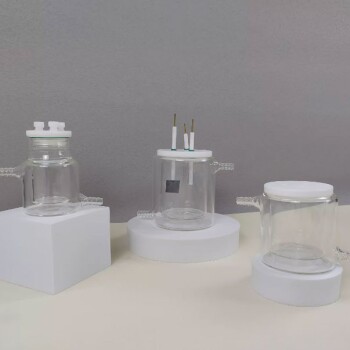
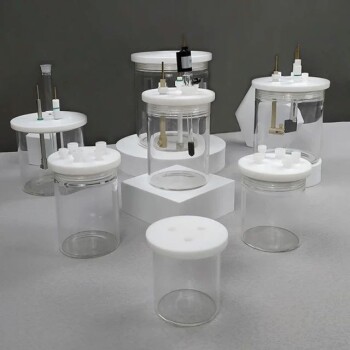
Don't let thermal instability compromise the integrity of your advanced ceramic coatings. KINTEK specializes in providing high-performance laboratory solutions designed for rigorous research and production environments. From specialized electrolytic cells and electrodes specifically for plasma oxidation to advanced cooling solutions (ULT freezers, chillers, and freeze dryers), we ensure your PEO process remains stable and repeatable.
Whether you are refining battery research, developing aerospace-grade aluminum coatings, or utilizing our high-temperature furnaces and hydraulic presses, KINTEK delivers the durability and precision you need.
Ready to optimize your lab's thermal management? Contact our technical experts today to find the perfect equipment for your specific application!
References
- Francisco Trivinho‐Strixino, Mariana de Souza Sikora. Anodization Time Effect on Silver Particles Deposition on Anodic Oxide Coating over Al Produced by Plasma Electrolytic Oxidation. DOI: 10.3390/plasma6020018
This article is also based on technical information from Kintek Solution Knowledge Base .
Related Products
- Engineering Advanced Fine Ceramics Alumina Al2O3 Crucible With Lid Cylindrical Laboratory Crucible
- Engineering Advanced Fine Ceramics Alumina Crucibles (Al2O3) for Thermal Analysis TGA DTA
- Engineering Advanced Fine Ceramics Aluminum Oxide Al2O3 Heat Sink for Insulation
- High Temperature Wear-Resistant Alumina Al2O3 Plate for Engineering Advanced Fine Ceramics
- Engineering Advanced Fine Ceramics Aluminium Oxide Al2O3 Ceramic Washer for Wear-Resistant Applications
People Also Ask
- Why are high-purity alumina crucibles used for liquid lead corrosion experiments? Ensure Data Accuracy at 550°C
- Why are alumina crucibles and mother powder essential for LATP sintering? Optimize Your Solid Electrolyte Performance
- What is the primary purpose of using alumina crucibles for LLTO ceramics? Optimize Your High-Temperature Sintering
- Why Use Alumina Crucibles & Powder Burial for NaSICON? Ensure Phase Purity and Prevent Elemental Volatilization
- Why are alumina crucibles used as containers during the tungsten diffusion coating process on diamond surfaces?