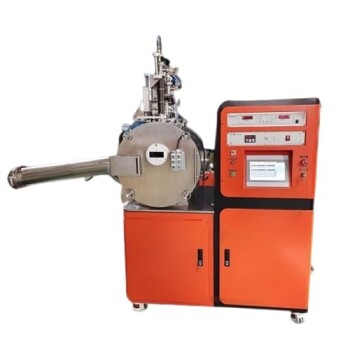
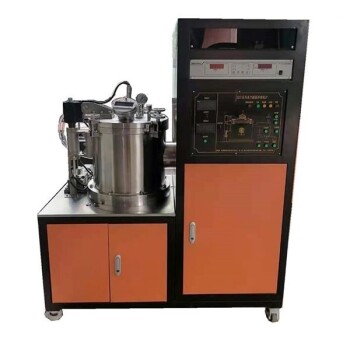
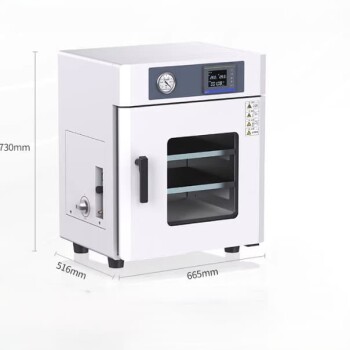
Industrial-grade Vacuum Arc Melting (VAR) systems are essential because they generate the extreme thermal energy required to fully melt refractory elements like Molybdenum while isolating the alloy from atmospheric contamination. This technology bridges the gap between raw elemental powders and a chemically homogeneous, structural-grade alloy ingot.
Core Insight High-Entropy Alloys (HEAs) like CoCrFeMoNi combine high-melting-point refractory metals with reactive elements, creating a unique processing challenge. VAR systems solve this by providing a controlled high-vacuum environment and an electric arc capable of melting Molybdenum, ensuring the final material is dense, pure, and free of oxidation.
The Engineering Challenges of CoCrFeMoNi
Creating a High-Entropy Alloy (HEA) is not merely about mixing metals; it is about forcing elements with vastly different physical properties to coexist in a single crystalline lattice. Industrial-grade VAR systems address three specific engineering hurdles in this process.
Overcoming the Molybdenum Melting Point
The inclusion of Molybdenum (Mo) in the CoCrFeMoNi matrix presents a significant thermal barrier. Molybdenum is a refractory metal with an extremely high melting point.
Standard heating elements often fail to reach the temperatures necessary to fully fuse Mo with the other constituent elements (Cobalt, Chromium, Iron, Nickel).
VAR systems utilize an electric arc to generate localized, extreme heat. This ensures that even the most stubborn refractory elements are fully melted and integrated into the liquid pool.
Eliminating Oxidation Risks
Many elements within HEAs are "active," meaning they react aggressively with oxygen at high temperatures. Even trace amounts of oxygen can lead to the formation of brittle oxides, ruining the alloy's mechanical properties.
VAR operates under high vacuum or a high-purity inert gas (Argon) atmosphere.
This isolation completely prevents the oxidation of metallic elements during the critical liquid phase, preserving the material's chemical integrity.
Achieving Chemical Homogeneity
In complex alloys, heavy elements tend to sink while lighter ones float (segregation), leading to an inconsistent material.
Industrial VAR systems and laboratory equivalents often employ a water-cooled copper crucible and a process of multiple flip-remelting cycles.
By melting the ingot, flipping it, and melting it again, the system mechanically and thermally forces the elements to mix uniformly. This results in high chemical homogeneity throughout the ingot.
Ensuring Absolute Purity
Crucible contamination is a major failure point in alloy production. Traditional ceramic crucibles can react with the molten metal, introducing impurities.
VAR systems utilize water-cooled copper crucibles that form a solidified "skull" of the alloy itself against the wall.
This prevents the molten pool from ever touching the crucible material, ensuring the resulting ingot maintains high purity with no foreign contaminants.
Operational Considerations and Trade-offs
While VAR is the gold standard for producing high-purity HEA ingots, it is important to understand the operational constraints.
Batch Processing Limitations
VAR is inherently a batch process, often involving discrete ingots rather than continuous casting. This can limit throughput speed compared to other industrial melting methods used for simpler steels.
Homogeneity Requires Iteration
A single pass in a VAR furnace is rarely sufficient for HEAs. To guarantee that the Molybdenum is evenly distributed, the operator must commit to multiple remelting cycles. This increases energy consumption and processing time.
Surface vs. Internal Quality
While VAR produces excellent internal density, the surface of the ingot often requires machining to remove surface defects formed during cooling against the copper wall.
Making the Right Choice for Your Goal
Selecting the right equipment depends heavily on the final form your material needs to take.
- If your primary focus is producing bulk alloy ingots: The VAR system is mandatory to handle the melting point of Molybdenum and ensure a homogeneous, oxide-free solid block.
- If your primary focus is creating thin coatings or bonding to a substrate: Consider a Vacuum Hot Pressing Sintering (VHPS) furnace, which uses pressure and lower temperatures (around 950°C) to densify powders without fully melting them.
Summary: For CoCrFeMoNi, the VAR system is the only reliable method to conquer the thermal requirements of Molybdenum while maintaining the strict purity standards required for high-performance applications.
Summary Table:
| Feature | VAR System Benefit for HEAs | Impact on CoCrFeMoNi |
|---|---|---|
| Thermal Energy | Electric arc generates localized extreme heat | Fully melts refractory Molybdenum (Mo) |
| Atmosphere Control | High vacuum or inert Argon shielding | Prevents oxidation of reactive elements |
| Crucible Type | Water-cooled copper crucible | Eliminates ceramic contamination and impurities |
| Homogeneity | Multiple flip-remelting cycles | Ensures uniform elemental distribution |
| Final Product | High-density structural-grade ingots | Superior mechanical properties and chemical integrity |
Elevate Your Advanced Material Research with KINTEK
Precise control over thermal energy and atmospheric purity is non-negotiable when developing complex High-Entropy Alloys like CoCrFeMoNi. KINTEK specializes in high-performance laboratory and industrial equipment designed to meet these rigorous standards.
Whether you require industrial-grade Vacuum Arc Melting (VAR) systems for bulk ingots, Vacuum Hot Pressing Sintering (VHPS) for powder metallurgy, or specialized high-temperature furnaces (vacuum, tube, or induction), KINTEK provides the engineering excellence your research demands. Our comprehensive portfolio also includes high-pressure reactors, crushing systems, and essential consumables like crucibles and ceramics to support every stage of your workflow.
Ready to achieve absolute chemical homogeneity and purity in your alloys?
Contact KINTEK Today to Consult with Our Experts
References
- Santiago Brito-García, Ionelia Voiculescu. EIS Study of Doped High-Entropy Alloy. DOI: 10.3390/met13050883
This article is also based on technical information from Kintek Solution Knowledge Base .
Related Products
- Vacuum Arc Induction Melting Furnace
- Vacuum Induction Melting Spinning System Arc Melting Furnace
- Non Consumable Vacuum Arc Induction Melting Furnace
- Vacuum Heat Treat Furnace and Levitation Induction Melting Furnace
- Lab-Scale Vacuum Induction Melting Furnace
People Also Ask
- How do vacuum induction or arc melting furnaces facilitate the synthesis of U-Al-C MAX phases? Precision Heat & Purity
- What core role does a Vacuum Induction Melting furnace play in nickel-free steel production? Achieve High-Purity Alloys
- What is the primary function of a vacuum arc melting furnace in RHEA preparation? Achieving Extreme Thermal Fusion
- What is the function of vacuum arc melting equipment? Creating High-Purity Ferrochrome (CrFe) Alloys
- What is the function of a vacuum arc melting furnace? Master Homogeneity for Amorphous Alloy Ribbons