The necessity of an ultra-high temperature graphite recrystallization furnace lies in its ability to facilitate "recrystallization sintering" at temperatures exceeding 2000°C. This specific thermal environment triggers an evaporation-condensation mechanism where silicon carbide (SiC) particles bond at contact points to form a robust, porous network. This process is the only way to achieve exceptional mechanical strength and precise pore structures in silicon carbide membranes without the dimensional shrinkage that typically occurs during conventional sintering.
This specialized furnace provides the extreme heat and reducing atmosphere required to drive the recrystallization of silicon carbide, ensuring high-performance membrane supports with zero-volume shrinkage and high interconnected porosity.
The Mechanics of Recrystallization Sintering
The Evaporation-Condensation Mechanism
At temperatures exceeding 2000°C, silicon carbide undergoes a phase change where material evaporates from the surface of particles and condenses at the contact points (necks). This evaporation-condensation mechanism is unique because it moves material to the bonding areas without drawing the centers of the particles closer together.
Achieving Zero-Shrinkage Stability
Because the particles do not move toward each other, the resulting ceramic membrane suffers no volume shrinkage during the sintering process. This dimensional stability is critical for manufacturing large-scale or high-precision supports and selection layers that must fit specific industrial housings.
Interconnected Pore Networks
The recrystallization process ensures that while the structure gains significant mechanical strength, the pores remain highly interconnected. This maximizes the permeability of the membrane, which is the primary performance metric for liquid and gas filtration applications.
The Role of Extreme Temperature and Chemistry
Driving Carbothermal Reduction
Preparation often involves the conversion of silicon-oxygen-carbon precursors (SiOxCy) into pure silicon carbide. An ultra-high temperature environment, often reaching 1800°C or higher, is required to drive the carbothermal reduction reactions that remove oxygen in the form of carbon monoxide.
Maintaining a Reducing Atmosphere
A graphite furnace naturally provides a reducing atmosphere, which is essential for protecting silicon carbide from oxidation. At these extreme temperatures, any presence of oxygen would lead to the formation of silica (SiO2), which would degrade the chemical resistance and purity of the SiC membrane.
Surface Passivation and Impurity Removal
The intense heat within the furnace serves to roast the SiC particles, effectively removing surface impurities and passivating sharp edges. This modification of the surface state improves the overall bonding quality between the support and the selection layer, leading to a more cohesive final product.
Why Graphite is the Material of Choice
High-Temperature Structural Integrity
Standard heating elements fail or melt long before reaching the 2000°C+ threshold required for SiC recrystallization. Graphite heating elements and insulation systems maintain their structural stability and performance under these extreme thermal loads.
Thermal Shielding and Atmosphere Control
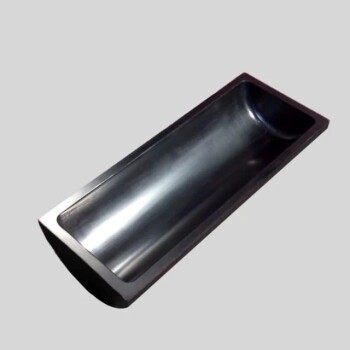
The use of graphite crucibles acts as a thermal shield, ensuring a stable and uniform thermal field across the entire batch of membranes. This uniformity is vital for preventing local defects or uneven pore distribution in the selection layer.
Chemical Stability at Extremes
Graphite is one of the few materials that remains chemically stable when in contact with SiC at ultra-high temperatures. It prevents the introduction of metallic impurities that could poison the ceramic or compromise its performance in corrosive environments.
Understanding the Trade-offs
High Operational Energy Costs
Running a furnace at temperatures exceeding 2000°C requires a massive energy input. This makes the production of recrystallized SiC membranes more expensive than lower-temperature "reaction-bonded" or "clay-bonded" alternatives.
Sensitivity to Oxygen Ingress
While the graphite environment is ideal, any leak in the furnace seal can lead to rapid oxidation of both the graphite components and the SiC samples. Maintaining high-purity argon or nitrogen atmospheres is a technical challenge that requires constant monitoring.
Equipment Wear and Maintenance
The extreme thermal cycling accelerates the degradation of heating elements and insulation. Manufacturers must account for the high cost of replacing graphite components, which directly impacts the long-term cost-efficiency of the production line.
Applying These Insights to Your Preparation Goal
Selecting the Right Process for Your Application
The choice to use an ultra-high temperature graphite furnace depends entirely on the performance requirements of your final silicon carbide membrane.
- If your primary focus is dimensional precision: Recrystallization sintering is mandatory, as it prevents the volume shrinkage that leads to cracking or warping in large supports.
- If your primary focus is chemical purity and harsh environment resistance: The high-temperature graphite environment ensures a pure SiC phase, free from the secondary binders that often fail in acidic or basic solutions.
- If your primary focus is maximizing flux/permeability: The evaporation-condensation mechanism preserves the largest possible pore volume compared to solid-state diffusion sintering.
The ultra-high temperature graphite recrystallization furnace is the definitive tool for producing silicon carbide membranes that require an uncompromising balance of mechanical strength and high porosity.
Summary Table:
| Key Requirement | Mechanism & Impact | Benefit for SiC Membranes |
|---|---|---|
| Sintering Temp (>2000°C) | Evaporation-condensation mechanism | Bonds particles without drawing centers closer |
| Zero-Shrinkage Stability | No particle movement during bonding | Maintains dimensional precision for large supports |
| Reducing Atmosphere | Graphite-induced oxygen removal | Prevents SiO2 formation and maintains chemical purity |
| Interconnected Porosity | Material moves only to contact 'necks' | Maximizes permeability for gas and liquid filtration |
| Structural Integrity | Graphite heating elements at extreme heat | Ensures stable, uniform thermal fields for defect-free layers |
Elevate Your Material Synthesis with KINTEK
Achieving the perfect balance of mechanical strength and high porosity in silicon carbide membranes requires uncompromising thermal precision. KINTEK specializes in advanced laboratory equipment designed for the most demanding applications. Whether you are performing ultra-high temperature recrystallization or developing advanced coatings, our portfolio has you covered.
- High-Temperature Solutions: Explore our comprehensive range of graphite, vacuum, CVD, PECVD, and atmosphere furnaces capable of reaching the extreme temperatures required for SiC processing.
- Material Preparation: From crushing and milling systems to isostatic and hot hydraulic presses, we provide the tools to create perfect green bodies.
- Advanced Research Tools: Benefit from our high-temperature high-pressure reactors, electrolytic cells, and specialized ceramics and crucibles that withstand corrosive environments.
Ready to optimize your sintering process and achieve zero-shrinkage results? Contact KINTEK today to discuss how our high-performance equipment can enhance your laboratory’s efficiency and product quality.
References
- Liqun Hu, Jinjie Wang. Effect of Post-Oxidation Treatment on the Performance and Microstructure of Silicon Carbide Ceramic Membrane. DOI: 10.3390/coatings13050957
This article is also based on technical information from Kintek Solution Knowledge Base .
Related Products
- Ultra-High Temperature Graphite Vacuum Graphitization Furnace
- Vertical High Temperature Graphite Vacuum Graphitization Furnace
- Horizontal High Temperature Graphite Vacuum Graphitization Furnace
- 2200 ℃ Graphite Vacuum Heat Treat Furnace
- Large Vertical Graphite Vacuum Graphitization Furnace
People Also Ask
- What is the disadvantage of graphite furnace? Managing Reactivity and Contamination Risks
- Is a graphite melting point high or low? Discover Its Extreme Thermal Resilience
- What are the advantages and disadvantages of graphite furnace? Unlock Extreme Heat Performance
- What gas is used in graphite furnace? Maximize Accuracy with the Right Inert Gas
- What are the disadvantages of graphite furnace? Key Limitations and Operational Costs