High-precision industrial heating equipment is strictly required for the normalizing process of Ferritic-Martensitic (FM) steel to maintain rigorous control over the austenitization temperature and holding time. Without this exact thermal management, the material suffers from excessive coarsening of prior austenite grains (PAG), directly compromising the refinement of the microstructure and the uniformity of mechanical properties.
The Core Objective Precision heating is not merely about reaching a target temperature; it is about orchestrating the microstructure before cooling occurs. It ensures the elimination of brittle phases and prevents grain growth, establishing the necessary foundation for a high-strength, uniform martensitic transformation.
Controlling Microstructural Evolution
To understand the necessity of high-precision equipment, one must look at how FM steel responds to heat at the microscopic level.
Preventing Grain Coarsening
The primary risk during normalizing is the uncontrolled growth of prior austenite grains (PAG). High-precision equipment ensures the steel is heated to the exact austenitization temperature without overshooting.
If the temperature is too high or held for too long, these grains become excessively large. This coarsening inevitably leads to a coarser final microstructure, reducing the material's toughness.
Ensuring Mechanical Uniformity
The grain size established during the heating phase dictates the quality of the subsequent martensitic transformation.
By maintaining precise temperature stability, industrial furnaces ensure that the grain structure is consistent throughout the entire component. This results in uniform mechanical properties, avoiding "soft spots" or brittle zones in the final product.
Managing Phase Transformations
Beyond grain size, precision heating is required to manage complex phase changes that define the steel's integrity.
Dissolving Carbides and $\delta$-Ferrite
High-temperature atmosphere furnaces provide the stable thermal fields (often between 1050°C and 1150°C) necessary to completely dissolve carbides and transform $\delta$-ferrite into austenite.
$\delta$-ferrite is a residual phase formed during solidification that can cause material embrittlement. Accurate heating can reduce $\delta$-ferrite content from over 10% to approximately 1%, effectively removing weak points from the steel.
Establishing the Martensitic Foundation
Heating the steel above the critical Ac1 point transforms the microstructure into austenite.
This specific phase transformation is the prerequisite for forming a high dislocation density martensitic structure during cooling. Any deviation in heating prevents the complete formation of austenite, leading to a suboptimal final structure.
Understanding the Trade-offs
When selecting or operating heating equipment for FM steel, it is vital to understand the consequences of thermal inaccuracy.
The Risk of Overheating
If the equipment lacks precision and temperatures drift too high, the prior austenite grains will grow rapidly. While the carbides may dissolve, the resulting coarse grain structure will significantly lower the steel's impact toughness and ductility.
The Risk of Underheating
If the equipment cannot maintain the required high temperatures (e.g., struggling to hold 1150°C), phase transformation will be incomplete.
This leaves undissolved carbides and retained $\delta$-ferrite in the matrix. These remnants act as stress concentrators, leading to premature failure and brittle fracture behavior in service.
Making the Right Choice for Your Goal
The level of precision required depends on the specific performance metrics you must meet.
- If your primary focus is Impact Toughness: Prioritize equipment with tight thermal uniformity to prevent PAG coarsening, as fine grains are the key to ductility.
- If your primary focus is Structural Integrity: Ensure the furnace can reliably sustain high-temperature fields (1050°C+) to minimize $\delta$-ferrite and eliminate potential crack initiation sites.
Precision in heating is the single most critical variable in converting raw FM steel into a high-performance engineering material.
Summary Table:
| Feature | Requirement for FM Steel | Impact of Precision Heating |
|---|---|---|
| Temperature Control | Exact Austenitization (1050°C-1150°C) | Prevents prior austenite grain (PAG) coarsening |
| Thermal Stability | Uniform Heat Distribution | Eliminates "soft spots" and ensures mechanical uniformity |
| Phase Management | Complete Transformation above Ac1 | Reduces brittle $\delta$-ferrite from >10% to ~1% |
| Carbide Handling | Stable High-Temperature Fields | Ensures total dissolution of carbides to prevent brittleness |
Elevate Your Metallurgy with KINTEK Precision
Don't let thermal inaccuracy compromise the integrity of your Ferritic-Martensitic steel. KINTEK specializes in high-performance laboratory and industrial heating solutions designed for the most demanding thermal cycles. Whether you need muffle, tube, or atmosphere furnaces for precise normalizing, or high-temperature high-pressure reactors for advanced material research, our equipment delivers the exact temperature control required to refine microstructures and eliminate brittle phases.
From crushing systems to hydraulic presses and cooling solutions, KINTEK provides the comprehensive tools necessary for superior material science. Ensure the toughness and uniformity your project demands—contact us today to find the perfect heating solution for your lab!
References
- H.Yu. Rostova, G.D. Tolstolutska. A REVIEW: FERRITIC-MARTENSITIC STEELS – TREATMENT, STRUCTURE AND MECHANICAL PROPERTIES. DOI: 10.46813/2022-140-066
This article is also based on technical information from Kintek Solution Knowledge Base .
Related Products
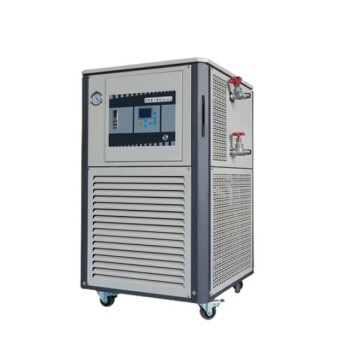
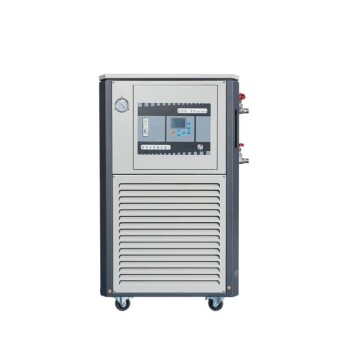
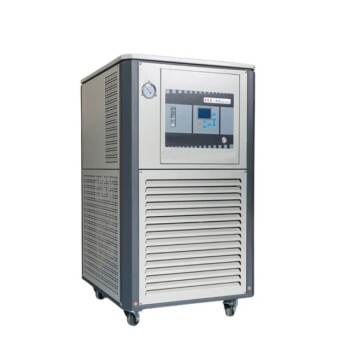
- 5L Heating Chilling Circulator Cooling Water Bath Circulator for High and Low Temperature Constant Temperature Reaction
- 100L Heating Chilling Circulator Cooling Water Bath Circulator for High and Low Temperature Constant Temperature Reaction
- 10L Heating Chilling Circulator Cooling Water Bath Circulator for High and Low Temperature Constant Temperature Reaction
- 20L Heating Chilling Circulator Cooling Water Bath Circulator for High and Low Temperature Constant Temperature Reaction
- High Temperature Constant Temperature Heating Circulator Water Bath Chiller Circulator for Reaction Bath
People Also Ask
- What is the necessity of a circulating water bath in chlorate production? Optimize Yield & Purity with Precision
- How does a constant temperature circulator support the leaching reaction of gold scrap? Optimize Gold Recovery Results
- How do constant temperature circulators impact weight-loss immersion tests? Ensure Precision in Corrosion Analysis
- What is the importance of a circulating water cooling system? Key to Protecting Your High-Temperature Lab Equipment
- Why is a circulating water chiller required for Prussian Blue nanoparticles? Ensure Stability & Batch Reproducibility