Maintaining an inert gas environment is critical in high-temperature reduction furnaces to strictly isolate the reaction zone from atmospheric oxygen. This isolation prevents the oxidation of both the raw precursor materials and the newly formed Silicon Carbide (SiC) powder, which preserves the chemical purity of the final product. Furthermore, this controlled atmosphere is essential for sweeping away gaseous byproducts, specifically carbon monoxide, allowing the chemical reduction to proceed efficiently.
High-performance Silicon Carbide production relies on precise chemical stability. An inert gas environment is essential not only to prevent oxygen contamination but also to facilitate the consistent removal of reaction byproducts, guaranteeing both material purity and process efficiency.
Preserving Material Integrity
Protecting Raw Materials
At the elevated temperatures required for SiC synthesis, the raw powder mixtures are highly reactive.
Without an inert gas barrier, these input materials would react with oxygen immediately. This pre-reaction degradation would fundamentally alter the stoichiometry of the mix before the intended reduction process begins.
Preventing Re-oxidation of the Product
The newly formed Silicon Carbide is equally vulnerable to environmental conditions.
If exposed to oxygen while still at high heat, the refined SiC powder would oxidize. This effectively reverses the manufacturing process, introducing impurities and degrading the performance characteristics of the final powder.
Facilitating Efficient Reduction
Managing Gaseous Byproducts
The chemical reduction reaction that creates Silicon Carbide generates significant amounts of carbon monoxide (CO).
A static atmosphere would allow this gas to accumulate around the reactants. A stable flow of inert gas acts as a carrier mechanism, continuously discharging CO from the reaction zone.
Ensuring Reaction Continuity
The removal of carbon monoxide is not merely a safety measure; it is a chemical necessity.
By clearing gaseous byproducts, the inert atmosphere ensures the environment remains favorable for reduction. This prevents the reaction from stalling and ensures the process proceeds at maximum efficiency under the intended reducing conditions.
Operational Challenges and Considerations
The Risk of Atmosphere Instability
While the presence of inert gas is necessary, the stability of that atmosphere is equally critical.
Fluctuations in gas pressure or flow can lead to pockets of stagnation where carbon monoxide accumulates. This results in uneven reduction rates and inconsistent powder quality across the batch.
Consequences of Incomplete Isolation
Even minor breaches in the furnace seal can render the inert gas ineffective.
If the furnace fails to maintain positive pressure or adequate sealing, oxygen will infiltrate the chamber. This compromises the isolation barrier, leading to immediate surface oxidation of the high-performance powder.
Optimizing Your Furnace Operations
To maximize the quality of Silicon Carbide powder, you must treat the inert atmosphere as an active component of the manufacturing process.
- If your primary focus is material purity: Ensure the furnace design prioritizes absolute seal integrity to strictly prohibit oxygen ingress during the thermal cycle.
- If your primary focus is process efficiency: Calibrate the inert gas flow to aggressively remove carbon monoxide byproducts without disrupting the thermal uniformity of the hot zone.
Mastering the control of the inert atmosphere is the defining factor in transitioning from standard to high-performance Silicon Carbide production.
Summary Table:
| Factor | Role of Inert Gas Environment | Impact on SiC Quality |
|---|---|---|
| Atmospheric Isolation | Blocks oxygen and moisture from entering the reaction zone | Prevents material degradation and preserves stoichiometry |
| Oxidation Control | Protects newly formed SiC powder from re-oxidizing at high heat | Ensures chemical purity and high performance of final product |
| Byproduct Removal | Continuously sweeps away Carbon Monoxide (CO) gas | Prevents reaction stalling and ensures process continuity |
| Pressure Stability | Maintains positive pressure to seal out contaminants | Eliminates batch inconsistency and uneven reduction rates |
Elevate Your Advanced Material Synthesis with KINTEK
Precise atmospheric control is the difference between standard materials and high-performance results. At KINTEK, we specialize in providing state-of-the-art laboratory equipment designed for the most demanding thermal processes. Our comprehensive range of high-temperature furnaces (muffle, tube, rotary, vacuum, and atmosphere) and high-pressure reactors provides the absolute seal integrity and gas flow precision required for consistent Silicon Carbide production.
Whether you are refining powder through crushing and milling systems or conducting cutting-edge battery research, KINTEK offers the tools you need for excellence. From PTFE products and ceramics to sophisticated PECVD/MPCVD systems, we empower researchers and manufacturers to achieve superior material purity.
Ready to optimize your reduction process? Contact our technical experts today to find the perfect furnace solution for your laboratory.
References
- Hidehiko Tanaka. Silicon carbide powder and sintered materials. DOI: 10.2109/jcersj2.119.218
This article is also based on technical information from Kintek Solution Knowledge Base .
Related Products
- Vacuum Heat Treat and Pressure Sintering Furnace for High Temperature Applications
- High Temperature Muffle Oven Furnace for Laboratory Debinding and Pre Sintering
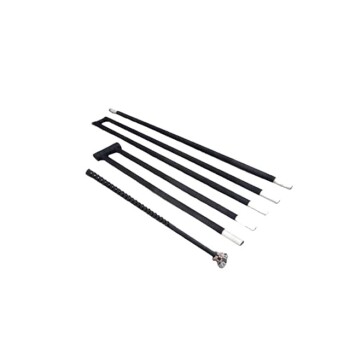
- Silicon Carbide SiC Thermal Heating Elements for Electric Furnace
- Graphite Vacuum Furnace Bottom Discharge Graphitization Furnace for Carbon Materials
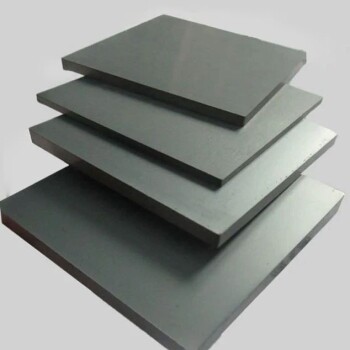
- Silicon Carbide (SIC) Ceramic Plate for Engineering Advanced Fine Ceramics
People Also Ask
- What is the purpose of the heat treatment (sintering) step? Engineering Robust Electroactive Membranes
- What is a vacuum sintering furnace? Unlock Purity and Performance in Advanced Materials
- How does the vacuum environment impact sintering of diamond-copper composites? Protect Against Thermal Damage
- What are some alternative atmospheres to pure hydrogen for powder metallurgy sintering processes? Top Sintering Solutions
- Why must green bodies produced via binder jetting undergo treatment in a vacuum sintering furnace?