Knowledge Why use a laboratory crushing and sieving system for rice husks? Optimize Hydrolysis for 1mm Particle Size
Author avatar

Tech Team · Kintek Solution

Updated 17 hours ago

Why use a laboratory crushing and sieving system for rice husks? Optimize Hydrolysis for 1mm Particle Size


Mechanical preparation is the catalyst for chemical efficiency. Crushing and sieving rice husks to a precise 1mm size is necessary to drastically increase the specific surface area of the biomass. This physical alteration is the prerequisite that allows dilute sulfuric acid to penetrate the material structure effectively, directly influencing the success of the hydrolysis process.

The efficiency of dilute acid hydrolysis depends as much on physical geometry as it does on chemical concentration. Processing rice husks to a uniform 1mm size ensures consistent reaction kinetics, maximizing reducing sugar conversion and guaranteeing experimental repeatability.

Optimizing the Material Structure

To understand why this step is non-negotiable, you must look at how the physical state of the biomass dictates chemical accessibility.

Increasing Specific Surface Area

Raw rice husks possess a structure that naturally resists chemical attack. By processing the material to a 1mm size, you significantly expand the specific surface area available for reaction.

This exposes more of the internal cellulose and hemicellulose to the reagents. It transforms a low-surface-area material into a high-surface-area substrate ready for conversion.

Facilitating Acid Penetration

Dilute sulfuric acid cannot react with material it cannot reach. A smaller, uniform particle size reduces the physical barrier to entry.

This reduction in size allows the acid solution to penetrate deep into the material structure. It ensures the acid interacts with the entire volume of the husk, rather than just the outer shell.

Ensuring Reaction Stability

Beyond simple access, the uniformity provided by the sieving system is critical for controlling the reaction's behavior over time.

Kinetic Consistency

Chemical reactions rely on predictable rates, known as kinetics. When particle sizes vary, the reaction rates vary across the sample.

A uniform 1mm particle size ensures that all biomass reacts at the same speed. This prevents a scenario where small particles are over-reacted (degrading sugars) while large particles remain under-reacted.

Maximizing Conversion Efficiency

The ultimate metric of success in this process is the yield of reducing sugars.

Because the acid can penetrate uniformly and the kinetics are consistent, the conversion efficiency increases. You extract the maximum theoretical value from the raw material.

Guaranteeing Repeatability

In scientific experimentation, a result is only valuable if it can be reproduced.

Using a crushing and sieving system eliminates physical variability as a source of error. It ensures that your experimental results are repeatable, making your data regarding reducing sugar conversion reliable.

Common Pitfalls to Avoid

While reducing particle size is beneficial, the method of reduction matters significantly.

The Danger of Non-Uniformity

Simply crushing the material without sieving is insufficient.

If the particle size distribution is wide (a mix of dust and large chunks), your reaction kinetics will be chaotic. This leads to unpredictable yields and data that is difficult to interpret.

The Role of the Sieve

The sieving component of the system is just as critical as the crusher.

It acts as the quality control step, ensuring that only material meeting the 1mm specification enters the hydrolysis stage. This step safeguards the kinetic consistency mentioned earlier.

Making the Right Choice for Your Goal

The rigorous preparation of your feedstock is an investment in the quality of your output.

  • If your primary focus is maximizing yield: Prioritize the sieving process to ensure every particle allows for full acid penetration, maximizing reducing sugar conversion.
  • If your primary focus is experimental validation: Adhere strictly to the 1mm standard to ensure that any variance in results is due to chemical parameters, not inconsistent feedstock.

Uniformity in physical preparation is the single most controllable variable for ensuring high-efficiency hydrolysis.

Summary Table:

Factor 1mm Particle Size Advantage Impact on Hydrolysis
Surface Area Significantly increased specific surface area Enhances chemical-biomass contact
Acid Penetration Reduced physical barrier for dilute sulfuric acid Ensures reaction throughout the husk volume
Reaction Kinetics Uniform particle size distribution Prevents sugar degradation and under-reaction
Yield Consistent material geometry Maximizes the conversion of reducing sugars
Data Reliability Elimination of physical variability Guarantees experimental repeatability

Precision preparation is the key to high-yield biomass conversion. KINTEK provides industry-leading crushing and milling systems, high-precision sieving equipment, and specialized laboratory reactors designed to optimize your material research. Whether you are processing rice husks for hydrolysis or developing advanced battery materials, our comprehensive range of tools—from high-temperature furnaces to hydraulic presses—ensures your lab achieves consistent, repeatable results. Contact KINTEK today to upgrade your lab's efficiency!

References

  1. Yoney López, Carlos Martı́n. Chemical characterisation and dilute-acid hydrolysis of rice hulls from an artisan mill. DOI: 10.15376/biores.5.4.2268-2277

This article is also based on technical information from Kintek Solution Knowledge Base .

Related Products

People Also Ask

Related Products

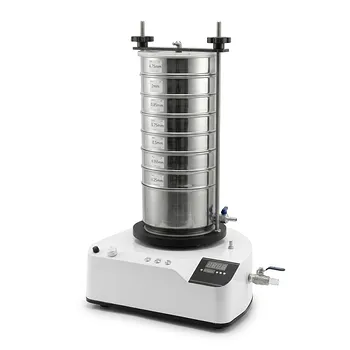
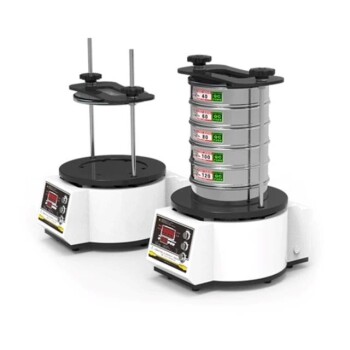
Laboratory Test Sieves and Vibratory Sieve Shaker Machine

Laboratory Test Sieves and Vibratory Sieve Shaker Machine

Efficiently process powders, granules, and small blocks with a high-frequency vibration sieve. Control vibration frequency, screen continuously or intermittently, and achieve accurate particle size determination, separation, and classification.

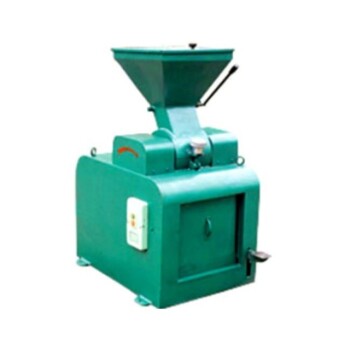
Laboratory Jaw Crusher

Laboratory Jaw Crusher

Discover the small jaw crusher for efficient, flexible, and affordable crushing in labs and small mines. Ideal for coal, ores, and rocks. Learn more now!

Laboratory Horizontal Planetary Ball Mill Milling Machine

Laboratory Horizontal Planetary Ball Mill Milling Machine

Improve sample uniformity with our Horizontal Planetary Ball Mills. KT-P400H reduces sample deposition and KT-P400E has multi-directional capabilities. Safe, convenient and efficient with overload protection.

Sealed Jaw Crusher High Efficiency Environmental Protection Safe and Reliable

Sealed Jaw Crusher High Efficiency Environmental Protection Safe and Reliable

Discover our Sealed Jaw Crusher: High efficiency, environmental protection, Safe and reliable crushing for labs, mines, and more.

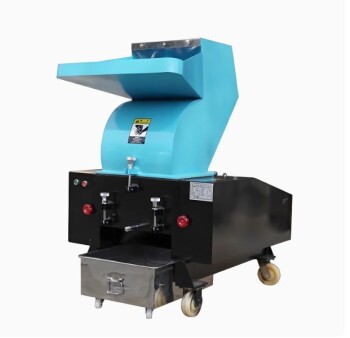
Laboratory Sealed Hammer Crusher for Efficient Sample Preparation

Laboratory Sealed Hammer Crusher for Efficient Sample Preparation

Discover the Laboratory Sealed Hammer Crusher for efficient sample preparation. Ideal for coal, metallurgy, and research, this crusher ensures high production efficiency and environmental friendliness.

Laboratory Jar Ball Mill with Alumina Zirconia Grinding Jar and Balls

Laboratory Jar Ball Mill with Alumina Zirconia Grinding Jar and Balls

Grind to perfection with alumina/zirconia grinding jars and balls. Available in volume sizes from 50ml to 2500ml, compatible with various mills.

Vibratory Sieve Shaker Machine Dry Three-Dimensional Vibrating Sieve

Vibratory Sieve Shaker Machine Dry Three-Dimensional Vibrating Sieve

The KT-V200 product focuses on solving common sieving tasks in the laboratory. It is suitable for sieving 20g-3kg dry samples.

Laboratory manual slicer

Laboratory manual slicer

Manual microtome is a high-precision cutting device designed for laboratories, industry and medical fields. It is suitable for the preparation of thin slices of various materials such as paraffin samples, biological tissues, battery materials, food, etc.

Manual High Temperature Heated Hydraulic Press Machine with Heated Plates for Lab

Manual High Temperature Heated Hydraulic Press Machine with Heated Plates for Lab

The High Temperature Hot Press is a machine specifically designed for pressing, sintering and processing materials in a high temperature environment. It is capable of operating in the range of hundreds of degrees Celsius to thousands of degrees Celsius for a variety of high temperature process requirements.

Desktop Fast Laboratory Autoclave Sterilizer 35L 50L 90L for Lab Use

Desktop Fast Laboratory Autoclave Sterilizer 35L 50L 90L for Lab Use

The desktop fast steam sterilizer is a compact and reliable device used for rapid sterilization of medical, pharmaceutical, and research items. It efficiently sterilizes surgical instruments, glassware, medicines, and resistant materials, making it suitable for various applications.

Automatic Heated Hydraulic Press Machine with Heated Plates for Laboratory Hot Press 25T 30T 50T

Automatic Heated Hydraulic Press Machine with Heated Plates for Laboratory Hot Press 25T 30T 50T

Efficiently prepare your samples with our Automatic Heated Lab Press. With a pressure range up to 50T and precise control, it's perfect for various industries.

Automatic Lab Cold Isostatic Press CIP Machine Cold Isostatic Pressing

Automatic Lab Cold Isostatic Press CIP Machine Cold Isostatic Pressing

Efficiently prepare samples with our Automatic Lab Cold Isostatic Press. Widely used in material research, pharmacy, and electronic industries. Provides greater flexibility and control compared to electric CIPs.

Touchscreen Automatic Vacuum Heat Press

Touchscreen Automatic Vacuum Heat Press

Precision vacuum heat press for labs: 800°C, 5-ton pressure, 0.1MPa vacuum. Ideal for composites, solar cells, aerospace.

HFCVD Machine System Equipment for Drawing Die Nano-Diamond Coating

HFCVD Machine System Equipment for Drawing Die Nano-Diamond Coating

The nano-diamond composite coating drawing die uses cemented carbide (WC-Co) as the substrate, and uses the chemical vapor phase method ( CVD method for short ) to coat the conventional diamond and nano-diamond composite coating on the surface of the inner hole of the mold.

Lab Blown Film Extrusion Three Layer Co-Extrusion Film Blowing Machine

Lab Blown Film Extrusion Three Layer Co-Extrusion Film Blowing Machine

Lab blown film extrusion is mainly used to detect the feasibility of film blowing of polymer materials and the colloid condition in the materials, as well as the dispersion of colored dispersions, controlled mixtures, and extrudates;

Microwave Plasma Chemical Vapor Deposition MPCVD Machine System Reactor for Lab and Diamond Growth

Microwave Plasma Chemical Vapor Deposition MPCVD Machine System Reactor for Lab and Diamond Growth

Get high-quality diamond films with our Bell-jar Resonator MPCVD machine designed for lab and diamond growth. Discover how Microwave Plasma Chemical Vapor Deposition works for growing diamonds using carbon gas and plasma.

High Purity Pure Graphite Crucible for Evaporation

High Purity Pure Graphite Crucible for Evaporation

Vessels for high temperature applications, where materials are kept at extremely high temperatures to evaporate, allowing thin films to be deposited on substrates.

Small Vacuum Heat Treat and Tungsten Wire Sintering Furnace

Small Vacuum Heat Treat and Tungsten Wire Sintering Furnace

The small vacuum tungsten wire sintering furnace is a compact experimental vacuum furnace specially designed for universities and scientific research institutes. The furnace features a CNC welded shell and vacuum piping to ensure leak-free operation. Quick-connect electrical connections facilitate relocation and debugging, and the standard electrical control cabinet is safe and convenient to operate.

Customizable Laboratory High Temperature High Pressure Reactors for Diverse Scientific Applications

Customizable Laboratory High Temperature High Pressure Reactors for Diverse Scientific Applications

High-pressure lab reactor for precise hydrothermal synthesis. Durable SU304L/316L, PTFE liner, PID control. Customizable volume & materials. Contact us!

Inclined Rotary Plasma Enhanced Chemical Vapor Deposition PECVD Equipment Tube Furnace Machine

Inclined Rotary Plasma Enhanced Chemical Vapor Deposition PECVD Equipment Tube Furnace Machine

Upgrade your coating process with PECVD coating equipment. Ideal for LED, power semiconductors, MEMS and more. Deposits high-quality solid films at low temps.


Leave Your Message