Knowledge Why is it necessary to use a zirconia crucible for LLZO sintering? Ensure High-Purity Solid-State Battery Materials
Author avatar

Tech Team · Kintek Solution

Updated 1 day ago

Why is it necessary to use a zirconia crucible for LLZO sintering? Ensure High-Purity Solid-State Battery Materials


The choice of crucible dictates the chemical purity of your final material. You must use a zirconia (ZrO2) crucible instead of alumina to prevent the LLZO powder from reacting chemically with the container during high-temperature sintering (specifically around 950°C). Unlike alumina, zirconia provides the chemical stability required to prevent uncontrolled aluminum contamination, ensuring the stoichiometry and phase purity of your powder remain intact.

Core Insight: Alumina crucibles are not inert in this environment; they act as a source of aluminum impurities that alter the chemical makeup of LLZO. Zirconia crucibles are necessary to maintain a strictly controlled, non-reactive environment.

The Chemistry of Contamination

Reactivity at High Temperatures

At sintering temperatures of 950°C, LLZO is highly reactive with standard ceramic containers. Alumina (Al2O3) crucibles are prone to chemical attack under these conditions.

Uncontrolled Aluminum Diffusion

When LLZO reacts with an alumina crucible, aluminum ions diffuse into the powder. This introduces excess aluminum impurities that were not calculated in your original stoichiometric formulation.

Formation of Impurity Phases

This reaction does not just dope the material; it can fundamentally change the phase composition. The reaction between LLZO and the crucible can lead to the formation of secondary impurity phases, such as LaAlO3, which degrade the material's quality.

Why Zirconia is the Superior Choice

Chemical Stability

Zirconia (ZrO2) possesses superior high-temperature chemical stability regarding LLZO compared to alumina. It resists the aggressive nature of the lithium-rich powder at 950°C.

Preserving Stoichiometry

Because the crucible does not leach elements into the powder, the ratio of elements in your final product matches your starting raw materials. This allows for precise control over the chemical stoichiometry.

Ensuring Phase Purity

By eliminating the variable of crucible interaction, zirconia ensures that the crystal structure of the resulting powder is determined solely by your synthesis parameters, not by foreign contaminants.

Understanding the Trade-offs

When Alumina is Permissible

It is important to note that alumina is not always forbidden; it is sometimes used intentionally. Since aluminum doping can stabilize the cubic phase of LLZO, some researchers use alumina crucibles to act as a passive dopant source.

The Risk of Passive Doping

However, relying on a crucible for doping is imprecise and difficult to reproduce. It often leads to uneven distribution of aluminum or the over-production of insulating phases at the contact interface.

Mitigation Strategies

If you are forced to use alumina due to resource constraints, the sample must be isolated. This is often done by burying the pellet in "mother powder" (powder of the same composition) to prevent direct contact with the crucible walls.

Making the Right Choice for Your Goal

  • If your primary focus is strict chemical purity: Use a zirconia (ZrO2) crucible to completely eliminate the risk of aluminum contamination and secondary phase formation.
  • If your primary focus is intentional Aluminum doping: Do not rely on the crucible; use a zirconia crucible and add a precise amount of aluminum to your precursors, or strictly isolate the sample within an alumina crucible using mother powder.
  • If your primary focus is preventing Lithium loss: regardless of the crucible material, ensure the system is sealed or covered with mother powder to maintain a lithium-rich atmosphere.

Ultimately, to define the material rather than let the container define it, zirconia is the necessary standard.

Summary Table:

Feature Alumina (Al2O3) Crucible Zirconia (ZrO2) Crucible
Chemical Stability Reactive with LLZO at 950°C Highly stable and inert
Contamination Risk High (Al diffusion, LaAlO3 phase) Negligible
Stoichiometry Control Poor (passive doping) Precise control
Impact on LLZO Can degrade phase purity Maintains intended crystal structure
Best Use Case General low-reactivity heating High-purity LLZO & battery research

Elevate Your Material Research with KINTEK

Don't let crucible contamination compromise your battery research. KINTEK specializes in high-performance laboratory equipment, providing the chemical stability you need for advanced sintering processes.

Our extensive portfolio includes:

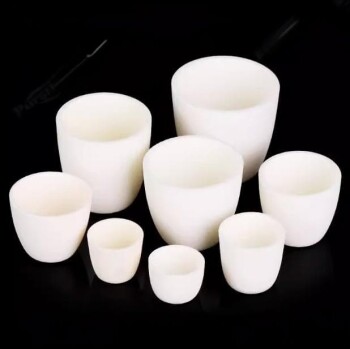
  • Premium Zirconia & Alumina Crucibles for precise stoichiometry.
  • High-Temperature Muffle & Vacuum Furnaces for controlled environments.
  • High-Pressure Reactors & Autoclaves for advanced material synthesis.
  • Milling Systems & Hydraulic Presses for superior powder preparation.

Whether you are developing solid-state electrolytes or advanced ceramics, KINTEK delivers the tools to ensure your results are defined by your science, not your containers. Contact KINTEK today to find the perfect solution for your lab!

Related Products

People Also Ask

Related Products

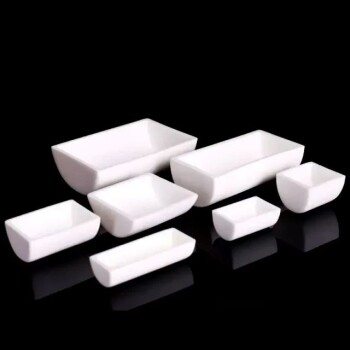
Arc-Shaped Alumina Ceramic Crucible High Temperature Resistant for Engineering Advanced Fine Ceramics

Arc-Shaped Alumina Ceramic Crucible High Temperature Resistant for Engineering Advanced Fine Ceramics

In the journey of scientific exploration and industrial production, every detail is crucial. Our arc-shaped alumina ceramic crucibles, with their excellent high temperature resistance and stable chemical properties, have become a powerful assistant in laboratories and industrial fields. They are made of high-purity alumina materials and manufactured through precision processes to ensure excellent performance in extreme environments.

Alumina Al2O3 Ceramic Crucible Semicircle Boat with Lid for Engineering Advanced Fine Ceramics

Alumina Al2O3 Ceramic Crucible Semicircle Boat with Lid for Engineering Advanced Fine Ceramics

Crucibles are containers widely used for melting and processing various materials, and semicircular boat-shaped crucibles are suitable for special smelting and processing requirements. Their types and uses vary by material and shape.

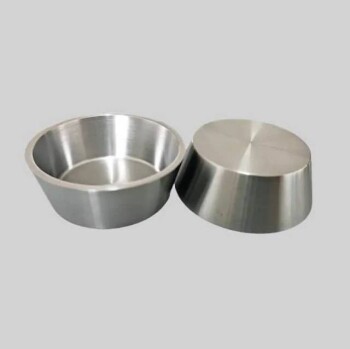
Electron Beam Evaporation Coating Tungsten Crucible and Molybdenum Crucible for High Temperature Applications

Electron Beam Evaporation Coating Tungsten Crucible and Molybdenum Crucible for High Temperature Applications

Tungsten and molybdenum crucibles are commonly used in electron beam evaporation processes due to their excellent thermal and mechanical properties.

Engineering Advanced Fine Alumina Al2O3 Ceramic Crucible for Laboratory Muffle Furnace

Engineering Advanced Fine Alumina Al2O3 Ceramic Crucible for Laboratory Muffle Furnace

Alumina ceramic crucibles are used in some materials and metal melting tools, and flat-bottomed crucibles are suitable for melting and processing larger batches of materials with better stability and uniformity.

Zirconia Ceramic Gasket Insulating Engineering Advanced Fine Ceramics

Zirconia Ceramic Gasket Insulating Engineering Advanced Fine Ceramics

Zirconia insulating ceramic gasket has high melting point, high resistivity, low thermal expansion coefficient and other properties, making it an important high temperature resistant material, ceramic insulating material and ceramic sunscreen material.

Engineering Advanced Fine Ceramics Alumina Crucibles (Al2O3) for Thermal Analysis TGA DTA

Engineering Advanced Fine Ceramics Alumina Crucibles (Al2O3) for Thermal Analysis TGA DTA

TGA/DTA thermal analysis vessels are made of aluminum oxide (corundum or aluminum oxide). It can withstand high temperature and is suitable for analyzing materials that require high temperature testing.

Precision Machined Yttrium Stabilized Zirconia Ceramic Rod for Engineering Advanced Fine Ceramics

Precision Machined Yttrium Stabilized Zirconia Ceramic Rod for Engineering Advanced Fine Ceramics

Zirconia ceramic rods are prepared by isostatic pressing, and a uniform, dense and smooth ceramic layer and transition layer are formed at high temperature and high speed.

Evaporation Crucible for Organic Matter

Evaporation Crucible for Organic Matter

An evaporation crucible for organic matter, referred to as an evaporation crucible, is a container for evaporating organic solvents in a laboratory environment.

Electron Beam Evaporation Coating Gold Plating Tungsten Molybdenum Crucible for Evaporation

Electron Beam Evaporation Coating Gold Plating Tungsten Molybdenum Crucible for Evaporation

These crucibles act as containers for the gold material evaporated by the electron evaporation beam while precisely directing the electron beam for precise deposition.

Boron Nitride (BN) Crucible for Phosphorous Powder Sintered

Boron Nitride (BN) Crucible for Phosphorous Powder Sintered

Phosphorus powder sintered boron nitride (BN) crucible has a smooth surface, dense, pollution-free and long service life.

Electron Beam Evaporation Coating Oxygen-Free Copper Crucible and Evaporation Boat

Electron Beam Evaporation Coating Oxygen-Free Copper Crucible and Evaporation Boat

Electron Beam Evaporation Coating Oxygen-Free Copper Crucible enables precise co-deposition of various materials. Its controlled temperature and water-cooled design ensure pure and efficient thin film deposition.

Custom Machined and Molded PTFE Teflon Parts Manufacturer with PTFE Crucible and Lid

Custom Machined and Molded PTFE Teflon Parts Manufacturer with PTFE Crucible and Lid

PTFE crucibles, made from pure Teflon, offer chemical inertness and resistance from -196°C to 280°C, ensuring compatibility with a wide range of temperatures and chemicals. These crucibles feature machine-finished surfaces for easy cleaning and prevention of contamination, making them ideal for precise laboratory applications.

Electron Beam Evaporation Coating Conductive Boron Nitride Crucible BN Crucible

Electron Beam Evaporation Coating Conductive Boron Nitride Crucible BN Crucible

High-purity and smooth conductive boron nitride crucible for electron beam evaporation coating, with high temperature and thermal cycling performance.

Desktop Fast Laboratory Autoclave Sterilizer 35L 50L 90L for Lab Use

Desktop Fast Laboratory Autoclave Sterilizer 35L 50L 90L for Lab Use

The desktop fast steam sterilizer is a compact and reliable device used for rapid sterilization of medical, pharmaceutical, and research items. It efficiently sterilizes surgical instruments, glassware, medicines, and resistant materials, making it suitable for various applications.

Silicon Carbide (SIC) Ceramic Sheet Wear-Resistant Engineering Advanced Fine Ceramics

Silicon Carbide (SIC) Ceramic Sheet Wear-Resistant Engineering Advanced Fine Ceramics

Silicon carbide (sic) ceramic sheet is composed of high-purity silicon carbide and ultra-fine powder, which is formed by vibration molding and high-temperature sintering.

Engineering Advanced Fine Alumina (Al₂O₃) Ceramic Positioning Pin Straight Bevel for Precision Applications

Engineering Advanced Fine Alumina (Al₂O₃) Ceramic Positioning Pin Straight Bevel for Precision Applications

Alumina ceramic positioning pin has the characteristics of high hardness, wear resistance and high temperature resistance.

Molybdenum Disilicide (MoSi2) Thermal Elements Electric Furnace Heating Element

Molybdenum Disilicide (MoSi2) Thermal Elements Electric Furnace Heating Element

Discover the power of Molybdenum Disilicide (MoSi2) Heating Element for high-temperature resistance. Unique oxidation resistance with stable resistance value. Learn more about its benefits now!

Small Vacuum Heat Treat and Tungsten Wire Sintering Furnace

Small Vacuum Heat Treat and Tungsten Wire Sintering Furnace

The small vacuum tungsten wire sintering furnace is a compact experimental vacuum furnace specially designed for universities and scientific research institutes. The furnace features a CNC welded shell and vacuum piping to ensure leak-free operation. Quick-connect electrical connections facilitate relocation and debugging, and the standard electrical control cabinet is safe and convenient to operate.

Twin Screw Extruder Plastic Granulation Machine

Twin Screw Extruder Plastic Granulation Machine

Twin screw extruder plastic granulation machine is designed for the mixing and processing experiments of engineering plastics, modified plastics, waste plastics and masterbatches.

Laboratory Oscillating Orbital Shaker

Laboratory Oscillating Orbital Shaker

Mixer-OT orbital shaker uses brushless motor, which can run for a long time. It is suitable for vibration tasks of culture dishes, flasks and beakers.


Leave Your Message