Precise heating rate control is the defining factor in the structural integrity of B4C-TiB2 ceramics. Because the synthesis of these composites involves complex in-situ chemical reactions—specifically between Boron Carbide (B4C) and precursors like Titanium Carbide (TiC) or Titanium Dioxide (TiO2)—the heating rate dictates the reaction kinetics. Strict regulation of this rate prevents the rapid evolution of gases that leads to porosity and ensures the uniform dispersion of the reinforcing phase necessary for high mechanical performance.
The heating rate acts as a throttle for chemical reactions within the furnace; without it, rapid gas evolution destroys structural density and compromises the mechanical reinforcement of the composite.
Managing the In-Situ Chemical Reactor
Sintering B4C-TiB2 is not merely a process of thermal densification; it is a chemical synthesis occurring inside the furnace.
Controlling Reaction Kinetics
The reactants, such as TiC or TiO2, interact with the B4C matrix to generate the secondary phase.
This is a chemical transformation that releases energy and byproducts.
Precise heating ensures these reactions proceed at a steady, controlled pace, rather than triggering a runaway or uneven reaction chain.
Mitigating Porosity and Defects
When reaction rates are too aggressive due to rapid heating, gases are generated faster than they can diffuse out of the material.
This rapid escape of gases creates voids, resulting in structural defects and porosity within the final ceramic.
By slowing the heating rate during critical reaction windows, you allow gases to escape gradually, preserving the density of the material.
Optimizing Microstructural Homogeneity
The physical arrangement of the composite's internal structure is just as critical as its chemical composition.
Achieving Uniform Dispersion
The goal of this process is to generate a second phase—Titanium Diboride (TiB2)—within the Boron Carbide matrix.
Controlled heating ensures that this generation occurs evenly throughout the material, rather than in localized clusters.
A uniformly dispersed second phase is the hallmark of a high-quality composite.
Maximizing Mechanical Toughness
The presence of TiB2 is intended to provide toughening and reinforcing effects to the brittle B4C matrix.
However, these mechanical benefits are only realized if the distribution is homogeneous.
Precise thermal control maximizes these reinforcing effects, resulting in a ceramic that is both hard and fracture-resistant.
Understanding the Trade-offs
While precise control is ideal, it introduces specific challenges that must be managed during production.
The Cost of Cycle Time
Implementing slow, deliberate heating rates extends the total sintering cycle significantly.
This reduces the throughput of the sintering equipment and increases energy consumption per batch.
Equipment Complexity
Achieving high-precision ramp rates requires sophisticated furnace controllers and heating elements.
Standard sintering furnaces may lack the granularity required to navigate the specific reaction temperature zones of B4C-TiB2 without overshooting.
Making the Right Choice for Your Goal
The balance between heating speed and material quality depends on your specific performance requirements.
- If your primary focus is mechanical integrity: Prioritize a slow, stepped heating rate through the critical reaction zones to minimize porosity and maximize TiB2 dispersion.
- If your primary focus is production efficiency: Identify the specific non-reactive temperature ranges where heating can be accelerated, while maintaining strict control only during the chemical reaction windows.
Ultimately, the heating rate is not just a parameter; it is the primary tool for engineering the microstructure of the final ceramic.
Summary Table:
| Factor | Impact on B4C-TiB2 Composites | Benefit of Precise Control |
|---|---|---|
| Reaction Kinetics | Regulates in-situ chemical transformations | Prevents runaway reactions and thermal stress |
| Gas Evolution | Controls the escape of chemical byproducts | Minimizes internal porosity and structural defects |
| Microstructure | Influences TiB2 phase distribution | Ensures uniform dispersion for higher toughness |
| Mechanical Performance | Determines hardness and fracture resistance | Maximizes the reinforcing effect of the second phase |
Elevate Your Advanced Ceramic Production with KINTEK
Achieving the perfect microstructure in B4C-TiB2 composites requires more than just heat—it requires absolute precision. KINTEK specializes in high-performance laboratory equipment designed for the most demanding material science applications.
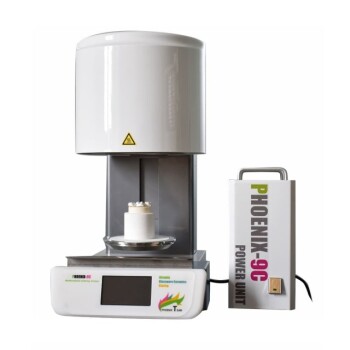
Our comprehensive range of high-temperature furnaces (muffle, vacuum, and atmosphere) and hot hydraulic presses provide the granular ramp-rate control necessary to manage complex in-situ reactions and eliminate porosity. Whether you are conducting fundamental research or scaling up production, KINTEK offers the crushing, milling, and sintering solutions needed to ensure mechanical excellence.
Ready to optimize your sintering cycle? Contact our technical experts today to find the ideal thermal solution for your laboratory.
Related Products
- Dental Porcelain Zirconia Sintering Ceramic Vacuum Press Furnace
- Dental Porcelain Zirconia Sintering Ceramic Furnace Chairside with Transformer
- Vacuum Dental Porcelain Sintering Furnace
- Conductive Boron Nitride BN Ceramics Composite for Advanced Applications
- Boron Nitride (BN) Crucible for Phosphorous Powder Sintered
People Also Ask
- What does sintering do to zirconia? Unlock Its Full Strength and Aesthetic Potential
- What is the shrinkage of zirconia during sintering? Mastering the 20-25% Dimensional Change
- What is the sintering temperature of zirconia ceramic? Mastering the 1400°C-1600°C Thermal Profile
- What is the price of zirconia sintering furnace? Invest in Precision, Not Just a Price Tag
- What factors are important to consider when choosing a dental sintering furnace? Match Your Workflow for Optimal Results