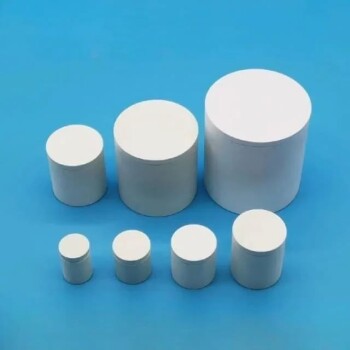
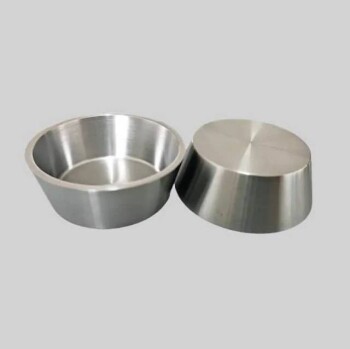
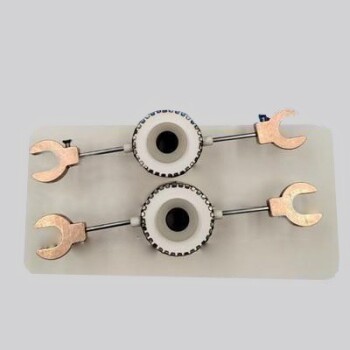
The configuration of alumina crucibles within static experimental tanks is a mandatory safeguard against the aggressive nature of molten metals. The crucible acts as a chemically inert barrier, physically isolating the corrosive liquid lead from the stainless steel walls of the testing chamber. Without this containment, the liquid lead would directly attack the apparatus, compromising the equipment's structural integrity and invalidating the purity of the experimental environment.
Core Takeaway The alumina crucible serves a dual function: it acts as a sacrificial shield to preserve the expensive stainless steel reactor and creates a chemically isolated zone to ensure corrosion data reflects only the interaction between the specimen and the lead, free from external contamination.
Protecting Infrastructure Integrity
The Corrosivity of Liquid Lead
Liquid lead is highly corrosive to standard construction materials, including stainless steel, particularly at elevated temperatures.
If left uncontained, the molten medium will aggressively attack the internal walls of high-pressure reactors or autoclaves.
Preventing Equipment Dissolution
The primary role of the alumina crucible is to prevent this direct contact.
By holding the melt, the crucible protects the reactor material from dissolution and erosion. This significantly extends the operational lifespan of the testing apparatus.
Ensuring Experimental Precision
Eliminating Chemical Interference
To generate accurate data, the chemical environment must remain pristine.
If the liquid lead were to corrode the stainless steel tank, foreign metal ions would leach into the melt. This contamination alters the chemistry of the lead, rendering long-term corrosion data unreliable.
Isolating the Corrosion Variable
In studies involving alloys like FeCrAl, T91, or ODS steel, researchers must verify that observed effects are strictly between the specimen and the lead.
Alumina crucibles ensure that any oxidation or self-healing behavior observed is exclusive to the specimen. This setup prevents the container material from interfering with the formation of oxide films on the alloy surface.
Stability at Extreme Temperatures
High-purity alumina is chosen specifically for its thermal stability and chemical inertness.
References indicate these crucibles remain stable in liquid lead environments ranging from 600°C to as high as 800°C. Even at these extremes, the alumina does not react with the molten metal.
Common Pitfalls to Avoid
Underestimating Reaction Kinetics
A common error is assuming that high-grade stainless steel reactors are sufficient to hold liquid lead without an insert.
This is incorrect; without the inert alumina liner, the "protective" walls of the tank become active participants in the chemical reaction, leading to rapid degradation.
The Risk of Data Contamination
Failing to isolate the melt results in a mixed-metal environment.
Data collected from such setups often reflects the corrosion of the tank walls rather than the behavior of the test specimen, leading to false conclusions about an alloy's oxidation properties.
Making the Right Choice for Your Goal
To ensure the success of your high-temperature exposure tests, apply the following principles:
- If your primary focus is Equipment Longevity: Prioritize the use of alumina crucibles to shield the internal walls of your autoclave from dissolution and erosion caused by direct contact with liquid lead.
- If your primary focus is Data Accuracy: Rely on the chemical inertness of high-purity alumina to prevent foreign metal ions from contaminating the melt and interfering with specimen oxide film formation.
The use of an alumina crucible is not optional; it is the fundamental requirement for isolating variables and preserving the validity of high-temperature liquid lead research.
Summary Table:
| Feature | Alumina Crucible Function | Benefit to Experiment |
|---|---|---|
| Material Compatibility | Chemically inert to liquid lead | Prevents melt contamination and leaching |
| Structural Protection | Physical barrier for reactor walls | Prevents stainless steel dissolution/erosion |
| Temperature Stability | Stable from 600°C to 800°C | Enables reliable high-temperature testing |
| Data Integrity | Isolates the corrosion variable | Ensures results reflect only specimen behavior |
Elevate Your Material Research with KINTEK Precision Solutions
Don't let equipment degradation or chemical interference compromise your critical data. KINTEK specializes in high-performance laboratory equipment designed for the most demanding environments. Whether you are conducting high-temperature liquid lead tests or complex alloy studies, we provide the essential tools you need:
- High-Temperature High-Pressure Reactors & Autoclaves engineered for durability.
- Premium Alumina & Ceramic Crucibles for perfect chemical isolation.
- Advanced High-Temperature Furnaces (Muffle, Tube, Vacuum, and Atmosphere).
- Precision Sample Preparation including crushing, milling, and hydraulic presses.
Ready to safeguard your infrastructure and achieve superior experimental accuracy? Contact our technical experts today to find the perfect configuration for your lab's unique requirements.
References
- Martina Pazderová, Jan ČÍŽEK. EFFECT OF STEEL COMPOSITION ON ITS BEHAVIOUR IN THE LIQUID LEAD ENVIRONMENT. DOI: 10.37904/metal.2023.4700
This article is also based on technical information from Kintek Solution Knowledge Base .
Related Products
- Arc-Shaped Alumina Ceramic Crucible High Temperature Resistant for Engineering Advanced Fine Ceramics
- Alumina Al2O3 Ceramic Crucible Semicircle Boat with Lid for Engineering Advanced Fine Ceramics
- Engineering Advanced Fine Ceramics Alumina Al2O3 Crucible With Lid Cylindrical Laboratory Crucible
- Engineering Advanced Fine Ceramics Alumina Crucibles (Al2O3) for Thermal Analysis TGA DTA
- Engineering Advanced Fine Alumina Al2O3 Ceramic Crucible for Laboratory Muffle Furnace
People Also Ask
- Why Use Alumina Crucibles & Powder Burial for NaSICON? Ensure Phase Purity and Prevent Elemental Volatilization
- What is the primary purpose of using alumina crucibles for LLTO ceramics? Optimize Your High-Temperature Sintering
- Why are alumina crucibles and mother powder essential for LATP sintering? Optimize Your Solid Electrolyte Performance
- Why are high-purity alumina crucibles used for liquid lead corrosion experiments? Ensure Data Accuracy at 550°C
- Primary considerations for choosing alumina crucibles and quartz tubes in indium intercalation: Ensure Material Purity