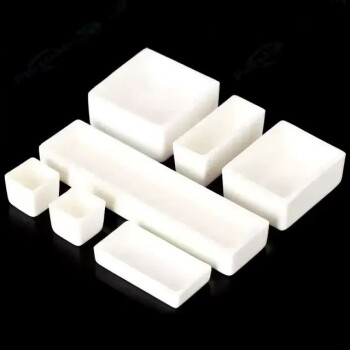
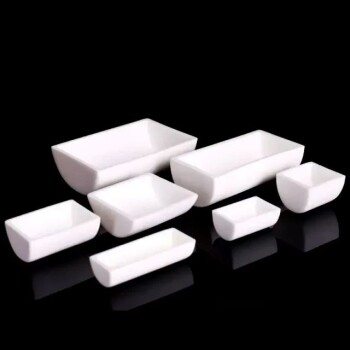
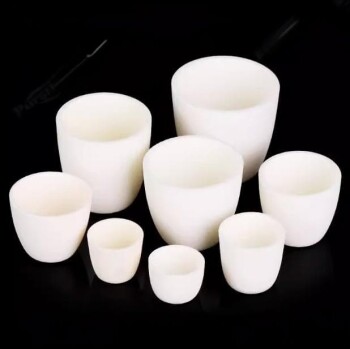
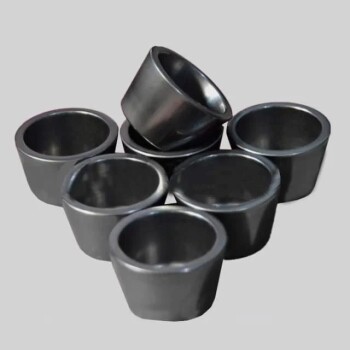
Boron Nitride (BN) coatings are essential because they act as both a chemical barrier and a high-performance release agent during the infiltration process. These coatings prevent molten tin (Sn) and the resulting TiNiSn compounds from wetting or chemically reacting with the alumina crucible substrate at elevated temperatures. By creating this inert interface, the coating ensures that the thermoelectric samples can be recovered intact and remain free from ceramic-based impurities.
The use of BN-coated alumina crucibles is a strategic choice to manage the high reactivity of molten tin. The coating serves the dual purpose of preserving the chemical purity of the TiNiSn compound and ensuring the physical integrity of the sample during post-process extraction.
Preventing Chemical Adhesion and Wetting
The Role of Non-Wetting Properties
Molten tin (Sn) possesses a high surface tension but tends to wet many ceramic surfaces, including alumina, at the temperatures required for reactive infiltration. Boron Nitride is naturally non-wetting to many molten metals and alloys, meaning the liquid metal beads up rather than spreading and bonding to the crucible surface.
Ensuring Structural Integrity
Because the TiNiSn does not adhere to the BN layer, the final solidified sample can be removed from the crucible without the need for destructive force. This is critical for thermoelectric materials, which can be brittle and prone to cracking if they become mechanically "locked" to the container walls during cooling.
Maintaining Material Purity
A Barrier Against Alumina Contamination
At the high temperatures necessary for the reactive melt infiltration of TiNiSn, alumina (Al2O3) can become chemically active in the presence of aggressive melts. The BN coating acts as a physical shield, preventing the molten phase from leaching aluminum or oxygen into the TiNiSn matrix, which would degrade its thermoelectric performance.
High-Temperature Stability and Inertness
BN is chosen for its exceptional chemical inertness, even in corrosive environments or extreme temperatures reaching up to 1900°C. It remains structurally stable and does not react with the reactants, ensuring that the purity of the synthesized TiNiSn is governed strictly by the precursor materials rather than the container.
Understanding the Trade-offs
Coating Uniformity and Vulnerability
The primary risk when using BN-coated crucibles is the uniformity of the application. Any microscopic gaps, pinholes, or scratches in the BN layer allow the molten tin to make direct contact with the alumina, leading to localized "sticking" and potential sample contamination.
Maintenance and Reusability
While alumina crucibles are durable, the BN coating is often considered a consumable layer. Depending on the intensity of the reaction, the coating may flake or degrade after a single cycle, requiring the crucible to be cleaned and re-coated before subsequent use to maintain the reliability of the results.
Best Practices for Successful Infiltration
Recommendations for Your Process
Selecting the right approach to crucible preparation depends on your specific experimental or production goals:
- If your primary focus is sample purity: Ensure the BN coating is applied in multiple thin, even layers, allowing each to dry fully to create an impenetrable chemical barrier.
- If your primary focus is high-throughput recovery: Use a BN spray with a high binder content to improve adhesion to the alumina, reducing the likelihood of the coating flaking off during the cooling phase.
- If your primary focus is cost-efficiency: Monitor the crucible surface after each run; if the BN layer remains smooth and white, it may only require a light "touch-up" rather than a full strip and re-coat.
By effectively leveraging Boron Nitride as an intermediary layer, you transform the alumina crucible from a reactive participant into a stable, inert vessel for high-quality TiNiSn synthesis.
Summary Table:
| Feature | Role of BN Coating | Benefit for TiNiSn Process |
|---|---|---|
| Wetting Behavior | Provides a non-wetting interface | Prevents molten tin from sticking to crucible walls |
| Chemical Reactivity | Acts as an inert physical barrier | Prevents Al and O contamination from the alumina |
| Thermal Stability | Stable up to 1900°C | Maintains integrity during high-temp infiltration |
| Sample Recovery | Functions as a release agent | Allows for non-destructive extraction of brittle samples |
Elevate Your Materials Synthesis with KINTEK Precision
Achieving high-purity TiNiSn thermoelectric materials requires more than just the right chemistry—it requires the right environment. KINTEK specializes in high-performance laboratory equipment designed for the most demanding thermal processes.
Whether you need reliable alumina and ceramic crucibles, professional-grade Boron Nitride coatings, or advanced high-temperature furnaces (muffle, tube, and vacuum), our solutions are engineered to prevent contamination and ensure consistent results. From crushing and milling systems to high-pressure reactors, we provide the full suite of tools for advanced material research.
Ready to optimize your reactive melt infiltration process? Contact our technical experts today to find the perfect equipment and consumables for your laboratory.
References
- Alexander Pröschel, David C. Dunand. Combining direct ink writing with reactive melt infiltration to create architectured thermoelectric legs. DOI: 10.1016/j.cej.2023.147845
This article is also based on technical information from Kintek Solution Knowledge Base .
Related Products
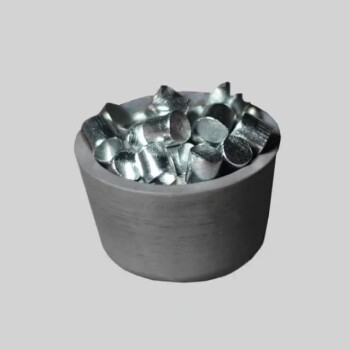
- Electron Beam Evaporation Coating Conductive Boron Nitride Crucible BN Crucible
- Boron Nitride (BN) Crucible for Phosphorous Powder Sintered
- Boron Nitride (BN) Ceramic Plate
- Boron Nitride (BN) Ceramic Rod for High Temperature Applications
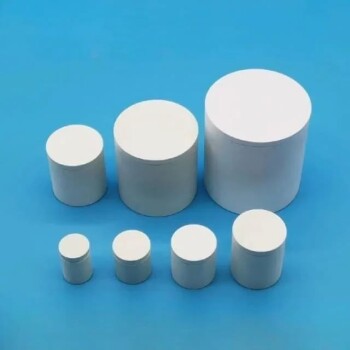
- Engineering Advanced Fine Ceramics Alumina Al2O3 Crucible With Lid Cylindrical Laboratory Crucible
People Also Ask
- Why use Boron Nitride (BN) crucibles in metal infiltration? Ensure sample purity and non-wetting performance.
- Why are Boron Nitride (BN) or Alumina crucibles preferred for Na-flux GaN growth? Optimize Your Crystal Yield
- What is the container that holds the metal source material called in e-beam evaporation? Ensure Purity and Quality in Your Thin-Film Deposition
- What is the process of e-beam coating? Achieve High-Purity, Precise Thin Films for Your Lab
- What materials are used in electron beam evaporation? Master High-Purity Thin Film Deposition