The primary function of a Boron Nitride coating is to serve as a high-temperature barrier between the graphite mold and the material being sintered. In the context of Vacuum Hot Press (VHP) sintering, particularly with reactive materials like AlFeTiCrZnCu high-entropy alloys, this coating is essential to prevent carbon atoms from the mold from diffusing into the sample. Additionally, it acts as a release agent, ensuring the sample does not bond to the mold walls during the process.
Boron Nitride creates a critical separation layer that halts carbon diffusion, preserving the chemical purity of the alloy while ensuring the sample releases cleanly from the mold after high-pressure sintering.
Preserving Material Integrity
Blocking Carbon Diffusion
During the Vacuum Hot Press (VHP) process, materials are subjected to extreme heat and pressure. Under these conditions, carbon atoms from the graphite mold tend to migrate or diffuse into the sample material.
Preventing Chemical Reactions
The Boron Nitride coating acts as an inert shield to stop this migration. By preventing the carbon from reaching the alloy (such as AlFeTiCrZnCu), the coating stops undesirable chemical reactions that would otherwise alter the material's composition.
Minimizing Interfacial Contamination
Direct contact between the graphite and the alloy can lead to contamination at the surface interface. The coating ensures that the alloy maintains its intended purity by physically isolating it from the carbon source.
Operational Efficiency
The Role of a Release Agent
Sintering under high pressure can cause the sample material to mechanically or chemically bond to the mold walls. The Boron Nitride layer functions effectively as a lubricant or release agent.
Simplifying the Demolding Process
Once the sintering cycle is complete, the sample must be removed without damage. The presence of the coating facilitates easy removal, protecting both the finished part and the graphite mold for potential reuse.
Risks of Omission
Compromised Alloy Properties
If the coating is omitted or applied unevenly, the barrier against carbon diffusion fails. This leads to carbon infiltration into the alloy matrix, which can degrade the mechanical and chemical properties of high-entropy alloys.
Component Seizure
Without the release properties of Boron Nitride, the risk of the sample fusing to the mold increases significantly. This often results in damage to the component during extraction or the total loss of the mold.
Making the Right Choice for Your Goal
To ensure the success of your VHP sintering process, apply the coating with specific outcomes in mind:
- If your primary focus is material purity: Apply a consistent Boron Nitride layer to act as an impermeable diffusion barrier, specifically preventing carbon contamination in sensitive alloys.
- If your primary focus is equipment longevity: Use the coating to prevent sample adhesion, ensuring the graphite mold remains undamaged during the demolding phase.
By controlling the interface between the mold and the metal, you ensure both the quality of the alloy and the efficiency of the manufacturing process.
Summary Table:
| Feature | Purpose of Boron Nitride Coating | Benefit to VHP Sintering |
|---|---|---|
| Barrier Layer | Blocks carbon atoms from migrating into the sample | Maintains chemical purity of sensitive alloys |
| Inert Shield | Prevents chemical reactions between mold and alloy | Preserves intended material properties |
| Release Agent | Acts as a high-temperature lubricant | Enables easy demolding without part damage |
| Surface Integrity | Minimizes interfacial contamination | Produces clean, high-quality sintered surfaces |
| Mold Protection | Reduces mechanical bonding and wear | Extends the operational lifespan of graphite molds |
Elevate Your Material Synthesis with KINTEK Precision Solutions
Don't let carbon contamination or mold seizure compromise your research. KINTEK specializes in advanced laboratory equipment, including high-performance vacuum hot presses (VHP), high-temperature furnaces, and precision hydraulic presses (pellet, hot, and isostatic). We provide the comprehensive tools and consumables—from graphite molds to specialized ceramics—needed to achieve superior material integrity in high-entropy alloy and battery research.
Ready to optimize your sintering process? Contact our technical experts today to discover how KINTEK’s tailored solutions can enhance your laboratory’s efficiency and precision.
Related Products
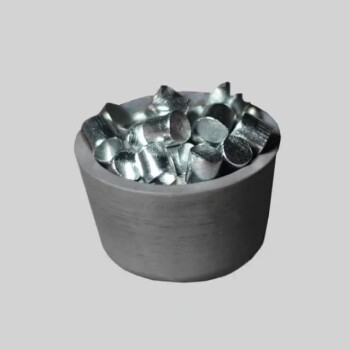
- Electron Beam Evaporation Coating Conductive Boron Nitride Crucible BN Crucible
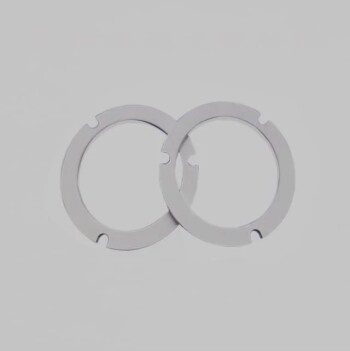
- Hexagonal Boron Nitride HBN Ceramic Ring
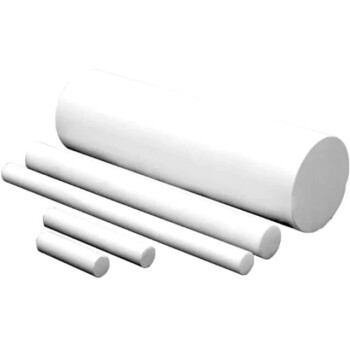
- Boron Nitride (BN) Ceramic Rod for High Temperature Applications
- Conductive Boron Nitride BN Ceramics Composite for Advanced Applications
- Boron Nitride (BN) Ceramic Plate
People Also Ask
- Why use Boron Nitride (BN) crucibles in metal infiltration? Ensure sample purity and non-wetting performance.
- Why are Boron Nitride (BN) or Alumina crucibles preferred for Na-flux GaN growth? Optimize Your Crystal Yield
- What is the container that holds the metal source material called in e-beam evaporation? Ensure Purity and Quality in Your Thin-Film Deposition
- What is the process of e-beam coating? Achieve High-Purity, Precise Thin Films for Your Lab
- What materials are used in electron beam evaporation? Master High-Purity Thin Film Deposition