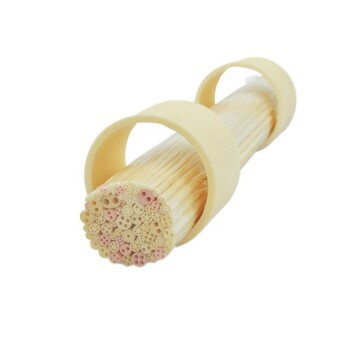
High-purity quartz tubes are required for this application because they provide the necessary chemical inertness and thermal stability to prevent data corruption. When aluminum reacts with water vapor at temperatures up to 1000 °C, the reaction chamber must remain neutral; quartz ensures the tube does not chemically interact with the reactants, protecting the integrity of the aluminum oxidation process.
By utilizing high-purity quartz, you create a sealed, non-reactive environment that isolates the experiment from external contaminants. This ensures that the oxidation products observed on the aluminum surface are the result of the intended reaction with water vapor only, rather than side reactions with the chamber walls or impurities from the heating elements.
Preserving Chemical Integrity
Preventing Wall-Reactant Interference
The primary danger in high-temperature oxidation experiments is the potential for the reaction chamber itself to become a variable. High-purity quartz is chemically inert, meaning it will not react with aluminum specimens or water vapor.
Unlike metal reactors, quartz prevents side reactions between the internal walls and oxidizing gases. This guarantees that any changes measured are derived exclusively from the aluminum samples, providing accurate and reliable data.
Ensuring Purity of Oxidation Products
For the analysis of aluminum oxidation to be valid, the surface products must be pure. Quartz tubes effectively isolate the samples from the furnace's heating elements.
This isolation acts as a barrier against potential contamination that naturally off-gasses from heating elements at high temperatures. By maintaining a sealed atmosphere, the quartz preserves the chemical composition of the final product.
Thermal Stability and Performance
Withstanding Extreme Temperatures
The reaction between aluminum and water vapor requires significant thermal energy. High-purity quartz offers excellent thermal stability, making it suitable for operations up to 1000 °C (and generally suitable up to 1200 °C).
At these temperatures, the material maintains its structural integrity without softening or deforming. This stability is critical for maintaining a consistent reaction volume and pressure profile throughout the experiment.
Cost-Effectiveness and Visibility
Beyond thermal performance, quartz acts as the most cost-effective option for high-temperature reactors compared to specialized high-performance alloys.
Additionally, the transparency of quartz offers a distinct advantage for specific experimental setups. It allows for visual monitoring of the sample placement and physical changes without breaching the sealed atmosphere.
Understanding the Trade-offs
Thermal Cycling Limitations
While quartz is superior for chemical inertness, it is not without physical limitations. A significant drawback is that quartz generally cannot endure as many heating and cooling cycles as ceramic or high-alloy metal alternatives.
Over frequent and rapid temperature changes, quartz is more susceptible to fatigue and potential fracture. It is best suited for applications where chemical purity is prioritized over long-term mechanical durability under cyclic stress.
Making the Right Choice for Your Goal
- If your primary focus is Experimental Accuracy: Choose high-purity quartz to eliminate side reactions and ensure all data reflects only the aluminum-water vapor interaction.
- If your primary focus is Equipment Longevity: Be aware that while quartz is cost-effective, it may require more frequent replacement than metal reactors if your process involves rapid thermal cycling.
High-purity quartz remains the definitive choice for isolating variables in high-temperature oxidation studies.
Summary Table:
| Feature | High-Purity Quartz Tube Benefit |
|---|---|
| Chemical Inertness | Prevents side reactions between walls and reactants |
| Thermal Stability | Maintains structural integrity up to 1000°C - 1200°C |
| Contamination Control | Isolates samples from furnace heating element off-gassing |
| Visibility | Allows visual monitoring of sample and reaction progress |
| Cost-Efficiency | More economical than high-performance alloy reactors |
Elevate Your Research Precision with KINTEK
Don't let impurities compromise your experimental data. KINTEK specializes in premium laboratory equipment, providing high-purity quartz tubes designed for our advanced high-temperature tube furnaces. Whether you are performing aluminum oxidation studies or complex CVD/PECVD processes, our solutions ensure maximum chemical integrity and thermal performance.
From high-temperature reactors and vacuum furnaces to essential consumables like ceramic crucibles and PTFE products, KINTEK supports your lab with reliable, high-quality tools. Contact us today to find the perfect quartz solution for your research!
References
- Lin Huang, Wei Feng. The Mechanism of Oxide Growth on Pure Aluminum in Ultra-High-Temperature Steam. DOI: 10.3390/met12061049
This article is also based on technical information from Kintek Solution Knowledge Base .
Related Products
- 1200℃ Split Tube Furnace with Quartz Tube Laboratory Tubular Furnace
- High Purity Pure Graphite Crucible for Evaporation
- Laboratory Rapid Thermal Processing (RTP) Quartz Tube Furnace
- High Temperature Resistant Optical Quartz Glass Sheet
- High Temperature Alumina (Al2O3) Furnace Tube for Engineering Advanced Fine Ceramics
People Also Ask
- What functions does a laboratory high-temperature tube furnace perform? Master Catalyst Synthesis & Carbonization
- What roles does a high-temperature tube furnace play in the synthesis of N/O co-doped carbon? Master Precise Doping
- Why is a high-temperature tube furnace required for the production of biochar from tobacco straw? Expert Pyrolysis Guide
- How does a high-temperature tube furnace influence 253MA steel? Master Microstructure & High-Temp Creep Resistance
- What are the primary applications of muffle and tube furnaces in photocatalysts? Optimize Metal Loading & Support Synthesis