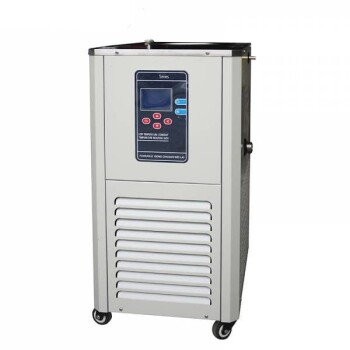
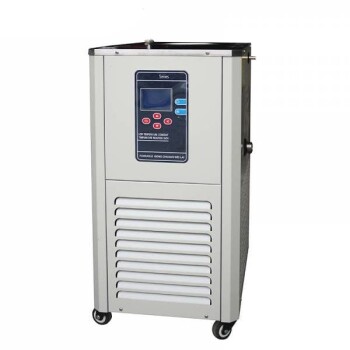
Precise temperature control is mandatory because the formation of Layered Double Hydroxide (LDH) coatings is a sensitive, temperature-driven endothermic reaction. To ensure the coating provides effective protection, the reaction system must be maintained at an exact optimal temperature of 50 °C using a device like a water bath or heating jacket.
The stability of the protective layer relies on a delicate thermodynamic balance. High-precision temperature regulation is the only way to optimize the reaction equilibrium, ensuring the coating is dense and complete while preventing structural defects caused by thermal fluctuations.
The Thermodynamics of Coating Formation
Driving the Endothermic Reaction
The conversion process to create an LDH coating is endothermic, meaning it absorbs heat from its surroundings.
Without a consistent external heat source, the reaction lacks the energy required to proceed effectively.
A high-precision control device ensures that the system receives the exact amount of thermal energy needed to sustain the reaction without interruption.
Optimizing the Equilibrium Constant
The chemical balance of the solution, represented by the equilibrium constant (K), is highly dependent on temperature.
At exactly 50 °C, this constant is optimized.
This specific thermal state promotes the chemical interactions necessary to build the coating's structure, ensuring the reaction proceeds at the ideal rate.
The Impact on Microstructure
Achieving the Honeycomb Architecture
The goal of the LDH conversion process is to create a specific microscopic structure.
Under optimal thermal conditions, the coating forms a complete and dense honeycomb microstructure.
This architecture is essential for the coating's durability and its ability to protect the underlying magnesium alloy.
Understanding the Trade-offs: The Risks of Deviation
The Consequence of Low Temperatures
If the temperature drops below the optimal 50 °C threshold, the reaction lacks sufficient energy.
This results in incomplete crystal growth.
The coating fails to densify, leaving gaps in the protective layer that compromise its effectiveness.
The Danger of Overheating
Conversely, allowing the temperature to rise too high introduces instability.
Excessive heat generates internal stress within the developing coating.
This stress eventually relieves itself through physical damage, leading to coating cracking, which renders the protective layer useless.
Ensuring Process Reliability
To guarantee the quality of your LDH coatings, you must treat temperature as a critical variable, not a general guideline.
- If your primary focus is Coating Density: Maintain the system at exactly 50 °C to optimize the equilibrium constant for a dense, honeycomb microstructure.
- If your primary focus is Defect Prevention: Use high-precision equipment to eliminate thermal fluctuations, thereby avoiding both incomplete growth and stress-induced cracking.
Precision in thermal control is the difference between a high-performance protective shield and a flawed surface.
Summary Table:
| Factor | Condition | Impact on LDH Coating |
|---|---|---|
| Optimal Temperature | Exactly 50 °C | Formation of dense, complete honeycomb microstructure |
| Low Temperature | < 50 °C | Incomplete crystal growth and failure to densify |
| High Temperature | > 50 °C | Internal stress leads to cracking and structural instability |
| Reaction Type | Endothermic | Requires constant external heat to maintain equilibrium |
Elevate Your Material Research with KINTEK Precision
Achieving the perfect honeycomb microstructure in LDH coatings requires more than just heat—it requires unwavering thermal stability. KINTEK specializes in high-performance laboratory equipment designed for the most sensitive chemical syntheses.
Whether you are developing advanced coatings for magnesium alloys or conducting complex material characterization, our range of high-temperature high-pressure reactors, water baths, and cooling solutions ensures your reaction environment remains at the exact threshold for success.
Our value to you:
- Precision Control: Eliminate thermal fluctuations that cause coating cracks or incomplete growth.
- Comprehensive Range: From high-temperature furnaces and reactors to specialized consumables like PTFE products and crucibles.
- Expert Reliability: Trusted by researchers for battery tools, crushing systems, and hydraulic presses.
Don't let temperature deviations compromise your results. Contact KINTEK today to find the perfect thermal control solution for your lab!
References
- Xiaochen Zhang, Fuhui Wang. Effect of Temperature on Corrosion Resistance of Layered Double Hydroxides Conversion Coatings on Magnesium Alloys Based on a Closed-Cycle System. DOI: 10.3390/met11101658
This article is also based on technical information from Kintek Solution Knowledge Base .
Related Products
- Laboratory Small Constant Temperature Heated Magnetic Stirrer Heater and Stirrer
- High Temperature Constant Temperature Heating Circulator Water Bath Chiller Circulator for Reaction Bath
- 5L Heating Chilling Circulator Cooling Water Bath Circulator for High and Low Temperature Constant Temperature Reaction
- 100L Heating Chilling Circulator Cooling Water Bath Circulator for High and Low Temperature Constant Temperature Reaction
- 20L Heating Chilling Circulator Cooling Water Bath Circulator for High and Low Temperature Constant Temperature Reaction
People Also Ask
- What role does a magnetic stirrer with heating play in ZnO nanoparticle synthesis? Precision Control for Quality Results
- What role does a constant temperature heating magnetic stirrer play in MFC-HAp synthesis? Achieve Material Homogeneity
- What is the function of a laboratory magnetic stirrer in Ni–Cr–P electrodeposition? Optimize Ion Transport & Coating
- Why is a laboratory magnetic stirrer required for benzoic acid esters? Boost Reaction Speed & Yield with High RPM
- What role does a laboratory magnetic stirrer play in TiO2 and TiO2-Ag sol preparation? Master Chemical Kinetics