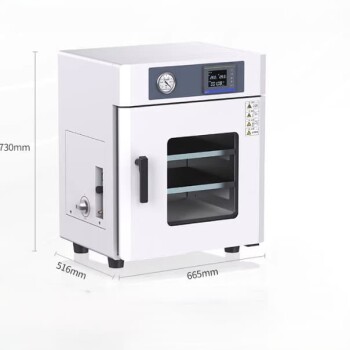
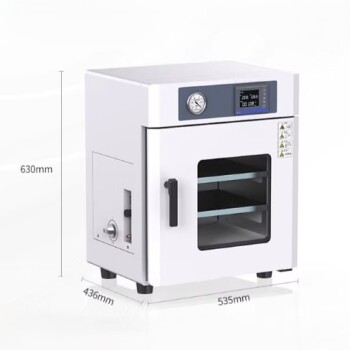
The use of a precision drying oven is a critical preparatory step for glass-ceramic green bodies to ensure the survival of the coating during subsequent high-temperature processing. This controlled environment allows moisture within the coating to sublimate and evaporate at a steady, manageable rate, rather than exploding out of the material.
The primary function of this process is to decouple moisture removal from the high-heat sintering phase. If moisture escapes too rapidly from an unhardened ceramic layer, it destroys the structural integrity of the component before it has a chance to harden.
The Mechanics of Controlled Drying
Uniform Heating Environments
To protect the green body, the drying environment must be free of thermal gradients.
A precision drying oven provides a slow and uniform heat distribution. This ensures that every part of the ceramic layer reaches the necessary temperature simultaneously, preventing localized stress.
Steady Moisture Release
The goal of this phase is not just to remove moisture, but to remove it slowly.
The oven allows moisture to sublimate and evaporate steadily. By controlling the rate of evaporation, the internal pressure within the ceramic body remains low and manageable.
Preventing Structural Defects
Avoiding Cracks
When moisture leaves a green body too quickly, the material shrinks unevenly and rapidly.
This rapid volume change induces stress in the unhardened ceramic layer. Controlled drying mitigates this, effectively preventing the cracks that occur when the surface dries faster than the interior.
Eliminating Bubbling
Moisture trapped inside the coating will turn to gas as temperatures rise.
In a high-speed or uncontrolled environment, this gas expands violently, causing bubbling within the layer. Precision drying ensures these volatiles exit the material gently, leaving a smooth, dense structure ready for sintering.
Understanding the Trade-offs
Process Time vs. Yield
The main trade-off in using a precision drying oven is the investment of time.
Controlled drying is inherently slower than rapid or flash drying methods. However, attempting to accelerate this stage introduces a high risk of "infant mortality" for the parts, leading to wasted materials and lower overall yield.
The Cost of Rushing
It is important to recognize that defects created during the drying phase are often permanent.
Once a green body has cracked or bubbled, the subsequent sintering process cannot heal these flaws. Therefore, the time spent in the drying oven is a non-negotiable insurance policy against total part failure.
Making the Right Choice for Your Goal
To ensure your glass-ceramic components meet their performance requirements, consider the following regarding the drying process:
- If your primary focus is Structural Integrity: distinct priority must be given to the "slow and uniform" capabilities of the oven to prevent microscopic stress fractures.
- If your primary focus is Surface Finish: ensure the drying cycle is long enough to fully evaporate moisture, as any residual volatiles will cause visible bubbling during sintering.
Investing in a precise, controlled drying phase is the only way to guarantee the unhardened ceramic layer survives the transition to a finished, sintered product.
Summary Table:
| Feature | Precision Drying | Rapid/Uncontrolled Drying |
|---|---|---|
| Moisture Removal | Steady sublimation & evaporation | Explosive gas expansion |
| Heat Distribution | Uniform, no thermal gradients | Localized hot spots |
| Structural Outcome | Smooth, dense, crack-free surface | Cracking, bubbling, and warping |
| Process Impact | Higher yield and part reliability | High risk of material waste |
| Primary Function | Decouples drying from sintering | Rushed phase leading to failure |
Maximize Your Material Yield with KINTEK Precision Solutions
Don't let moisture compromise your glass-ceramic research. KINTEK specializes in high-performance laboratory equipment designed to protect your most delicate green bodies. From precision drying ovens that ensure uniform moisture removal to advanced muffle, vacuum, and CVD furnaces for the final sintering stage, we provide the end-to-end thermal solutions your lab requires.
Our extensive portfolio also includes crushing and milling systems, isostatic presses for green body preparation, and a full range of high-temperature ceramics and crucibles.
Ready to eliminate structural defects and achieve superior surface finishes? Contact KINTEK today to find the perfect equipment for your workflow!
References
- Rosalina Pérez, Petra Honnerová. Thermal behaviour of vitreous ceramic coatings obtained by electrophoretic deposition for furnace components. DOI: 10.1016/j.ceramint.2020.04.219
This article is also based on technical information from Kintek Solution Knowledge Base .
Related Products
- Laboratory Scientific Electric Heating Blast Drying Oven
- 56L Vertical Laboratory Vacuum Drying Oven
- 23L Laboratory Vacuum Drying Oven
- Benchtop Laboratory Vacuum Freeze Dryer
- High Temperature Muffle Oven Furnace for Laboratory Debinding and Pre Sintering
People Also Ask
- How does a laboratory electric drying oven contribute to the formation of the initial coating? Expert Insights
- What role does a precision laboratory drying oven play in the synthesis of GO-PANI nanocomposites? Protect Material Integrity
- What role does a laboratory drying oven play in the preparation of zinc oxide nanoparticle precursors?
- What is the necessity of using a laboratory drying oven when processing MoO3/GO composite nanopowders? Find out here.
- What is the role of a laboratory drying oven in cellulose citrate production? Ensure Material Stability & Purity