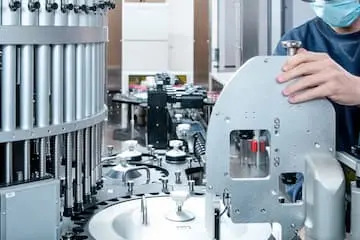
Controlled atmosphere furnace is well known as inert atmosphere and reducing atmosphere furnace, it is widely used in both laboratory and industry application. Controlled atmosphere furnace means the furnace can heat the material under the controlled flow and pressure of the target gases environment, like inert gas of nitrogen, and argon, reducing gas of hydrogen; Usually the controlled atmosphere furnace is well vacuum sealed, so as to ensure the purity of the target atmosphere gas, gases flow rate and pressure is also regulated with the atmosphere furnace.
Toggle Categories
Get Instant Support
Choose your preferred way to connect with our team
-
Get Free Quote Fill out form for detailed pricing
-
Send Email Detailed inquiry support
-
WhatsApp Quick mobile chat
Response Time
Within 8 hours on working days, 24 hours on holidays
Atmosphere Furnace
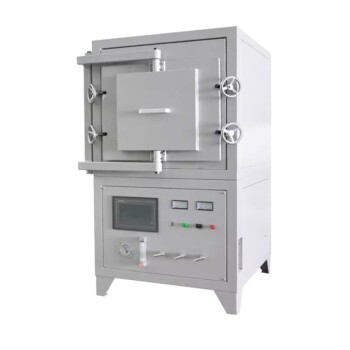
1200℃ Controlled Atmosphere Furnace Nitrogen Inert Atmosphere Furnace
Item Number : KT-12A

1400℃ Controlled Atmosphere Furnace with Nitrogen and Inert Atmosphere
Item Number : KT-14A

1700℃ Controlled Atmosphere Furnace Nitrogen Inert Atmosphere Furnace
Item Number : KT-17A

Controlled Nitrogen Inert Hydrogen Atmosphere Furnace
Item Number : KT-16AH

Mesh belt controlled atmosphere furnace
Item Number : KT-MB
Benefits of controlled atmosphere furnaces
The controlled atmosphere furnace boasts excellent sealing performance, enabling a positive pressured atmosphere environment. The inert gases supply system controls gas flow rate and pressure inside the furnace, unlike open air furnaces.
In comparison to vacuum furnaces, controlled atmosphere furnaces are more economical and versatile, with limitless capacity for continuous industrial operations. They include controlled atmosphere mesh belt and rotary kiln furnaces.
Controlled atmosphere accessories
Controlled atmosphere furnace accessories are the consuming parts with daily operation, like vacuum pump oil, resistant heating wires, SiC heaters, MoSi2 heaters, insulation chambers, furnace crucibles, furnace thermal controllers, temperature sensors , etc.
KinTek - one professional of Controlled atmosphere furnace suppliers
KinTek's Controlled Atmosphere Furnace offers a broad temperature range. The KT-12A series employs Cr2Al2Mo2 wire coil heating elements for temperatures up to 1200℃.
For temperatures up to 1400℃, the KT-14A series features silicon carbide heating elements, while the KT-17A series utilizes standard MoSi2 heating elements for temperatures up to 1700℃.
With varying heating elements, KinTek's Controlled Atmosphere Furnaces can operate at a wide range of temperatures, from 1200℃ to 1700℃.
FAQ
What Is A Atmospheric Furnace?
An atmospheric furnace is a type of laboratory equipment that provides a controlled environment for various procedures. It is designed to maintain a specific temperature and atmosphere, which is essential for completing tasks that require precision and accuracy. The furnace is sealed tightly to ensure the proper environment, and the mixture of gases used is precisely measured to achieve the desired results. This type of furnace is commonly used for bonding, curing, and heat treating of samples that are prone to oxidation in an inert atmosphere.
What Is The Use Of Atmosphere Furnace?
An atmosphere furnace is used in laboratories to provide a controlled environment for various processes. The furnace allows for precise temperature and atmospheric control, which is critical for procedures that require exact temperatures. The furnace is sealed tightly to ensure the proper environment for the project. The atmosphere furnace's main component is the correct mixture of gases, which is essential to the success of the project. The atmosphere furnace plays a vital role in the success of the heat-treating process. It is used to protect the material being processed or to allow the surface of the material being processed to change.
How Does An Atmosphere Furnace Work?
An atmosphere furnace works by heating materials or components in a controlled environment to achieve specific heat treatment or processing objectives. The furnace chamber is designed to accommodate the desired materials and can be sealed to maintain the selected atmosphere. The atmosphere is typically controlled by introducing specific gases or gas mixtures into the chamber, either continuously or intermittently, to create the desired environment. The furnace is equipped with heating elements, insulation, and temperature control systems to achieve and maintain the desired temperature. The materials or components are placed within the furnace chamber, and the furnace is heated to the desired temperature and held for the required duration to achieve the desired heat treatment or processing effect.
What Are The Advantages Of Using Atmosphere Furnaces?
Atmosphere furnaces offer several advantages for heat treatment and processing applications. The controlled atmosphere within the furnace allows for precise control over the material's surface chemistry and microstructure, resulting in improved mechanical properties or desired surface characteristics. The ability to create specific atmospheres, such as oxidizing, reducing, or inert, provides flexibility in achieving different heat treatment objectives. Atmosphere furnaces enable the processing of a wide range of materials, including metals, alloys, ceramics, and composites, allowing for diverse applications across various industries. The controlled environment within the furnace also helps prevent oxidation or decarburization of the materials during heating, ensuring consistent and reliable results. Additionally, atmosphere furnaces can be equipped with advanced temperature control and automation systems, enhancing process repeatability, efficiency, and productivity.
What Factors Should Be Considered When Selecting An Atmosphere Furnace?
Several factors should be considered when selecting an atmosphere furnace. The desired temperature range and heating rate capability of the furnace should match the requirements of the heat treatment or processing application. The furnace size and capacity should be suitable for the size and quantity of materials or components to be processed. The control and monitoring features, such as temperature control accuracy, gas flow control, and data logging capabilities, should be evaluated to ensure precise and reliable operation. The compatibility of the furnace design with the desired atmosphere and gas handling requirements should also be taken into account. Other factors to consider include safety features, maintenance requirements, and cost. It is advisable to consult with furnace manufacturers or industry experts to select the most suitable atmosphere furnace for specific application needs.
REQUEST A QUOTE
Our professional team will reply to you within one business day. Please feel free to contact us!
Related Articles

The Engineering of Nothingness: Why Vacuum Furnaces Define Material Integrity
Discover why the absence of air is the key to metallurgical perfection. We explore the physics, the trade-offs, and the precision of vacuum heat treatment.
Read more
It’s Not the Heat, It’s the Atmosphere: Why Your Furnace Is Ruining Your Samples
Discover the real reason your high-temperature materials fail. It's not the heat, but the air itself. Learn how to fix it for good.
Read more
The Architecture of Isolation: Anatomy of a Tube Furnace
Explore the layered engineering of a tube furnace. From alumina insulation to quartz reactors, understand how this "thermal sleeve" achieves precise isolation.
Read more
The Architecture of Emptiness: Controlling Pressure in Vacuum Furnaces
Precision in vacuum furnaces isn't about heat—it's about the absence of air. Explore how controlling pressure ranges defines material integrity.
Read more
Why Your Ashing Tests Fail: The Hidden Difference Between Muffle and Ashing Furnaces
Frustrated by inconsistent ashing results? Discover the critical difference (it's not temperature) and how the right furnace ensures accuracy.
Read more
The Geometry of Heat: A Choice Between Control and Capacity
Discover the critical engineering differences between tube and muffle furnaces. Learn why atmosphere control and geometry dictate your laboratory success.
Read more
The Architecture of Isolation: Why Control Beats Volume in Material Science
Discover why the tube furnace is the engineer's choice for precision. We explore the critical role of atmospheric isolation and thermal uniformity in advanced material synthesis.
Read more
Beyond the Scale: Why Your Furnace Is Ruining Your Parts—And the Simple Fix
Tired of oxidized, inconsistent heat-treated parts? Discover why the air in your furnace is the real problem and how a vacuum furnace provides the definitive solution.
Read more
The Silent Boundary: Engineering the Heart of the Tube Furnace
The furnace tube is not just a component; it is the limit of your experiment. A deep dive into Quartz, Alumina, and Metal selection strategies.
Read more
The Architecture of Heat: Inside the Precision of Laboratory Tube Furnaces
Explore the engineering behind tube furnaces, from the feedback loops of thermocouples to thermal uniformity, and why precision is an active process.
Read more
The Hidden Enemy in Your Furnace: Why Your Heat-Treated Parts Have Scale and Discoloration—And How to Fix It for Good
Frustrated with oxidized, inconsistent results from your furnace? Discover why air, not heat, is the real culprit and how to solve it permanently.
Read more
The Architecture of Nothingness: Mastering Heat in a Vacuum
Heat transforms materials, but air corrupts them. Discover how vacuum furnaces utilize low-pressure environments to ensure purity in brazing and sintering.
Read more
Why Your High-Temperature Experiments Fail: The Furnace Flaw Most Labs Overlook
Struggling with cracked parts or inconsistent material properties? Discover the hidden furnace flaws, like poor thermal uniformity, that cause failures and how to solve them for good.
Read more
The Geometry of Heat: Deciding Between Capacity and Control in Lab Furnaces
Choosing between a muffle furnace and a tube furnace isn't just about temperature—it is a choice between sample volume and atmospheric precision.
Read more
Why Your Brazed Joints Keep Failing: The Invisible Saboteur in Your Furnace
Struggling with inconsistent brazed joints? Discover the invisible culprit in your furnace—the atmosphere—and learn how to fix it for good.
Read more
The Architecture of Heat: Aligning Engineering Precision with Laboratory Reality
Choosing a tube furnace is not about finding the "best" model, but matching specifications—temperature, zones, and atmosphere—to your scientific reality.
Read more
The Silent Saboteur in Your Furnace: Why Your Heat Treatment Fails and How to Fix It
Tired of inconsistent heat treatment results? Discover the real reason your parts fail and learn how to gain control by mastering your furnace atmosphere.
Read more
Why Your High-Temperature Processes Fail: The Hidden Enemy in Your Vacuum Furnace
Frustrated by inconsistent vacuum furnace results? Discover the real cause of failures and how to fix it by ensuring true vacuum integrity.
Read more
The Geometry of Heat: Why the Split Tube Furnace is an Engineer’s Best Ally
When standard tunnels fail complex geometries, the split tube furnace offers a solution. Discover how hinged designs enable advanced R&D and safer thermal processing.
Read more
Why Your High-Temperature Furnace Failed—And How to Prevent It From Happening Again
Discover the hidden reason behind premature furnace failure. It's not poor quality, but a critical chemistry mismatch. Learn how to choose the right furnace.
Read more