Introduction
Table of Contents
Welcome to our comprehensive guide on pressing powder samples and molding polymer films. In this blog post, we will explore the techniques and factors involved in creating solid materials from powders and producing thin films for various analytical purposes. Whether you are a scientist, researcher, or industry professional, understanding the pressing and molding processes is crucial for accurate and reliable results. So, let's dive in and discover the fascinating world of powder pressing and film molding!
The Purpose of Pressing Powder Samples
Need for creating a solid material from powder
Pressing powder samples is done to create a solid material that remains intact even after the load is removed. This process involves pushing the powder grains closer together, closing the gaps between them and forcing them to flow and rearrange themselves into a more compact arrangement. As the available volume reduces, the flow of particles stops, and they undergo plastic and elastic deformations that result in bonding between the grains.

Mechanism of powder grain rearrangement and bonding under load
When a mixed sample and KBr powder are compressed inside a die using a hydraulic press, an evenly distributed pressure is applied, resulting in the formation of a solid pellet. This pellet is mostly transparent to infrared light and can be used for spectroscopic analysis. Similarly, in XRF spectroscopy, a hydraulic press is used to compact the sample between two pressure plates at high pressure, ensuring the sample is fully compacted and ready for analysis.
Pressing powder into pellets offers a more rigorous sample preparation method compared to pouring loose powders into a sample cup. The process involves grinding the sample into a fine powder, mixing it with a binding/grinding aid, and then pressing the mixture in a die at high pressure to produce a homogeneous sample pellet. This binding/grinding aid, usually a cellulose wax mixture, is added in a proportion of 20%-30% binder to sample.
The choice of press for pressing powder samples depends on factors like the maximum working pressure and the press die. Automatic presses are preferred over manual presses due to their time-saving and consistent sample conditions. The maximum pressure of the press should generally be no less than 30 tonnes, and there are various options available for press sample moulds.
Overall, pressing powder samples plays a crucial role in creating solid materials for various analytical techniques, ensuring the integrity and consistency of the samples throughout the analysis process.
Factors Influencing the Load Required for Bonding
Influence of material hardness
The hardness of the materials being bonded plays a significant role in determining the load required for bonding. Hard and brittle materials tend to have a harder time binding to each other compared to softer materials. The harder the materials, the higher the load required to achieve a fully bonded pellet. It is important to consider the hardness of the materials when determining the appropriate load for bonding.
Role of powder flow in the die
The flowability of the powder in the die also affects the load required for bonding. Powders that do not flow easily in the die will make it more difficult to achieve proper bonding. When the powder cannot achieve sufficient packing in the die, adhesion between the particles is compromised. This results in the need for higher pressure to achieve bonding. It is crucial to ensure that the powder has good flowability to facilitate bonding and minimize the load required.
Impact of moisture content, particle size, and distribution on required pressure
Moisture content, particle size, and distribution of the materials being bonded can also influence the load required for bonding. Higher moisture content can affect the flowability of the powder and make it more challenging to achieve proper bonding. Particle size and distribution play a role in determining the required pressure as well. Powders with a larger particle size distribution may not require as high of a pressure as fines, as a lower air velocity can be used to minimize entrainment. It is important to consider these factors when determining the appropriate load for bonding.
In summary, the load required for bonding depends on various factors. The hardness of the materials, the flowability of the powder, and the moisture content, particle size, and distribution all contribute to the load required for achieving proper bonding. By considering these factors, one can determine the appropriate load for bonding and ensure successful sample preparation.
Pressing Pellets for Different Analytical Techniques
Requirements for pressing KBr pellets for FT-IR
When using FT-IR spectroscopy, pressing KBr pellets is a common method of sample preparation. This involves compressing a mixture of KBr powder and the sample inside a die using a hydraulic press. The uniform force applied by the press creates a solid pellet that is mostly transparent to infrared light. The pellet contains a dilute quantity of the sample, which falls within the detection range of the FT-IR instrument. This process can be completed in just a few minutes with the right press.

Specifications and challenges in pressing pellets for XRF analysis of geological and pharmaceutical samples
XRF spectroscopy is an analytical technique used to determine the elemental composition of materials. Pressed pellets are commonly used in XRF analysis as they help maintain the integrity of the sample throughout the process. By squeezing the sample between two pressure plates at high pressure, a hydraulic press ensures that the sample is completely compacted and ready for analysis. This method is particularly popular due to its ability to produce high-quality results quickly and at a low cost. It also allows for simple and cost-effective automation in high-throughput laboratories.
Considerations in pressing food and plant-based materials
Pressing powder into pellets is a more rigorous sample preparation method compared to pouring loose powders into a sample cup. This approach is commonly used for studying composite materials, including food and plant-based materials. The process involves grinding the sample into a fine powder, ideally with a grain size of less than 75um. The powder is then mixed with a binding/grinding aid, usually a cellulose wax mixture, and pressed in a die at a pressure of 20-30T to produce a homogeneous sample pellet. Pressed pellets offer higher quality results and are suitable for various analytical techniques.
How to Press XRF Pellets Using a KinTek Automatic Hydraulic Press: 7 easy steps.
If you're new to XRF pellet pressing, don't worry! We'll guide you through the process of pressing XRF pellets using a Kin-Tech automatic hydraulic press. XRF pellet pressing is crucial in industries like mining, geology, and metallurgy, where chemical analysis is essential. XRF pellets are made by pressing powdered samples into small, flat discs for XRF analysis. This non-destructive method helps identify the elements present in a sample. Pressing XRF pellets ensures accurate and reliable results for XRF analysis.
In summary, pressing pellets using a hydraulic press is a common and effective sample preparation technique for various analytical techniques. Whether it's pressing KBr pellets for FT-IR analysis, preparing pellets for XRF analysis, or pressing food and plant-based materials, the process involves compressing the sample with a binding agent to create solid and uniform pellets. This method ensures accurate and reliable results in chemical analysis.

Molding Polymer Films
Need for thin films in polymer analysis
In addition to their applied interest, thin films play an important role in the development and study of materials with new and unique properties. Analysis of polymers using spectroscopic techniques often requires a thin film to be produced. This can be achieved with heat and pressure using a heated platen and a film-making mold to set the thickness exactly.
To achieve this, the plastic needs to be melted so that it can flow within the mold and then just a small amount of pressure is needed to squeeze it into shape. The film maker equipment is usually rated to around 2 tonnes, but only 1 tonne or less is usually needed.
Process of film production using heat, pressure, and a film-making mold
Molding polymer films with a film maker involves the process of producing thin films with heat, pressure, and a film-making mold. The plastic is melted so that it can flow within the mold, and then a small amount of pressure is applied to squeeze it into shape. The film maker equipment typically uses a heated platen and is capable of applying up to 2 tonnes of pressure, although usually only 1 tonne or less is needed.
The pressure on the sample can be controlled not only via the load, but also by reducing the size of the sample. This allows for precise control over the compaction pressure, which is important in research applications.

Applications of thin polymer films
Polymer thin films have a wide range of applications in various industries. Some notable applications include:
-
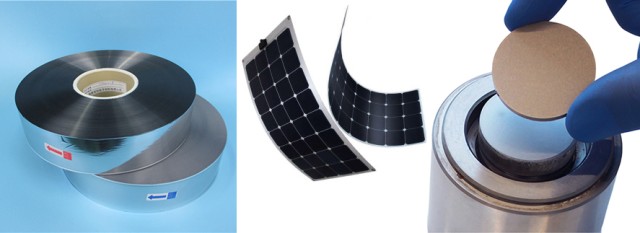
Thin-Film Battery: Thin films have greatly contributed to the advancement of rechargeable batteries, such as lithium-ion batteries. They are also used in the powering of implantable medical devices in the healthcare sector.
-
Thin-Film Coating: Thin-film coatings are used in several industries and technological fields to enhance the chemical and mechanical characteristics of target materials. Examples include anti-reflective coatings, anti-ultraviolet or anti-infrared coatings, anti-scratch coatings, and lens polarization.
-
Thin-Film Solar Cells: Thin-film solar cells utilize the pressurized molding process to create a compact shape that improves their strength and other properties. These solar cells are used in the production of memory chips, solar cells, and electronic devices.
-
Material Testing: Hydraulic presses are commonly used to create test substances for material testing. This helps to analyze the material's performance during the manufacturing process. For example, in high-volume packaging production processes like flexographic printing, it is crucial to test how materials will perform to avoid ruining the print run.
-
Metallized Polymer Films: Metallized polymer films are polymer films coated with a thin layer of metal, usually aluminum. These films have a shiny, metallic appearance similar to aluminum foil but are lighter and cheaper. They are commonly used for decorative purposes and packaging food products.
Overall, molding polymer films using heat, pressure, and a film-making mold is a crucial process in various industries for creating thin films with precise thickness and properties. These thin films find applications in battery technology, coatings, solar cells, material testing, and packaging.

Understanding the Pressure on the Sample
Difference between compaction pressure and load
When pressing samples to create pellets for analysis, it is important to understand the difference between compaction pressure and load. Compaction pressure refers to the pressure applied to the sample during the pressing process, while load refers to the force applied to the press. The compaction pressure needs to be sufficient for the binder to recrystallize and for the sample to be completely compressed. Most samples require pressing under 25-35T of pressure for 1-2 minutes to ensure no void spaces are present in the pellet.
Role of sample size in controlling compaction pressure
In research applications, the compaction pressure can be controlled not only by the load but also by reducing the size of the sample. By reducing the size of the sample, the pressure can be increased, resulting in a more compact pellet. This is particularly important when analyzing materials with hard and brittle characteristics, as they require higher pressures to achieve full compaction.
Trade-off between required pellet size and achievable compaction pressure
The thickness of pressed pellets is crucial for effective analysis. If a sample is too thick, X-rays will not be able to penetrate it sufficiently for analysis. Therefore, the sample must be thin enough for the X-rays to reach the detector. Additionally, certain materials, such as food and plant-based materials containing oils, may dissociate and seep out under high pressure. To prevent this, these materials should be pressed at lower tonnages, typically 4 tonnes or less.
It is also important to consider the trade-off between the required pellet size and the achievable compaction pressure. Smaller pellets allow for higher compaction pressures, resulting in more compact and uniform samples. However, larger pellets may be required for certain analysis techniques or instruments. The choice of pellet size should be based on the specific requirements of the analysis.
Particle Size
One of the key aspects of preparing pressed pellets is ensuring that the sample is ground to a particle size of <75µm, with <50µm being ideal. The particle size has a significant impact on the compression and binding of the sample when pressed. Smaller particle sizes result in better analytical results and minimize sample heterogeneities. Larger or variable particle sizes can lead to inconsistencies in the sample, affecting the accuracy of the analysis. It is recommended to use a ring and puck pulverizing mill for grinding the sample to the desired particle size.
Lab tablet presses

There are automatic and manual sample presses available for pressing pellets. Manual presses are time-consuming and labor-intensive, and are rarely used in factories. Automatic presses are increasingly preferred as they can be preset for pressure and holding time, ensuring consistent pressed sample conditions. When choosing a press, consider the maximum working pressure and the press die. The maximum pressure of the press should generally be no less than 30 tonnes to allow for a certain margin. Press sample molds are available in various materials, such as plastic rings, boric acid, low-pressure polyethylene powder, and steel rings.
Powder Compaction for Composite Material Study
The load required to achieve a fully bonded pellet depends on the materials involved. Hard and brittle materials may have a harder time binding to each other, requiring higher pressures for compaction. Powders that do not flow easily in the die can also make it more difficult to achieve proper compaction. Factors such as moisture content, particle size and distribution, and overall homogeneity of the materials can affect the required pressure for compaction.
For example, when pressing KBr pellets for FT-IR analysis, a load of 10 tonnes applied through a 13 mm diameter pellet die is usually more than adequate. This is considered a general guideline for KBr pellet making. It is important to ensure that the KBr salt and analysis material are well mixed without absorbing too much moisture.

Understanding the pressure on the sample is crucial for obtaining accurate and reliable analytical results. By considering factors such as compaction pressure, sample size, and particle size, you can optimize the pressing process and achieve high-quality pellets for analysis.
Conclusion
In conclusion, pressing powder samples and molding polymer films are crucial techniques in various analytical processes. By creating solid materials from powders, we can analyze their properties more effectively. Factors such as material hardness, powder flow, moisture content, particle size, and distribution all influence the load required for bonding. Pressing pellets for different analytical techniques, such as FT-IR and XRF analysis, have specific requirements and challenges. Similarly, molding polymer films allows for the production of thin films for polymer analysis. Understanding the pressure on the sample, including compaction pressure and load, is essential for achieving accurate results. These techniques contribute significantly to the field of material analysis and research.
Related Products
- Automatic High Temperature Heated Hydraulic Press Machine with Heated Plates for Lab
- Heated Hydraulic Press Machine with Heated Plates for Vacuum Box Laboratory Hot Press
- Manual High Temperature Heated Hydraulic Press Machine with Heated Plates for Lab
- 24T 30T 60T Heated Hydraulic Press Machine with Heated Plates for Laboratory Hot Press
- Laboratory Hydraulic Press Split Electric Lab Pellet Press
Related Articles
- Hydraulic Hot Press: Principles, Components, Features, Advantages, and Applications
- Choosing the Right Press for Your Laboratory Needs
- Comprehensive Guide to Hydraulic Hot Press: Function, Features and Applications
- Unveiling the World of Heated Lab Presses: A Comprehensive Guide
- What is lab hydraulic press



















