Blog The Ceramic Paradox: Why the Best Way to Clean an Alumina Tube is Not to Clean It
The Ceramic Paradox: Why the Best Way to Clean an Alumina Tube is Not to Clean It

The Ceramic Paradox: Why the Best Way to Clean an Alumina Tube is Not to Clean It

1 day ago

The Psychology of Maintenance

In the laboratory, we often treat maintenance as a chore—a tax we pay for doing the real work. But there is a deeper reality to materials science: the state of your equipment is a direct reflection of the discipline of your process.

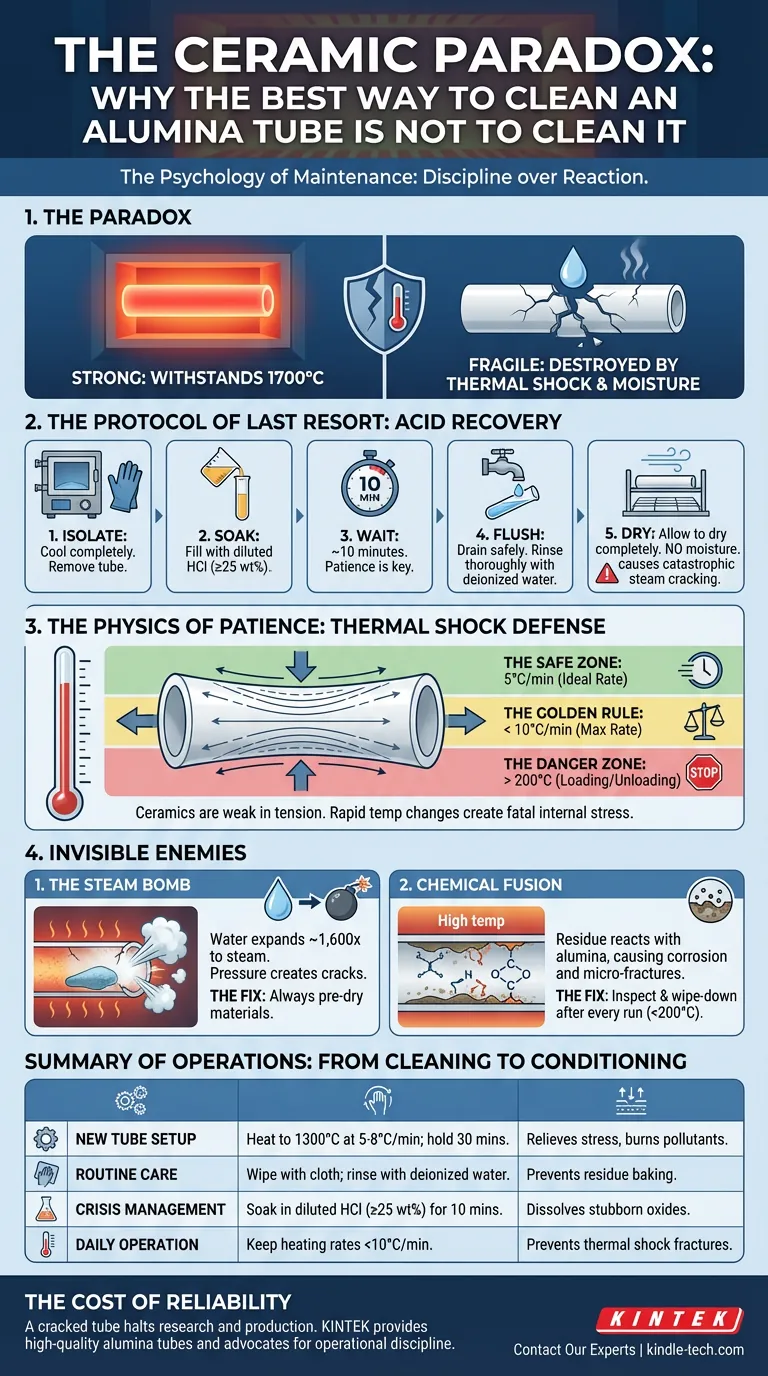
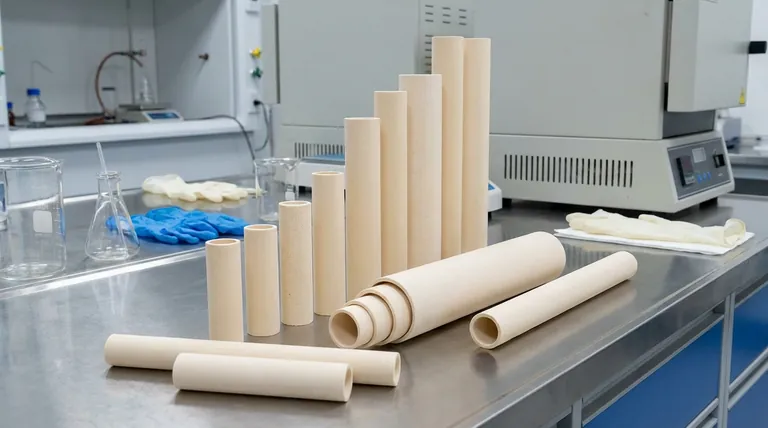
An alumina tube is an engineering paradox. It is capable of withstanding 1700°C, yet it can be destroyed by a drop of cold water or a wet sample.

When researchers ask, "How do I clean my alumina tube?", they are often asking the wrong question. They are looking for a reactive solution to a process failure. While chemical cleaning is sometimes necessary, the true engineering challenge is not removing the residue. It is preventing the conditions that allowed the residue to fuse with the ceramic in the first place.

Here is how to manage the lifecycle of your furnace tube, from the protocol of last resort to the art of prevention.

The Protocol of Last Resort: Acid Recovery

If you are reading this because your tube is already heavily contaminated, you are past the point of routine maintenance. You are now in a recovery operation.

When significant residue remains baked onto the tube walls, physical wiping is insufficient. You must use chemistry to reset the system.

The Acid Wash Procedure

This process uses Hydrochloric Acid (HCl) to dissolve metallic oxides without aggressively attacking the alumina structure. Treat this as surgery, not a daily wash.

  1. Isolate the Component: Ensure the furnace is completely cool. Remove the tube and place it on a chemically resistant surface.
  2. The Soak: Fill the tube with diluted hydrochloric acid (≥25 wt%).
  3. The Wait: Let it soak for approximately 10 minutes. Patience is key here; let the chemistry do the work.
  4. The Flush: Drain the acid safely. Rinse the interior thoroughly with deionized water. You must remove all traces of acid.
  5. The Dry: Allow the tube to dry completely. Reheating a wet tube will generate steam pressure that causes catastrophic cracking.

The Physics of Patience

The single greatest threat to your alumina tube is not dirt. It is Thermal Shock.

Ceramics are strong in compression but weak in tension. When a tube heats up or cools down too quickly, the temperature gradient creates internal stress. If the expansion of the inner wall outpaces the outer wall, the material snaps.

Physics does not negotiate. To preserve your equipment, you must adopt a philosophy of slowness.

  • The Golden Rule: Never exceed a heating or cooling rate of 10°C per minute.
  • The Safe Zone: A conservative rate of 5°C per minute is the hallmark of a careful operator.
  • The Danger Zone: Never load or unload samples when the furnace is above 200°C.

The Invisible Enemies

Beyond heat, two factors silently degrade your equipment: Moisture and Chemistry.

1. The Steam Bomb

Water expands roughly 1,600 times when it turns to steam. If you place a sample with high moisture content or crystal water into a sealed, hot environment, you are essentially creating a pressure bomb inside a ceramic vessel.

** The Fix:** Always pre-dry materials. If your sample holds water, the furnace is not the place to remove it.

2. Chemical Fusion

Residue is not passive. At high temperatures, left-over sample material can react with the alumina, creating new compounds. This is chemical corrosion. It etches the tube walls, creating micro-fractures that weaken the structural integrity over time.

The Fix: Inspect the tube after every run (once cooled below 200°C). A simple wipe-down prevents today's residue from becoming tomorrow's permanent corrosion.

Summary of Operations

To ensure longevity, move your focus from "cleaning" to "conditioning."

Operational Phase Action Required The "Why"
New Tube Setup Heat to 1300°C at 5-8°C/min; hold 30 mins. Relieves manufacturing stress and burns off pollutants.
Routine Care Wipe with cloth; rinse with deionized water. Prevents residue from baking into the ceramic.
Crisis Management Soak in diluted HCl (≥25 wt%) for 10 mins. Dissolves stubborn metallic oxides.
Daily Operation Keep heating rates <10°C/min. Prevents thermal shock and stress fractures.

The Cost of Reliability

A cracked tube stops research. It halts production. It costs time, which is often more expensive than the hardware itself.

At KINTEK, we understand that a furnace is only as reliable as the consumables inside it. We provide high-quality alumina tubes designed to withstand rigorous laboratory environments, but we also advocate for the operational discipline that makes them last.

Whether you need a replacement tube or advice on optimizing your thermal process, our engineering team is ready to assist.

Contact Our Experts

Visual Guide

The Ceramic Paradox: Why the Best Way to Clean an Alumina Tube is Not to Clean It Visual Guide

Related Products

Related Articles

Related Products

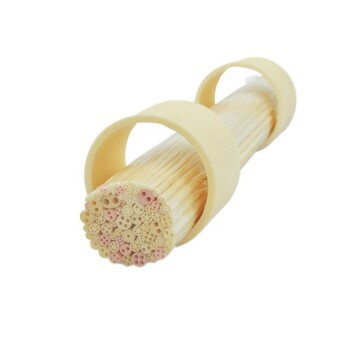
High Temperature Alumina (Al2O3) Furnace Tube for Engineering Advanced Fine Ceramics

High Temperature Alumina (Al2O3) Furnace Tube for Engineering Advanced Fine Ceramics

High temperature alumina furnace tube combines the advantages of high hardness of alumina, good chemical inertness and steel, and has excellent wear resistance, thermal shock resistance and mechanical shock resistance.

1700℃ Laboratory High Temperature Tube Furnace with Alumina Tube

1700℃ Laboratory High Temperature Tube Furnace with Alumina Tube

Looking for a high-temperature tube furnace? Check out our 1700℃ Tube Furnace with Alumina Tube. Perfect for research and industrial applications up to 1700C.

High Temperature Aluminum Oxide (Al2O3) Protective Tube for Engineering Advanced Fine Ceramics

High Temperature Aluminum Oxide (Al2O3) Protective Tube for Engineering Advanced Fine Ceramics

Alumina oxide protective tube, also known as high temperature resistant corundum tube or thermocouple protection tube, is a ceramic tube mainly made of alumina (aluminum oxide).

1400℃ Laboratory High Temperature Tube Furnace with Alumina Tube

1400℃ Laboratory High Temperature Tube Furnace with Alumina Tube

Looking for a tube furnace for high-temperature applications? Our 1400℃ Tube Furnace with Alumina Tube is perfect for research and industrial use.

Laboratory Rapid Thermal Processing (RTP) Quartz Tube Furnace

Laboratory Rapid Thermal Processing (RTP) Quartz Tube Furnace

Get lightning-fast heating with our RTP Rapid Heating Tube Furnace. Designed for precise, high-speed heating and cooling with convenient sliding rail and TFT touch screen controller. Order now for ideal thermal processing!

High Pressure Laboratory Vacuum Tube Furnace Quartz Tubular Furnace

High Pressure Laboratory Vacuum Tube Furnace Quartz Tubular Furnace

KT-PTF High Pressure Tube Furnace: Compact split tube furnace with strong positive pressure resistance. Working temp up to 1100°C and pressure up to 15Mpa. Also works under controller atmosphere or high vacuum.

1200℃ Split Tube Furnace with Quartz Tube Laboratory Tubular Furnace

1200℃ Split Tube Furnace with Quartz Tube Laboratory Tubular Furnace

KT-TF12 split tube furnace: high-purity insulation, embedded heating wire coils, and max. 1200C. Widely used for new materials and chemical vapour deposition.

Laboratory Vacuum Tilt Rotary Tube Furnace Rotating Tube Furnace

Laboratory Vacuum Tilt Rotary Tube Furnace Rotating Tube Furnace

Discover the versatility of Laboratory Rotary Furnace: Ideal for calcination, drying, sintering, and high-temperature reactions. Adjustable rotating and tilting functions for optimal heating. Suitable for vacuum and controlled atmosphere environments. Learn more now!

1800℃ Muffle Oven Furnace for Laboratory

1800℃ Muffle Oven Furnace for Laboratory

KT-18 muffle furnace with Japan Al2O3 polycrystalline fibe and Silicon Molybdenum heating element, up to 1900℃, PID temperature control and 7" smart touch screen. Compact design, low heat loss, and high energy efficiency. Safety interlock system and versatile functions.

Hexagonal Boron Nitride HBN Thermocouple Protection Tube

Hexagonal Boron Nitride HBN Thermocouple Protection Tube

Hexagonal boron nitride ceramics is an emerging industrial material. Because of its similar structure to graphite and many similarities in performance, it is also called "white graphite".

Vacuum Sealed Continuous Working Rotary Tube Furnace Rotating Tube Furnace

Vacuum Sealed Continuous Working Rotary Tube Furnace Rotating Tube Furnace

Experience efficient material processing with our vacuum-sealed rotary tube furnace. Perfect for experiments or industrial production, equipped with optional features for controlled feeding and optimized results. Order now.

Multi Heating Zones CVD Tube Furnace Machine Chemical Vapor Deposition Chamber System Equipment

Multi Heating Zones CVD Tube Furnace Machine Chemical Vapor Deposition Chamber System Equipment

KT-CTF14 Multi Heating Zones CVD Furnace - Precise Temperature Control and Gas Flow for Advanced Applications. Max temp up to 1200℃, 4 channels MFC mass flow meter, and 7" TFT touch screen controller.

Multi-zone Laboratory Tube Furnace

Multi-zone Laboratory Tube Furnace

Experience precise, efficient thermal testing with our Multi Zone Tube Furnace. Independent heating zones and temperature sensors allow for controlled high-temperature gradient heating fields. Order now for advanced thermal analysis!

Custom PTFE Teflon Parts Manufacturer for Centrifuge Tubes

Custom PTFE Teflon Parts Manufacturer for Centrifuge Tubes

PTFE centrifugal tubes are highly valued for their exceptional chemical resistance, thermal stability, and non-stick properties, making them indispensable in various high-demand sectors. These tubes are particularly useful in environments where exposure to corrosive substances, high temperatures, or stringent cleanliness requirements are prevalent.

Dental Porcelain Zirconia Sintering Ceramic Vacuum Press Furnace

Dental Porcelain Zirconia Sintering Ceramic Vacuum Press Furnace

Get precise dental results with Dental Vacuum Press Furnace. Automatic temperature calibration, low noise tray, and touch screen operation. Order now!

Vacuum Heat Treat and Sintering Furnace with 9MPa Air Pressure

Vacuum Heat Treat and Sintering Furnace with 9MPa Air Pressure

The air pressure sintering furnace is a high-tech equipment commonly used for the sintering of advanced ceramic materials. It combines vacuum sintering and pressure sintering techniques to achieve high-density and high-strength ceramics.

Electric Rotary Kiln Continuous Working Small Rotary Furnace Heating Pyrolysis Plant

Electric Rotary Kiln Continuous Working Small Rotary Furnace Heating Pyrolysis Plant

Efficiently calcine and dry bulk powder and lump fluid materials with an electric heating rotary furnace. Ideal for processing lithium ion battery materials and more.

1700℃ Muffle Oven Furnace for Laboratory

1700℃ Muffle Oven Furnace for Laboratory

Get superior heat control with our 1700℃ Muffle Furnace. Equipped with intelligent temperature microprocessor, TFT touch screen controller & advanced insulation materials for precise heating up to 1700C. Order now!

1200℃ Controlled Atmosphere Furnace Nitrogen Inert Atmosphere Furnace

1200℃ Controlled Atmosphere Furnace Nitrogen Inert Atmosphere Furnace

Discover our KT-12A Pro Controlled atmosphere furnace - high precision, heavy duty vacuum chamber, versatile smart touch screen controller, and excellent temperature uniformity up to 1200C. Ideal for both laboratory and industrial application.

Ultra-High Temperature Graphite Vacuum Graphitization Furnace

Ultra-High Temperature Graphite Vacuum Graphitization Furnace

The ultra-high temperature graphitization furnace utilizes medium frequency induction heating in a vacuum or inert gas environment. The induction coil generates an alternating magnetic field, inducing eddy currents in the graphite crucible, which heats up and radiates heat to the workpiece, bringing it to the desired temperature. This furnace is primarily used for graphitization and sintering of carbon materials, carbon fiber materials, and other composite materials.


Leave Your Message