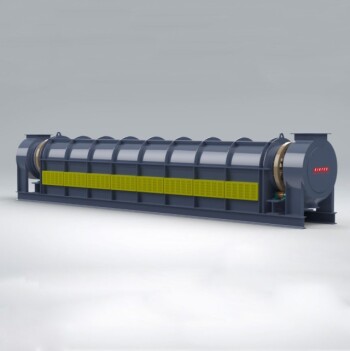
Industrial furnaces are heating devices used in various industrial processes, including soldering, heat treatment of steels and alloys, and ceramics sintering. Industrial furnaces can be designed to meet specific temperature control and uniformity requirements, and can be customized to meet the needs of different industrial processes.
There are various types of industrial furnaces, including static or bogie chamber furnaces, top hat furnaces, and general purpose furnaces. The modular design of static or bogie chamber furnaces allows them to be used for a variety of applications, while the versatility of general purpose furnaces makes them ideal for batch processing. Top hat furnaces are well-suited for high temperature applications such as soldering and sintering, and some models may also include a debinding option.
Industrial furnaces can also be designed to comply with specific industry standards, such as specification for aerospace applications. The design and construction of industrial furnaces can vary depending on the specific needs of the industrial process, but they are typically built to withstand the demands of a production environment while still providing accurate and precise temperature control.
What is Industrial Furnaces
An industrial chamber furnace is a type of industrial furnace that is designed to heat a defined space or chamber to a specific temperature. These furnaces are typically used for a variety of industrial processes, such as heat treatment, annealing, and sintering. They can be used to heat a variety of materials, including metals, ceramics, and glass, and can operate at temperatures ranging from ambient to over 2000°C.
Industrial chamber furnaces are usually constructed with a chamber made of refractory materials, such as ceramic or brick, which can withstand high temperatures and thermal stresses. The chamber is surrounded by insulation to help maintain a consistent temperature within the chamber and to reduce heat loss. The heating element of an industrial chamber furnace is typically located at the bottom or sides of the chamber, and the temperature is controlled by a thermocouple or other temperature sensing device.
There are several types of industrial chamber furnaces, including batch, continuous, and muffle furnaces. Batch furnaces are used to process a specific quantity of material at a time, while continuous furnaces are designed to process materials continuously. Muffle furnaces are used to heat materials in a controlled atmosphere and are often used for high-temperature applications, such as melting or sintering.
Industrial chamber furnaces are critical tools in a variety of industrial processes, providing the precise temperature control and uniformity required to produce high-quality products.
Range of temperatures
Industrial chamber furnaces can operate at a wide range of temperatures, depending on the specific requirements of the industrial process being carried out. The maximum temperature that an industrial chamber furnace can reach is largely determined by the type of heating elements used in its construction.
As you mentioned, industrial chamber furnaces that use metallic wire heating elements can typically operate at temperatures ranging from 1000°C to 1200°C. However, other types of heating elements, such as ceramic or graphite, can be used to achieve even higher temperatures, up to 3000°C or more.
In addition to the type of heating element, the maximum temperature of an industrial chamber furnace can also be affected by the material of the chamber itself and the type of insulation used to surround the chamber. Some materials and insulation are better suited for high temperature applications than others.
Overall, the temperature range of an industrial chamber furnace is dependent on the specific needs of the industrial process being carried out and the materials and technologies used in its construction.
Types of industrial furnaces
There are several types of industrial chamber furnaces, each designed to meet the specific needs of different industrial processes. Some common types of industrial chamber furnaces include:
- Batch furnaces: Batch furnaces are used to process a specific quantity of material at a time. They are typically used for heat treatment, annealing, and sintering applications.
- Continuous furnaces: Continuous furnaces are designed to process materials continuously. They are often used for applications that require the heating or cooling of materials as they move through the furnace on a conveyor belt.
- Top hat furnaces: Top hat furnaces are shaped like a dome and are used for high-temperature heat treatment applications. They are often used for forging, hardening, and tempering.
- Bogie hearth furnaces: Bogie hearth furnaces are used for heat treatment and annealing applications. They are designed with a moving hearth that allows the material being heated to be easily loaded and unloaded.
- Strand annealing furnaces: Strand annealing furnaces are used to heat and cool long strands of material, such as wire or cable, in a controlled atmosphere.
- Elevator hearth furnaces: Elevator hearth furnaces are used for heat treatment and annealing applications. They are designed with a moving hearth that can be raised or lowered to allow the material being heated to be easily loaded and unloaded.
- Modified atmosphere furnaces: Modified atmosphere furnaces are used to heat materials in a controlled atmosphere, often with a specific gas mixture. They are often used for applications that require a specific chemical reaction to take place within the chamber.
Applications
Industrial chamber furnaces are suitable for a wide range of applications in various industries, including metallurgy, ceramics, glass, and electronics. Some common applications for industrial chamber furnaces include:
- Annealing: Annealing is a heat treatment process that involves heating a material to a specific temperature and then allowing it to cool slowly. Industrial chamber furnaces are often used for annealing applications to improve the material's ductility, reduce its brittleness, and improve its overall mechanical properties.
- Heat treatment: Heat treatment is a process used to alter the physical and mechanical properties of a material by heating it to a specific temperature and then cooling it at a specific rate. Industrial chamber furnaces are used for heat treatment applications such as hardening, tempering, normalizing, and solution treating.
- Debinding: Debinding is a process used to remove binders or other temporary materials from a material before it is sintered. Industrial chamber furnaces are often used for debinding applications to ensure that the material is properly prepared for sintering.
- Sintering: Sintering is a process used to produce solid objects from a powder by heating it to a temperature just below its melting point. Industrial chamber furnaces are often used for sintering applications to produce a wide range of products, including ceramics, metals, and glass.
- Graphitization: Graphitization is a process used to produce high-purity graphite by heating it to a high temperature in a controlled atmosphere. Industrial chamber furnaces are often used for graphitization applications to ensure that the graphite is produced with a consistent quality.
- Quenching: Quenching is a process used to rapidly cool a material to improve its mechanical properties. Industrial chamber furnaces are often used for quenching applications to rapidly cool materials such as steel or other metals.
- Siliconization: Siliconization is a process used to coat a material with silicon to improve its surface properties. Industrial chamber furnaces are often used for siliconization applications to ensure that the silicon coating is applied evenly and consistently.
- Brazing: Brazing is a process used to join two or more materials together using a filler metal with a melting temperature lower than the materials being joined. Industrial chamber furnaces are often used for brazing applications to ensure that the filler metal is properly melted and applied to the materials.
- Calcination: Calcination is a process used to decompose a material by heating it to a high temperature. Industrial chamber furnaces are often used for calcination applications to ensure that the material is properly decomposed and to control the reaction rate.
Industrial chamber furnaces are versatile tools that can be used for a wide range of applications in various industries. They can be customized to meet the specific requirements of different industrial processes and can be manufactured to comply with industry-specific standards.
Kindle Tech Industrial Furnace
Kindle Tech offers a range of industrial furnaces for batch processing that are designed to be durable, safe, and easy to maintain. The company offers a range of sizes for its industrial furnaces, with heating chambers that can hold up to more than 5000 liters of volume and maximum temperatures of up to 1800°C.
In addition to the standard features of its industrial furnaces, Kindle Tech also offers a range of options to customize its furnaces to meet the specific needs of its customers. These options may include over-temperature protection, digital controllers, multi-segment programmers, and data loggers.
It is important to carefully consider the specific needs of your industrial process when selecting an industrial furnace to ensure that you choose a model that meets your requirements. Kindle Tech's range of industrial furnaces and customizable options may be able to provide the solution you need for your batch processing needs.
Related Products
- Rotary Tube Furnace Split Multi Heating Zone Rotating Tube Furnace
- High Temperature Muffle Oven Furnace for Laboratory Debinding and Pre Sintering
- Multi Heating Zones CVD Tube Furnace Machine Chemical Vapor Deposition Chamber System Equipment
- Vertical High Temperature Graphite Vacuum Graphitization Furnace
- Ultra-High Temperature Graphite Vacuum Graphitization Furnace
Related Articles
- Rotary Furnaces: Advanced Materials Processing and Applications
- Exploring the Functions and Advantages of Rotary Tube Furnaces
- Unlocking Efficiency: Exploring the Advantages and Applications of Rotary Tube Furnaces
- Exploring Rotary Tube Furnaces: A Comprehensive Guide
- The Geometry of Heat: Engineering the Perfect Thermal Environment