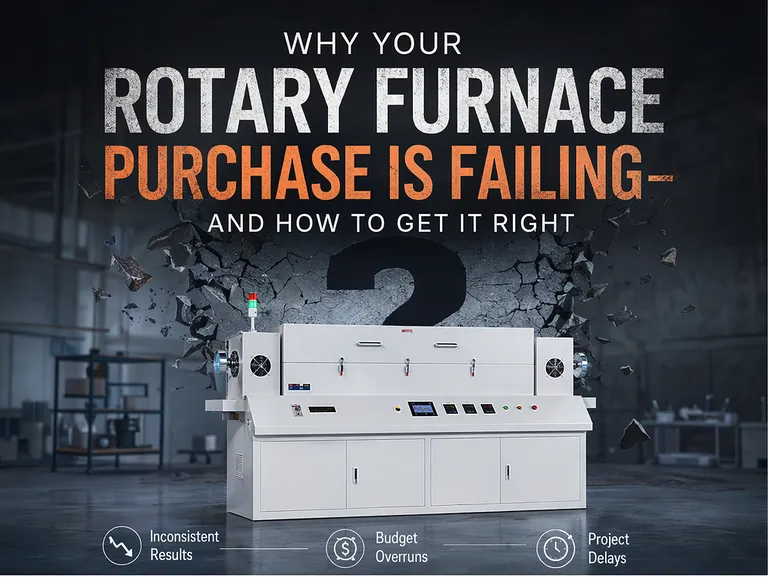
Does this sound familiar? Your team needs to heat-treat a new batch of powdered material—a critical step like calcination or drying. You know a rotary furnace is the right tool for uniform heating. But when you start searching, you're hit with a wave of confusing options: "hearths," "kilns," "tubes." They all rotate, but they look fundamentally different.
You're stuck. Making the wrong choice means wasting precious samples, blowing the project budget, and facing weeks of delays. You're not just buying a piece of equipment; you're making a decision that could make or break your research.
The Hidden Costs of "Getting It Wrong"
This moment of confusion is where many promising projects stall. In the quest for a solution, teams often fall into predictable traps:
- Making do with a static furnace: You try to process the powder in a standard muffle furnace, manually stirring it occasionally. The result? Inconsistent data. The material near the edges is over-processed, while the center remains untouched. The entire batch is compromised.
- Focusing only on temperature: You find a furnace that hits your target temperature but ignore its material handling mechanism. The equipment arrives, and you realize it's designed for solid parts, not powders, leading to spills, damage, and unusable results.
- Guessing on the wrong type: You order a "rotary furnace" that turns out to be a rotary hearth model. Your fine powder either gets stuck, blows around the chamber, or provides zero consistency.
The consequences go far beyond a single failed experiment. These missteps lead to significant business problems: wasted R&D funds on ruined materials, project timelines that stretch from months into years, and an inability to develop a reliable process that can be scaled up for production. You're not just losing time; you're losing your competitive edge.
The Root of the Problem: Are You Processing Parts or Powders?
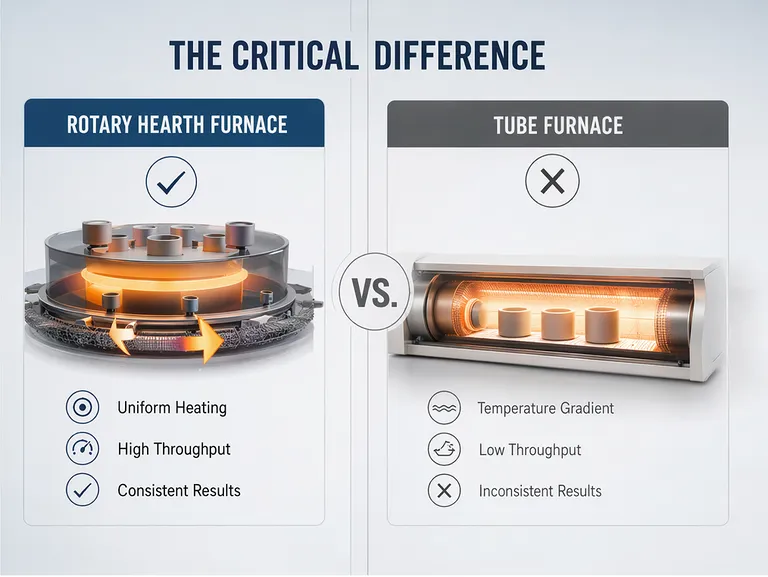
The frustrating truth is that the term "rotary furnace" is dangerously ambiguous. The key to success isn't finding the right temperature; it's understanding that you are choosing between two fundamentally different tools designed for two different jobs.
The failure of the "common solutions" above is that they ignore a simple, core principle of physical processing. They are treating a symptom (uneven heat) without diagnosing the underlying disease: a mismatch between the material form and the mechanical action.
The "Cement Mixer" vs. The "Pizza Oven"
To make it simple, let’s use an analogy.
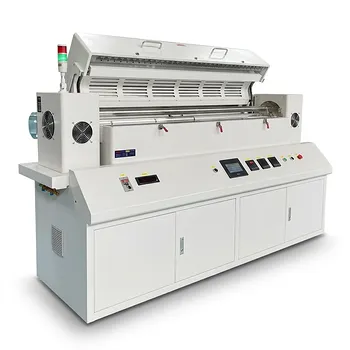
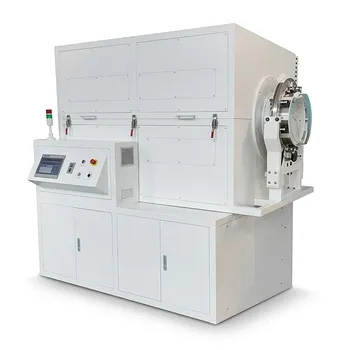
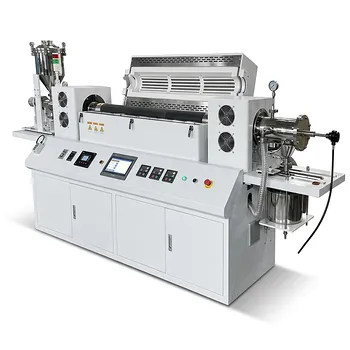
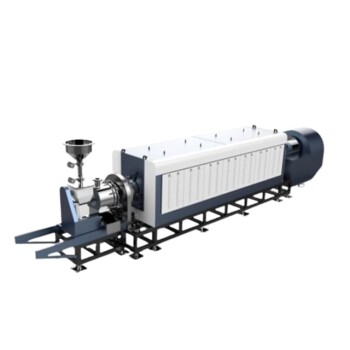
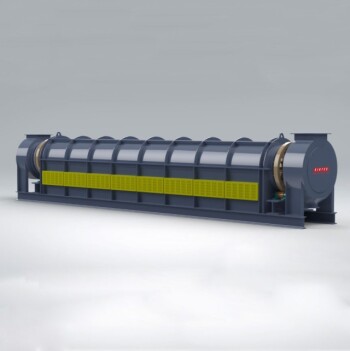
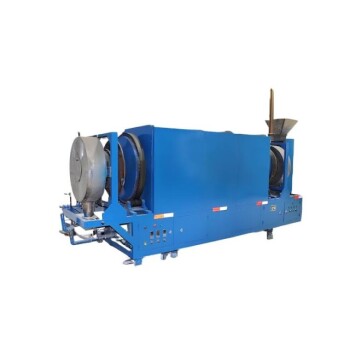
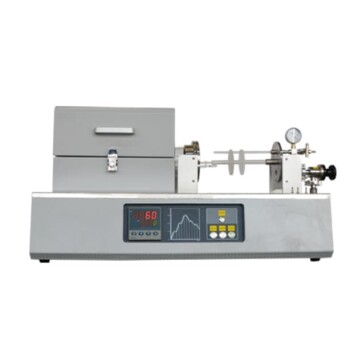
A Rotary Tube Furnace is like a mini cement mixer. It’s a slightly inclined, rotating cylinder. You feed material in one end, and as it rotates, the material constantly tumbles and mixes as it travels through the heat. This design is perfect for anything that can flow and tumble: powders, granules, and small aggregates. The goal is dynamic mixing to ensure every single particle is exposed to the same thermal conditions.
A Rotary Hearth Furnace is like a rotating pizza oven. It’s a flat, circular platform (the "hearth") that rotates inside a heated chamber. You place individual items on the shelf, and it transports them through different heat zones. This is ideal for discrete, solid parts like metal gears, engine components, or ceramic pieces that must remain stationary during heating. The goal is uniform transport, not mixing.
Trying to process powder in a rotary hearth furnace is like trying to bake a cake in a frying pan. You're using the wrong tool for the job, and failure is guaranteed.
The Right Tool: Mastering Your Process with a Rotary Tube Furnace
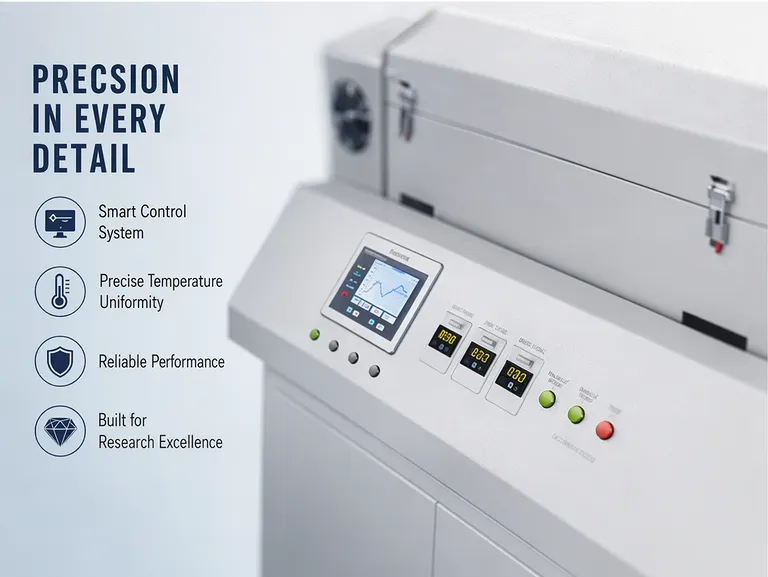
To achieve consistent, repeatable results for powders and granules, you don't just need heat; you need controlled, continuous tumbling within a precise thermal environment.
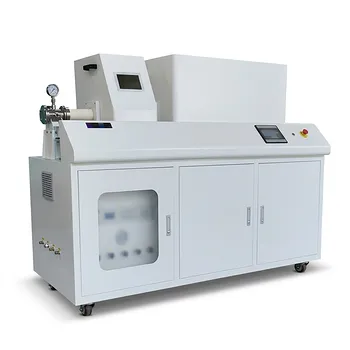
This is where a lab-scale Rotary Tube Furnace becomes the essential instrument. It’s not just a piece of hardware; it’s a tool engineered from a deep understanding of materials science. It is designed specifically to solve the core problem of uniform heating for bulk materials.
By controlling the furnace's rotation speed, you control the residence time—how long the material stays in the heat. By adjusting the tilt angle, you control the flow rate. And by programming the temperature, you create the exact thermal profile your process requires. These three variables give you total command over your experiment.
KINTEK's laboratory tube furnaces are designed to give researchers this exact level of control. They are built not just to heat, but to empower you to develop and perfect your process with precision.
Beyond a Fix: What Consistent Heating Unlocks for Your Lab
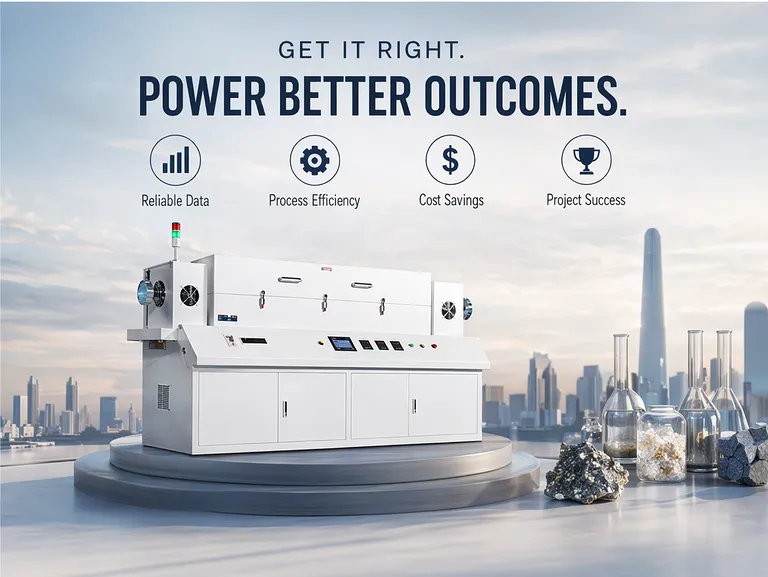
Once you stop struggling with the wrong equipment and implement the right tool, you're no longer just solving an old problem. You're opening the door to new possibilities. With a reliable and precise rotary tube furnace, you can:
- Accelerate Materials Discovery: Rapidly test thermal profiles on small, valuable samples of new materials, getting to your breakthrough faster.
- Develop Truly Scalable Processes: Create a robust, repeatable process in the lab with the confidence that its core principles can be scaled up for pilot and full-scale production.
- Achieve Unprecedented Consistency: Eliminate the batch-to-batch variations that plague static heating, leading to reliable, publishable data and higher quality end-products.
- Expand Your Capabilities: Your lab can now confidently take on challenging projects involving catalyst activation, pyrolysis, drying, and specialized chemical synthesis that were previously out of reach.
Stop letting equipment ambiguity hold your research back. The solution isn't more complicated; it's clearer. By understanding the fundamental difference in how materials should be handled, you can finally achieve the consistent results you've been searching for.
Your next project deserves the right tool for the job. Our team of specialists understands the nuances of thermal processing and can help you configure a system that directly addresses your specific material and process goals. Let's move your research forward, together. Contact Our Experts.
Related Products
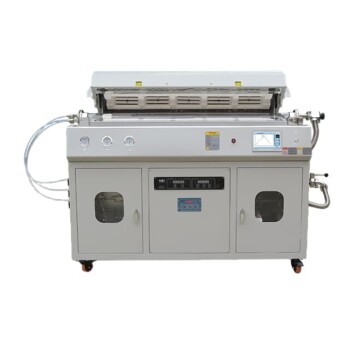
- Rotary Tube Furnace Split Multi Heating Zone Rotating Tube Furnace
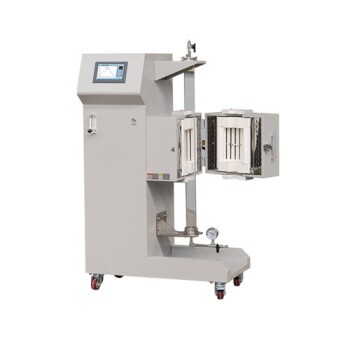
- Laboratory Vacuum Tilt Rotary Tube Furnace Rotating Tube Furnace
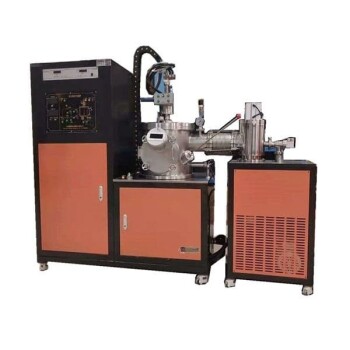
- Vacuum Sealed Continuous Working Rotary Tube Furnace Rotating Tube Furnace
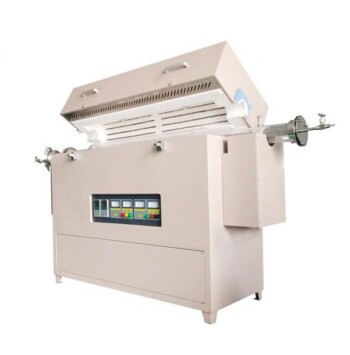
- Electric Rotary Kiln Small Rotary Furnace for Activated Carbon Regeneration
- Electric Rotary Kiln Small Rotary Furnace Biomass Pyrolysis Plant
Related Articles
- The Geometry of Heat: Why Motion Matters in Material Synthesis
- Exploring the Functions and Advantages of Rotary Tube Furnaces
- The Physics of Perfection: How Rotary Furnaces Eliminate Randomness in Material Processing
- Exploring the Advantages of Rotary Tube Furnaces in Industrial and Laboratory Applications
- Exploring Rotary Tube Furnaces: A Comprehensive Guide