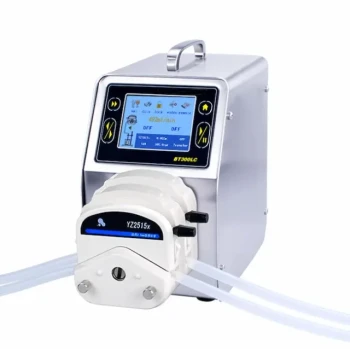
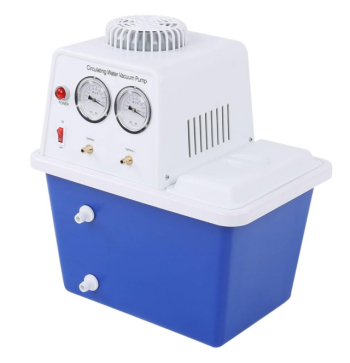
High-precision high-pressure injection pumps serve as the critical control mechanism within flow-through reactor systems. They are explicitly responsible for regulating both confining pressure and pore pressure with extreme accuracy. By operating in stable constant pressure or constant flow modes, these pumps maintain the consistent fluid delivery necessary to validate experiments involving rock samples.
Core Takeaway: These pumps transform variable experimental conditions into a controlled environment. By ensuring consistent fluid delivery over extended periods, they enable the precise measurement of permeability in tight rock formations and allow researchers to observe slow-moving chemical interactions without data noise.
The Mechanics of Precision Control
Regulating Dual Pressures
The primary contribution of these pumps is the simultaneous management of two distinct pressure environments. They control confining pressure (the external stress on the sample) and pore pressure (the internal fluid pressure). This dual control is essential for simulating realistic subsurface conditions within the reactor.
Versatile Operation Modes
To accommodate different research goals, these pumps operate in two specific modes: constant pressure or constant flow. This flexibility allows the system to adapt to the specific physical requirements of the rock sample being tested.
Enabling Advanced Experimental Capabilities
Measuring Low-Permeability Rocks
Standard pumps often fail to maintain the stability required for tight, resistant rock formations. High-precision pumps provide the steady, non-pulsating force needed to force fluid through low-permeability rocks. This capability is the only way to obtain accurate permeability data in these challenging environments.
Facilitating Long-Duration Studies
Geological processes rarely happen quickly. These pumps are engineered to deliver consistent flow over long timeframes. This stability eliminates fluctuations that could introduce errors into datasets spanning days or weeks.
Capturing Slow Chemical Kinetics
In flow-through systems, researchers often study chemical dissolution and precipitation. These reactions occur at slow rates. The high stability of the injection pump ensures that changes in flow or pressure are due to the chemical reaction itself, not mechanical inconsistency.
Understanding the Trade-offs
Mode Selection Consequences
Choosing between operation modes involves a distinct trade-off. In constant flow mode, you ensure a fixed fluid residence time, but precipitation reactions can cause dangerous pressure spikes.
Data Interpretation Challenges
Conversely, in constant pressure mode, the mechanical stress remains stable, but the flow rate will fluctuate as the rock changes. While safer for the equipment, this variable flow rate can complicate the calculation of reaction rates during dissolution or precipitation studies.
Making the Right Choice for Your Goal
To maximize the utility of high-precision pumps in your flow-through reactor, align the operation mode with your specific experimental objective.
- If your primary focus is measuring permeability in tight formations: Prioritize constant pressure mode to maintain stable stress conditions while measuring how much fluid the rock accepts over time.
- If your primary focus is studying chemical kinetics (dissolution/precipitation): Prioritize constant flow mode to strictly control the contact time between the fluid and the rock, ensuring accurate reaction rate calculations.
Reliable data in flow-through experiments is ultimately defined by the stability of the injection source.
Summary Table:
| Feature | Constant Pressure Mode | Constant Flow Mode |
|---|---|---|
| Primary Control | Maintains stable mechanical stress/pressure | Ensures fixed fluid residence time |
| Best Used For | Measuring permeability in tight formations | Studying slow chemical kinetics/reaction rates |
| Key Benefit | Prevents equipment overpressure | Eliminates variables in contact time |
| Trade-off | Flow rate fluctuates during reactions | Potential for pressure spikes during precipitation |
Elevate Your Research Precision with KINTEK
Unlock the full potential of your geological and chemical studies with KINTEK’s advanced laboratory solutions. Whether you are conducting long-duration studies on low-permeability rocks or capturing slow chemical kinetics, our high-precision systems provide the stability your data demands.
KINTEK specializes in a comprehensive range of laboratory equipment, including:
- High-Temperature High-Pressure Reactors & Autoclaves
- Precision Crushing, Milling, & Sieving Systems
- Advanced Hydraulic Presses (Pellet, Hot, Isostatic)
- Customizable High-Temperature Furnaces (Vacuum, CVD, PECVD)
- Specialized Electrolytic Cells, Battery Research Tools, & PTFE Consumables
Don't let mechanical inconsistency compromise your experimental results. Our team of experts is ready to help you select the ideal equipment configuration tailored to your specific research goals.
Contact KINTEK Today to Request a Quote or Consultation
References
- Nick Harpers, Andreas Busch. The Harpers THMC flow bench: A triaxial multi-reactor setup for the investigation of long-term coupled thermo-hydro-mechanical-chemical fluid-rock interaction. DOI: 10.1063/5.0160906
This article is also based on technical information from Kintek Solution Knowledge Base .
Related Products
- Customizable High Pressure Reactors for Advanced Scientific and Industrial Applications
- Variable Speed Peristaltic Pump
- Stainless High Pressure Autoclave Reactor Laboratory Pressure Reactor
- Mini SS High Pressure Autoclave Reactor for Laboratory Use
- Portable High Pressure Laboratory Autoclave Steam Sterilizer for Lab Use
People Also Ask
- What is the function of high-pressure reactors in the synthesis of MFI-type zeolites? Master Dry Gel Conversion.
- Graphene Fiber Synthesis: Key High-Pressure Reactor Processing Conditions Explained
- What reactor is used for high pressure reactions? Select the Right Autoclave for Your Lab
- What is the primary function of a high-pressure reactor in NiMoO4 preparation? Optimize Hydrothermal Catalyst Synthesis
- What are the hazards of high pressure reactors? A Guide to Managing Explosive Risks