Knowledge How does a mechanical pelletizer extend the life of calcium-based adsorbents? Maximize Your Adsorbent Durability
Author avatar

Tech Team · Kintek Solution

Updated 10 hours ago

How does a mechanical pelletizer extend the life of calcium-based adsorbents? Maximize Your Adsorbent Durability


Mechanical pelletizers extend the service life of calcium-based adsorbents by physically transforming spent, degraded powders back into durable, usable forms. By incorporating water, steam, or specific binders, these machines reshape loose particles into solid pellets, restoring the mechanical strength and porosity required to withstand the harsh conditions of industrial regeneration cycles.

The core advantage of using a pellet press is the conversion of waste powder into reusable structural assets. By mitigating material loss, this process enables the effective reuse of adsorbents in high-impact equipment, significantly lowering replacement costs.

The Physical Restoration Process

Reshaping Spent Material

During the adsorption process, calcium-based materials often degrade into fine powders. A mechanical pelletizer reverses this physical breakdown.

It takes the spent powdered adsorbent and subjects it to a granulation process. This is often facilitated by the addition of water, steam, or binding agents to help the particles adhere to one another.

Enhancing Mechanical Strength

The primary failure point for many adsorbents is physical attrition—they simply crumble into dust. The pellet press compresses the material, significantly increasing the mechanical strength of the particles.

This hardening process ensures the adsorbent is robust enough to survive transport and handling without disintegrating.

Why Structure and Porosity Matter

Improving Macroscopic Porosity

Mere hardness is not enough; the material must also remain permeable to be effective. The granulation process creates improved macroscopic porosity within the pellet.

This structural openness allows gases to flow through the pellet efficiently, ensuring that the inner surface area of the adsorbent remains accessible for chemical reactions.

Reducing Material Loss

When adsorbents turn to powder, they are easily blown out of the system or clogged in filters. By reforming them into pellets, you drastically reduce this material loss.

This allows the same batch of material to be cycled through the system multiple times rather than being discarded immediately after a single use.

Compatibility with Industrial Systems

Suitability for Fluidized Beds

Fluidized beds require particles of a specific size and weight to "float" properly without being ejected. Powdered adsorbents are too light and are instantly lost in these systems.

Pelletized adsorbents provide the necessary mass and aerodynamic properties to function correctly in fluidized beds, maintaining stable operation.

Resilience in Rotary Kilns

Rotary kilns involve constant tumbling and physical impact. Fragile materials break down quickly in this environment.

The enhanced mechanical strength provided by the pellet press ensures the adsorbents can withstand the tumbling action of rotary kilns without suffering excessive attrition.

Understanding the Trade-offs

Process Complexity

While pelletization saves material costs, it introduces an additional processing step. You must manage the input of steam, water, or binders, which adds a layer of operational complexity to the regeneration loop.

Balancing Binder Usage

The use of binders is critical for strength, but it must be calibrated carefully. If not managed correctly, the additives used to bind the pellet could potentially alter the chemical purity or reactivity of the calcium base, though the primary reference emphasizes the structural benefits.

Making the Right Choice for Your Goal

To determine if integrating a mechanical pelletizer is right for your operation, consider your specific constraints:

  • If your primary focus is Cost Reduction: Implement pelletization to minimize the purchase of fresh calcium adsorbents by maximizing the lifespan of your current stock.
  • If your primary focus is Equipment Efficiency: Use pelletization to ensure your material maintains the physical integrity required for stable operation in fluidized beds or rotary kilns.

By treating the physical form of the adsorbent as equally important as its chemical composition, you turn a consumable resource into a durable asset.

Summary Table:

Feature Impact on Adsorbent Service Life Benefit to Regeneration
Physical Reshaping Converts fine waste powder into solid pellets Reduces material loss and waste
Mechanical Strength Increases resistance to physical attrition Survives transport and rotary kiln tumbling
Macroscopic Porosity Maintains internal surface area access Ensures efficient gas flow and reaction
Size Optimization Provides specific mass and aerodynamic properties Enables stability in fluidized bed systems

Enhance Your Material Lifecycle with KINTEK Precision Engineering

Don't let material attrition compromise your operational efficiency. KINTEK specializes in advanced crushing, milling, and hydraulic pellet presses designed to transform spent adsorbents into high-performance assets. Whether you are managing complex chemical reactions or optimizing fluidized bed stability, our laboratory and industrial solutions provide the durability your processes demand.

Our Expertise Includes:

  • High-Performance Hydraulic Presses: Precision pelletizing for consistent material density.
  • Thermal Processing: High-temperature furnaces and reactors to complement your regeneration loop.
  • Comprehensive Support: From milling systems to essential consumables like ceramics and crucibles.

Ready to reduce replacement costs and boost your lab's productivity? Contact our technical experts today to find the perfect equipment for your application!

References

  1. Donata Konopacka-Łyskawa, Andrzej Szefer. CaO-based high temperature CO2 sorbents – Literature review. DOI: 10.24425/cpe.2021.138938

This article is also based on technical information from Kintek Solution Knowledge Base .

Related Products

People Also Ask

Related Products

Single Punch Electric Tablet Press Machine TDP Tablet Punching Machine

Single Punch Electric Tablet Press Machine TDP Tablet Punching Machine

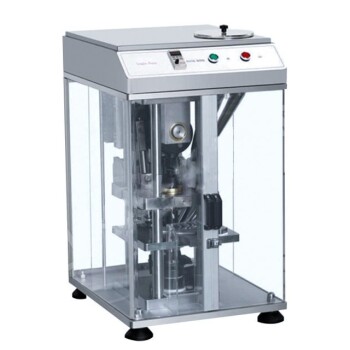
The electric tablet punching machine is a laboratory equipment designed for pressing various granular and powdery raw materials into discs and other geometric shapes. It is commonly used in pharmaceutical, healthcare products, food, and other industries for small batch production and processing. The machine is compact, lightweight, and easy to operate, making it suitable for use in clinics, schools, laboratories, and research units.

Lab Scale Rotary Single Punch Tablet Press Machine TDP Tablet Punching Machine

Lab Scale Rotary Single Punch Tablet Press Machine TDP Tablet Punching Machine

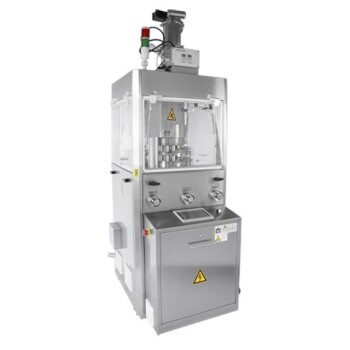
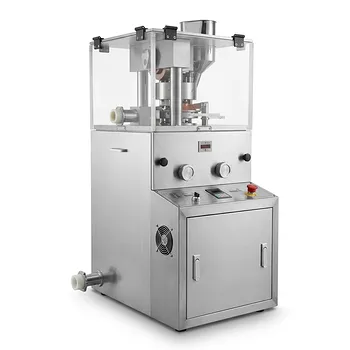
This machine is a single-pressure automatic rotating, continuous tableting machine that compresses granular raw materials into various tablets. It is mainly used for tablet production in the pharmaceutical industry, and is also suitable for chemical, food, electronics and other industrial sectors.

Single Punch Manual Tablet Press Machine TDP Tablet Punching Machine

Single Punch Manual Tablet Press Machine TDP Tablet Punching Machine

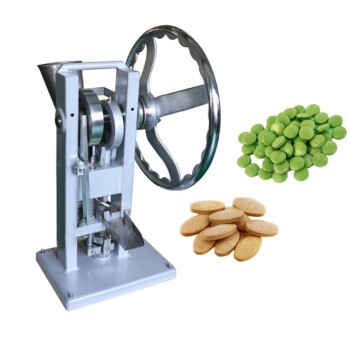
Single punch manual tablet punching machine can press various granular, crystal or powdery raw materials with good fluidity into disc-shaped, cylindrical, spherical, convex, concave and other various geometric shapes (such as square, triangle, ellipse, capsule shape, etc.), and can also press products with text and patterns.

Automatic Laboratory Hydraulic Pellet Press Machine for Lab Use

Automatic Laboratory Hydraulic Pellet Press Machine for Lab Use

Experience efficient sample preparation with our Automatic Lab Press Machine. Ideal for material research, pharmacy, ceramics, and more. Features a compact size and hydraulic press functionality with heating plates. Available in various sizes.

Multi-Punch Rotary Tablet Press Mold Ring for Rotating Oval and Square Molds

Multi-Punch Rotary Tablet Press Mold Ring for Rotating Oval and Square Molds

The multi-punch rotary tablet press mold stands as a pivotal component in pharmaceutical and manufacturing industries, revolutionizing the process of tablet production. This intricate mold system comprises multiple punches and dies arranged in a circular fashion, facilitating rapid and efficient tablet formation.

kbr pellet press 2t

kbr pellet press 2t

Introducing the KINTEK KBR Press - a handheld laboratory hydraulic press designed for entry-level users.

Laboratory Manual Hydraulic Pellet Press for Lab Use

Laboratory Manual Hydraulic Pellet Press for Lab Use

Efficient sample preparation with small footprint Manual Lab Hydraulic Press. Ideal for material researching labs, pharmacy, catalytic reaction, and ceramics.

Laboratory Manual Hydraulic Pellet Press for Lab Use

Laboratory Manual Hydraulic Pellet Press for Lab Use

Efficient Manure Lab Hydraulic Press with Safety Cover for sample preparation in material research, pharmacy, and electronic industries. Available in 15T to 60T.

Automatic Laboratory Hydraulic Press for XRF & KBR Pellet Press

Automatic Laboratory Hydraulic Press for XRF & KBR Pellet Press

Fast and easy xrf sample pellet preparation with KinTek Automatic Lab Pellet Press. Versatile and accurate results for X-ray fluorescence analysis.

Laboratory Hydraulic Pellet Press for XRF KBR FTIR Lab Applications

Laboratory Hydraulic Pellet Press for XRF KBR FTIR Lab Applications

Efficiently prepare samples with the Electric Hydraulic Press. Compact and portable, it's perfect for labs and can work in a vacuum environment.

Laboratory Hydraulic Press Lab Pellet Press Machine for Glove Box

Laboratory Hydraulic Press Lab Pellet Press Machine for Glove Box

Controlled environment lab press machine for glove box. Specialized equipment for material pressing and shaping with high precision digital pressure gauge.

Manual Cold Isostatic Pressing Machine CIP Pellet Press

Manual Cold Isostatic Pressing Machine CIP Pellet Press

Lab Manual Isostatic Press is a high-efficient equipment for sample preparation widely used in material research, pharmacy, ceramics, and electronic industries. It allows for precision control of the pressing process and can work in a vacuum environment.

Cold Isostatic Pressing Machine CIP for Small Workpiece Production 400Mpa

Cold Isostatic Pressing Machine CIP for Small Workpiece Production 400Mpa

Produce uniformly high-density materials with our Cold Isostatic Press. Ideal for compacting small workpieces in production settings. Widely used in powder metallurgy, ceramics, and biopharmaceutical fields for high-pressure sterilization and protein activation.

Automatic Laboratory Heat Press Machine

Automatic Laboratory Heat Press Machine

Precision automatic heat press machines for labs—ideal for material testing, composites, and R&D. Customizable, safe, and efficient. Contact KINTEK today!

Manual High Temperature Heated Hydraulic Press Machine with Heated Plates for Lab

Manual High Temperature Heated Hydraulic Press Machine with Heated Plates for Lab

The High Temperature Hot Press is a machine specifically designed for pressing, sintering and processing materials in a high temperature environment. It is capable of operating in the range of hundreds of degrees Celsius to thousands of degrees Celsius for a variety of high temperature process requirements.

Automatic High Temperature Heated Hydraulic Press Machine with Heated Plates for Lab

Automatic High Temperature Heated Hydraulic Press Machine with Heated Plates for Lab

The High Temperature Hot Press is a machine specifically designed for pressing, sintering and processing materials in a high temperature environment. It is capable of operating in the range of hundreds of degrees Celsius to thousands of degrees Celsius for a variety of high temperature process requirements.

Manual Heated Hydraulic Press Machine with Heated Plates for Laboratory Hot Press

Manual Heated Hydraulic Press Machine with Heated Plates for Laboratory Hot Press

The Manual Heat Press is a versatile piece of equipment suitable for a variety of applications, operated by a manual hydraulic system that applies controlled pressure and heat to the material placed on the piston.

Automatic Heated Hydraulic Press Machine with Heated Plates for Laboratory Hot Press

Automatic Heated Hydraulic Press Machine with Heated Plates for Laboratory Hot Press

The Automatic High Temperature Heat Press is a sophisticated hydraulic hot press designed for efficient temperature control and product quality processing.

Automatic Heated Hydraulic Press Machine with Heated Plates for Laboratory Hot Press 25T 30T 50T

Automatic Heated Hydraulic Press Machine with Heated Plates for Laboratory Hot Press 25T 30T 50T

Efficiently prepare your samples with our Automatic Heated Lab Press. With a pressure range up to 50T and precise control, it's perfect for various industries.

Heated Hydraulic Press Machine with Integrated Manual Heated Plates for Lab Use

Heated Hydraulic Press Machine with Integrated Manual Heated Plates for Lab Use

Efficiently process heat-pressing samples with our Integrated Manual Heated Lab Press. With a heating range up to 500°C, it's perfect for various industries.


Leave Your Message