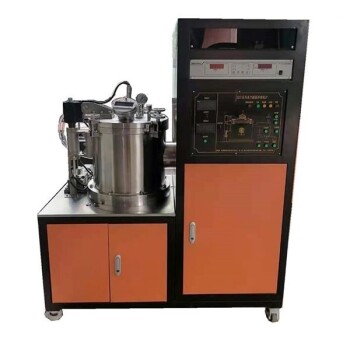
A PLC-based fuzzy adaptive PID controller fundamentally transforms the heating process in vacuum distillation furnaces by mitigating the inherent instability of high-temperature operations. Unlike static controllers, it utilizes real-time data to dynamically adjust parameters, effectively managing the system's non-linearity and thermal inertia to ensure rapid heating without dangerous temperature spikes.
The core advantage of this system is its ability to decouple heating speed from stability. It delivers a precise, constant temperature zone—specifically between 900 and 1000°C—ensuring consistent magnesium distillation quality where standard PID controllers often fail.
Overcoming Thermal Challenges
Tackling Thermal Inertia
Vacuum distillation furnaces are massive systems with high thermal inertia. This means they react slowly to control inputs, causing standard controllers to overcompensate and create unstable swings.
A fuzzy adaptive controller solves this by analyzing the change rate of the temperature. It anticipates the lag in the system, adjusting the power output before the temperature deviates significantly.
Managing System Non-Linearity
The heating characteristics of a furnace change as temperatures rise; the physics at 200°C are different from those at 900°C. A standard PID controller uses fixed parameters that may work well at one temperature but fail at another.
The fuzzy adaptive system treats the furnace as a non-linear object. It modifies its own logic rules in real-time, ensuring the control response remains optimal across the entire heating curve.
Optimizing Production Quality
Rapid Heating Without Overshoot
In standard systems, heating the furnace quickly often leads to overshoot, where the temperature exceeds the target limits. This can damage the product or the equipment.
This controller allows for aggressive heating during the initial phase. However, as the temperature approaches the setpoint, the fuzzy logic automatically dampens the response to glide smoothly into the target zone without overshooting.
Precision in the Critical Zone
For magnesium distillation, maintaining a specific temperature range is non-negotiable. The process requires a constant temperature zone typically between 900 and 1000°C.
By continuously correcting based on temperature deviations, the controller locks the furnace into this range. This stability is the primary driver for high-yield, consistent magnesium production.
Understanding the Trade-offs
Implementation Complexity
While superior in performance, a fuzzy adaptive system is more complex than a standard loop. It requires a PLC (Programmable Logic Controller) capable of processing complex algorithms, rather than a simple standalone temperature regulator.
Tuning Requirements
The effectiveness of the "fuzzy" logic depends on how well the rules are defined. While it adapts in real-time, the initial setup requires a deep understanding of the specific furnace's behavior to establish the correct baseline parameters.
Making the Right Choice for Your Goal
To determine if this control strategy aligns with your operational needs, consider your primary objectives:
- If your primary focus is Production Speed: This controller minimizes ramp-up time, allowing you to reach operating temperature faster without the risk of overshooting.
- If your primary focus is Product Consistency: The system creates the stable 900-1000°C environment required to eliminate variance in magnesium distillation batches.
By neutralizing the lag and non-linearity of vacuum furnaces, this technology converts a volatile thermal process into a precise manufacturing operation.
Summary Table:
| Feature | Standard PID Controller | Fuzzy Adaptive PID Controller |
|---|---|---|
| Thermal Inertia | Struggles with lag/swings | Anticipates lag and adjusts in real-time |
| System Linearity | Fixed parameters (Static) | Dynamic adjustment for non-linear behavior |
| Temperature Overshoot | High risk during rapid heating | Rapid ramp-up with smooth setpoint arrival |
| Stability (900-1000°C) | Prone to fluctuation | Maintains a constant, precise thermal zone |
| Control Complexity | Low (Standalone regulator) | Higher (Requires PLC and complex logic) |
Elevate Your Distillation Precision with KINTEK
Achieve unmatched consistency in your high-temperature processes with KINTEK’s advanced laboratory solutions. Whether you are refining magnesium in vacuum distillation furnaces or conducting complex material synthesis in CVD/PECVD systems, our equipment is designed for precision.
From high-pressure reactors and autoclaves to specialized crushing, milling, and pellet pressing systems, KINTEK provides the tools needed to eliminate thermal volatility and maximize yield. Contact our technical experts today to discover how our tailored thermal and processing solutions can optimize your laboratory or production efficiency.
Related Products
- Vacuum Heat Treat and Molybdenum Wire Sintering Furnace for Vacuum Sintering
- Small Vacuum Heat Treat and Tungsten Wire Sintering Furnace
- 2200 ℃ Tungsten Vacuum Heat Treat and Sintering Furnace
- Vacuum Heat Treat and Pressure Sintering Furnace for High Temperature Applications
- Ultra-High Temperature Graphite Vacuum Graphitization Furnace
People Also Ask
- What is the pressure for vacuum sintering? Achieve Optimal Material Purity and Density
- What is vacuum hardness? Unlock Superior Material Performance with Vacuum Processing
- What are the critical functions of the vacuum system in a sintering furnace for Cu/Ti3SiC2/C/MWCNTs composites?
- What critical process conditions does a vacuum sintering furnace provide for titanium? Expert Diffusion Bonding Guide
- How does a vacuum environment benefit the purification of matrix powders? Optimize Diamond Tool Sintering Efficiency