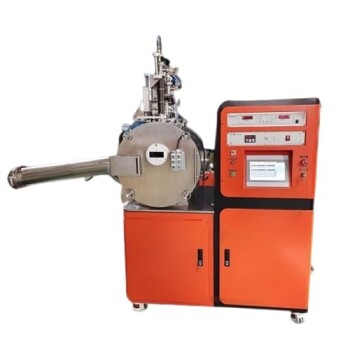
Air pressure acts as a critical control lever in PECVD, determining both the efficiency of the manufacturing process and the structural quality of the final film. It functions as a complex variable: increasing pressure boosts the reactant concentration and deposition rate, but simultaneously alters particle movement in ways that can compromise surface coverage and film regularity.
Optimal PECVD performance requires strictly balancing gas concentration against particle mobility. While higher pressures accelerate coating speed, they introduce risks to step coverage and film structure; conversely, pressure that is too low compromises density and invites physical defects.
The Mechanics of Pressure in PECVD
The Benefits of High Pressure
Increasing gas pressure directly increases the concentration of reactants within the chamber. With more reaction gas available, the chemical processes accelerate. This leads to a significantly higher deposition rate, which is often desirable for increasing manufacturing throughput.
The Mean Free Path Challenge
However, increasing pressure introduces a physical constraint known as a reduced mean free path. This refers to the average distance a particle travels before colliding with another particle.
When pressure is high, particles collide frequently, making it difficult for them to travel in straight lines. This hinders their ability to coat complex geometries, leading to poor step coverage on uneven or stepped surfaces.
Risks of Excessive Pressure
Pushing pressure levels to extremes triggers a phenomenon known as enhanced plasma polymerization. This aggressive reaction disrupts the orderly growth of the material. Consequently, the regularity of the film's growth network creates a chaotic structure, resulting in a higher volume of internal defects.
The Dangers of Low Pressure
Operating at pressures that are too low presents a different set of failure modes. Insufficient pressure negatively impacts the fundamental deposition mechanism. This results in a film with decreased denseness, weakening its structural integrity. Furthermore, low-pressure environments are prone to creating specific structural anomalies known as needle-like defects.
Understanding the Trade-offs
Process engineers must navigate a specific window of operation—typically around a vacuum of $10^{-3}$ millibar, though atmospheric pressure methods are emerging.
The core trade-off is between speed and quality. High pressure offers speed but sacrifices the ability to uniformly coat complex shapes (conformality). Low pressure risks the physical continuity of the film. There is no single "correct" pressure; the setting must be tuned to the specific geometry of the substrate and the required density of the coating.
Making the Right Choice for Your Goal
To optimize your PECVD process, you must align the pressure settings with your primary objective:
- If your primary focus is Production Speed: Higher pressure will maximize your deposition rate, provided your substrate is relatively flat and does not require complex step coverage.
- If your primary focus is Geometry and Coverage: Moderate pressure is required to maintain a sufficient mean free path, ensuring ions can navigate and coat stepped surfaces uniformly.
- If your primary focus is Structural Integrity: You must avoid the extremes; avoid very low pressure to prevent needle defects and low density, and avoid very high pressure to prevent polymerization and network irregularities.
Success in PECVD lies not in maximizing one variable, but in finding the precise equilibrium where deposition speed meets structural conformity.
Summary Table:
| Pressure Setting | Deposition Rate | Step Coverage | Structural Integrity | Common Risks |
|---|---|---|---|---|
| High Pressure | High/Fast | Poor | Low (Chaotic) | Polymerization, Internal defects |
| Optimal (~10⁻³ mbar) | Balanced | Good | High (Stable) | - |
| Low Pressure | Low/Slow | Good | Poor (Low density) | Needle-like defects, Weak integrity |
Elevate Your Thin-Film Research with KINTEK
Precise control over the PECVD process requires high-performance equipment that can handle the delicate balance between pressure, temperature, and plasma stability. KINTEK specializes in providing advanced laboratory solutions, including state-of-the-art PECVD, CVD, and vacuum furnaces designed for superior film uniformity and structural integrity.
Whether you are focusing on high-speed production or complex geometric coatings, our comprehensive range of tools—from MPCVD systems to high-temperature high-pressure reactors and specialized PTFE and ceramic consumables—ensures your research meets the highest standards.
Ready to optimize your deposition process? Contact KINTEK today to consult with our experts and find the perfect equipment for your laboratory needs.
Related Products
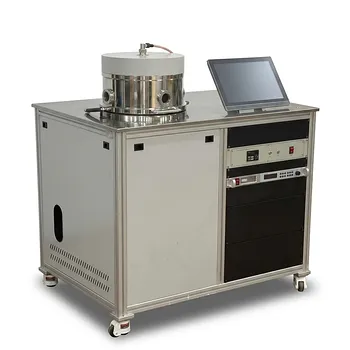
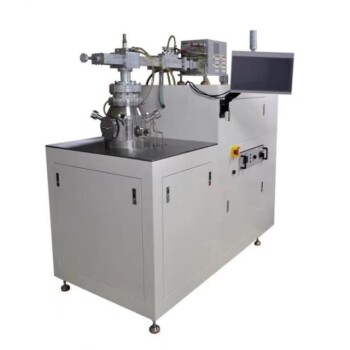
- RF PECVD System Radio Frequency Plasma-Enhanced Chemical Vapor Deposition RF PECVD
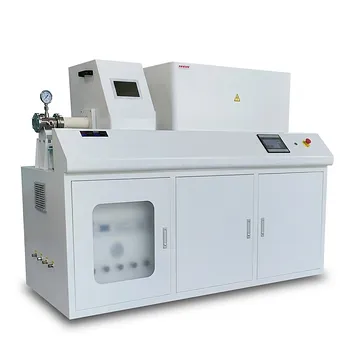
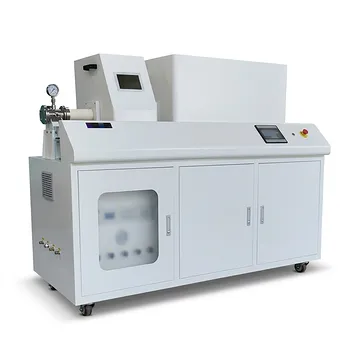
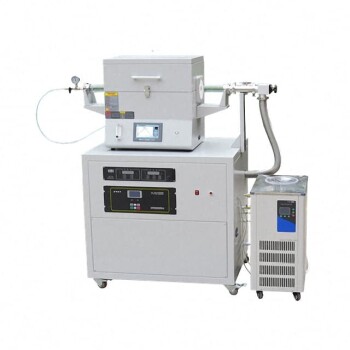
- Chemical Vapor Deposition CVD Equipment System Chamber Slide PECVD Tube Furnace with Liquid Gasifier PECVD Machine
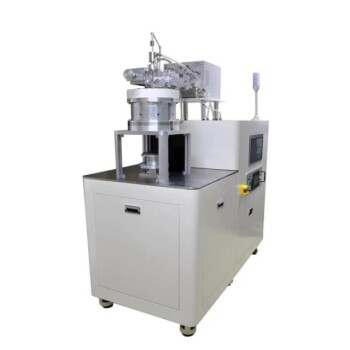
- Inclined Rotary Plasma Enhanced Chemical Vapor Deposition PECVD Equipment Tube Furnace Machine
- Inclined Rotary Plasma Enhanced Chemical Vapor Deposition PECVD Equipment Tube Furnace Machine
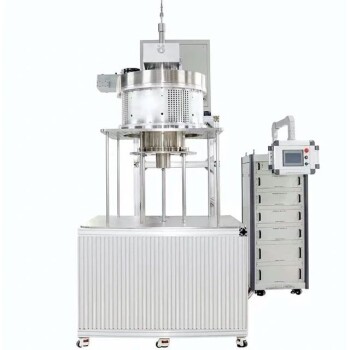
- 915MHz MPCVD Diamond Machine Microwave Plasma Chemical Vapor Deposition System Reactor
People Also Ask
- What is plasma enhanced chemical vapour deposition PECVD used for? Enable Low-Temp Thin Films for Electronics & Solar
- What is an example of PECVD? RF-PECVD for High-Quality Thin Film Deposition
- What is the role of RF-PECVD in VFG preparation? Mastering Vertical Growth and Surface Functionality
- What is plasma enhanced chemical Vapour deposition process used for fabrication of? A Guide to Low-Temperature Thin Films
- What is plasma CVD? Unlock Low-Temperature Thin Film Deposition for Sensitive Materials