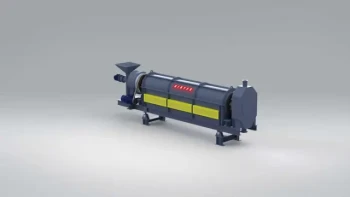
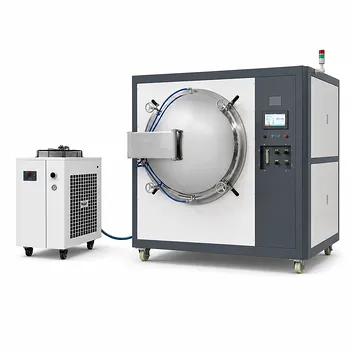
The atmosphere control furnace is the critical driver of the carbonization process. It facilitates high-temperature pyrolysis to convert phenolic resin (PR) into amorphous carbon (AC) while utilizing a continuous argon flow to prevent the oxidative destruction of the carbon nanotube framework.
This specialized thermal treatment transforms a polymer-coated sponge into a structurally reinforced carbon network. By excluding oxygen and precisely managing heat, the furnace enables the amorphous carbon to "weld" nanotube junctions, significantly increasing the material's mechanical stability and durability.
The Mechanism of Chemical Conversion
Pyrolysis of the Phenolic Resin Coating
The primary function of the furnace is to provide the thermal energy necessary for pyrolysis. During this process, the phenolic resin coating on the carbon nanotubes is chemically decomposed into amorphous carbon.
Formation of Amorphous Carbon "Welds"
As the resin carbonizes, the resulting amorphous carbon accumulates at the nanotube junctions. This serves as a structural weld, which is essential for enhancing the mechanical strength and structural integrity of the entire sponge network.
Regulation of Carbon Hybridization
The furnace allows for the precise management of the sp2 and sp3 hybridized carbon ratio. This level of control is vital for optimizing the electrochemical performance and the final graphitization degree of the carbon layer.
The Vital Role of Argon Gas Flow
Creation of an Oxygen-Free Environment
High-purity argon acts as an inert protective gas that displaces air within the furnace. By creating an oxygen-free neutral atmosphere, it ensures that the carbon framework does not undergo oxidative loss at high temperatures.
Protection of the Carbon Framework
Without the argon shield, the carbon nanotubes and the resin would simply combust. The argon flow allows the sponge to reach temperatures often exceeding 1000°C while maintaining its surface purity and structural mass.
Removal of Gaseous Byproducts
The continuous flow of argon helps sweep away volatile decomposition products released during the pyrolysis of the phenolic resin. This prevents unwanted secondary reactions and ensures a cleaner conversion to amorphous carbon.
Precision Control and Material Tuning
Selective Functional Group Decomposition
Researchers use the furnace's precise temperature regulation to selectively decompose specific surface functional groups like carboxyl or lactone groups. This allows for the fine-tuning of the sponge’s surface acidity without damaging the underlying carbon structure.
Thermal Localization and Conductivity
The furnace’s heating rate and duration directly influence the thermal conductivity of the resulting CNT@AC sponge. By regulating the graphitization degree of the carbon shell, the furnace helps optimize the thermal localization effects necessary for applications like solar-driven evaporation.
Optimization of Pore Structure
Precise annealing temperatures—typically ranging from 500°C to 900°C—enable the regulation of the pore size distribution. This is critical for maximizing the specific surface area and energy storage performance of the porous carbon matrix.
Understanding the Trade-offs
Temperature Precision vs. Material Integrity
While higher temperatures increase the degree of graphitization and structural "welding," excessive heat can lead to the unwanted sintering of nanotubes. Finding the optimal thermal window is a delicate balance between achieving strength and maintaining the desired porosity.
Gas Purity and Cost
The effectiveness of the process is highly dependent on the purity of the argon gas. Trace amounts of oxygen or moisture in the gas line can lead to surface defects or partial oxidation, increasing operational costs as higher-grade gases are required for sensitive applications.
Heating Rate Constraints
Rapid heating rates may lead to non-uniform carbonization or internal stresses within the sponge framework. A controlled, slower ramp-up is often necessary for structural uniformity, though it increases the overall processing time and energy consumption.
Applying This Process to Your Research Goals
The use of an atmosphere control furnace should be tailored to the specific physical requirements of your carbon nanotube sponge project.
- If your primary focus is mechanical durability: Target higher annealing temperatures to maximize the "welding" effect of amorphous carbon at the nanotube junctions.
- If your primary focus is surface chemistry and reactivity: Utilize lower, precisely controlled temperatures to preserve specific oxygen functional groups while still achieving resin carbonization.
- If your primary focus is electrical or thermal conductivity: Prioritize a high-purity argon environment and longer dwell times to increase the graphitization degree of the amorphous carbon layer.
The controlled thermal transformation within an inert atmosphere is the definitive method for turning fragile polymer-coated nanotubes into robust, high-performance carbon sponges.
Summary Table:
| Feature | Role in CNT@PR to CNT@AC Conversion |
|---|---|
| Argon Gas Flow | Displaces oxygen to prevent combustion; removes volatile byproducts for surface purity. |
| High-Temp Pyrolysis | Thermally decomposes phenolic resin into amorphous carbon to form structural "welds." |
| Atmosphere Control | Regulates the sp2/sp3 carbon ratio and graphitization for optimized conductivity. |
| Precision Annealing | Controls pore size distribution and surface acidity through selective functional group decomposition. |
Elevate Your Material Synthesis with KINTEK Precision
Achieving the perfect carbon nanotube sponge requires more than just heat—it requires absolute atmospheric control. KINTEK specializes in advanced laboratory equipment designed for sensitive pyrolysis and annealing processes. Our comprehensive range of atmosphere furnaces, tube furnaces, and vacuum systems provides the inert environment and temperature uniformity necessary to prevent oxidative loss and ensure structural "welding" of your CNT networks.
Whether you are refining pore structures or maximizing mechanical durability, KINTEK offers the tools to support your innovation, including:
- High-Temperature Furnaces: Muffle, Tube, Rotary, and CVD/PECVD systems.
- Specialized Reactors: High-temperature high-pressure reactors and autoclaves.
- Essential Consumables: High-purity ceramics, crucibles, and PTFE products.
Ready to optimize your carbonization process? Contact our technical experts today to find the ideal furnace solution for your research and development goals.
References
- Ziming Ye, Anyuan Cao. Crack‐Induced Superelastic, Strength‐Tunable Carbon Nanotube Sponges. DOI: 10.1002/adfm.202303475
This article is also based on technical information from Kintek Solution Knowledge Base .
Related Products
- 1200℃ Controlled Atmosphere Furnace Nitrogen Inert Atmosphere Furnace
- 1700℃ Controlled Atmosphere Furnace Nitrogen Inert Atmosphere Furnace
- 1400℃ Controlled Atmosphere Furnace with Nitrogen and Inert Atmosphere
- Controlled Nitrogen Inert Hydrogen Atmosphere Furnace
- Mesh belt controlled atmosphere furnace
People Also Ask
- What is a controlled atmosphere furnace? Achieve Purity and Precision in High-Temp Processing
- What is the necessity of a controlled atmosphere furnace for corrosion research? Replicating Realistic Industrial Risks
- What is the role of the furnace atmosphere? Master Precise Metallurgical Control for Your Heat Treatment
- What is a controlled atmosphere furnace for heat treatment? Master Surface Chemistry and Metallurgy
- Can you braze copper to brass without flux? Yes, but only under these specific conditions.