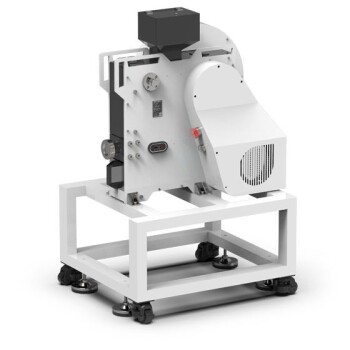
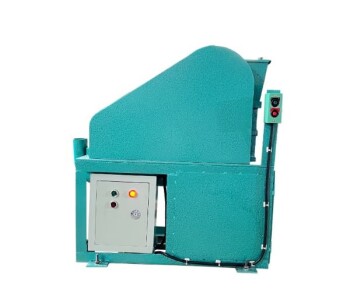
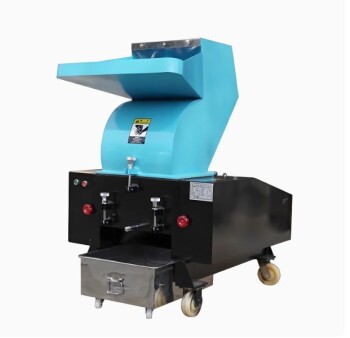
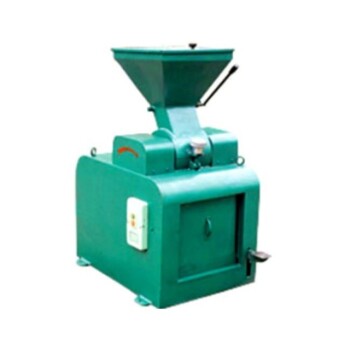
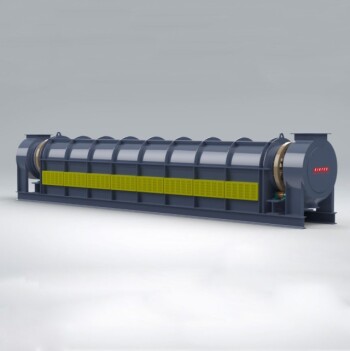
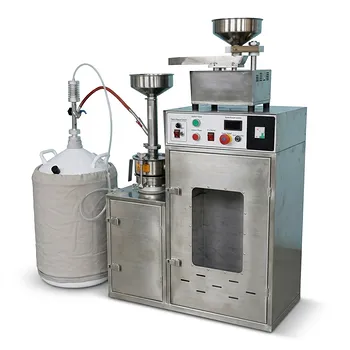
Crushing equipment serves a dual purpose in boron mud experiments: it physically reduces large calcium carbide chunks into fine particles while simultaneously acting as a process control against chemical degradation. Because calcium carbide is highly sensitive to environmental conditions, the equipment is utilized to execute a rapid size-reduction phase, minimizing the window of time the material is exposed to atmospheric moisture.
By prioritizing speed and efficiency, crushing equipment balances the physical need for fine particle size with the chemical necessity of preventing hydrolysis, ensuring the reducing agent remains potent for the thermal reduction process.
The Mechanics of Particle Reduction
Breaking Down the Raw Material
The primary function of the equipment is to convert raw, large chunks of calcium carbide into a usable state. The vacuum thermal reduction process requires materials that can be easily mixed and heated.
Achieving Optimal Particle Size
The equipment is calibrated to produce fine particles rather than coarse irregular pieces. This physical transformation is the first step in preparing the reducing agent for interaction with boron mud.
Mitigating Chemical Instability
The Danger of Hydrolysis
Calcium carbide is chemically volatile when exposed to the environment. It is highly susceptible to moisture, meaning it will react with water vapor in the air if left exposed.
Preventing Agent Degradation
This reaction with moisture leads to hydrolysis, which degrades the quality of the calcium carbide. If the crushing process is too slow or inefficient, the reducing agent loses its potency before the experiment even begins.
Speed as a Protective Factor
To counter this, the crushing equipment must operate with rapid efficiency. By minimizing the duration of the crushing phase, the equipment limits air exposure, preserving the chemical integrity of the calcium carbide.
Optimizing Reaction Conditions
Ensuring Thorough Contact
The ultimate goal of producing fine particles is to facilitate interaction within the reaction chamber. Fine particles allow for thorough contact between the calcium carbide and the boron mud.
Maximizing Surface Area
A finer grind increases the specific surface area of the reducing agent. This physical characteristic is essential for driving the vacuum thermal reduction reaction forward efficiently.
Understanding the Trade-offs
Fineness vs. Reactivity Risks
While finer particles provide better contact with boron mud, they also possess a higher surface area that reacts more quickly with atmospheric moisture. The crushing process must reach the desired fineness without extending the processing time so long that the material degrades.
Equipment Efficiency Dependencies
If the equipment is not sufficiently rapid, the benefit of achieving fine particles is negated by the chemical loss due to hydrolysis. The machinery must be capable of high-throughput processing to ensure the material remains "fresh" for the vacuum stage.
Making the Right Choice for Your Goal
To ensure the success of your boron mud vacuum thermal reduction, consider how you operate your crushing stage:
- If your primary focus is Chemical Purity: prioritize equipment speed to minimize the time calcium carbide is exposed to air, preventing hydrolysis.
- If your primary focus is Reaction Efficiency: ensure the equipment produces consistently fine particles to guarantee maximum surface contact with the boron mud.
The quality of your final reduction depends entirely on preserving the reducing agent during this initial preparation phase.
Summary Table:
| Feature | Function in Experiment | Benefit to Process |
|---|---|---|
| Rapid Size Reduction | Converts large chunks to fine particles | Minimizes exposure time to moisture |
| Particle Calibration | Achieves high surface area | Ensures thorough contact with boron mud |
| Hydrolysis Prevention | Limits atmospheric contact | Preserves chemical potency of the agent |
| High-Throughput Speed | Efficient material processing | Maximizes yield in vacuum thermal reduction |
Precision Processing for Your Laboratory Success
Maximize the integrity of your chemical agents with KINTEK’s high-performance crushing and milling systems. In complex procedures like boron mud vacuum thermal reduction, every second of exposure matters. Our equipment is engineered for rapid, efficient size reduction, ensuring your calcium carbide maintains its potency without degradation.
Beyond particle preparation, KINTEK offers a comprehensive suite of solutions including high-temperature vacuum furnaces, high-pressure reactors, and precision pellet presses. Whether you are working on battery research or advanced material synthesis, our expertise ensures your lab achieves superior consistency and reliability.
Ready to upgrade your research efficiency? Contact KINTEK today to find the perfect equipment for your specific application.
Related Products
- Laboratory Jaw Crusher
- Sealed Jaw Crusher High Efficiency Environmental Protection Safe and Reliable
- Powerful Plastic Crusher Machine
- Laboratory Sealed Hammer Crusher for Efficient Sample Preparation
- Professional Cutting Tools for Carbon Paper Cloth Diaphragm Copper Aluminum Foil and More
People Also Ask
- What role do laboratory crushers and standard sieves play in Datura stramonium pretreatment? Optimize Your HTL Yield
- What is a laboratory crusher? The First Step to Accurate Sample Analysis
- What is the primary function of a laboratory crusher? Optimize Biomass & Coal Co-Gasification Efficiency
- What is a jaw crusher for labs? The Essential First Step for Accurate Sample Analysis
- How does a jaw crusher contribute to the primary processing of slate waste? Optimize Your Size Reduction Workflow