Precision temperature-controlled heating serves as the fundamental driver for the successful conversion of Copper Nitride (Cu3N) thin films when in contact with molten lithium. By maintaining a highly stable environment at 200 degrees Celsius, this equipment provides the specific thermal energy required to overcome the reaction energy barrier, initiating the chemical transformation without inducing thermal shock or instability.
Core Takeaway The equipment’s primary function is to define a precise thermal window. It holds the system at 200°C to facilitate the "in-situ" formation of a dual-conductivity network (Li3N and Cu), while actively preventing the destructive decomposition of Cu3N that inevitably occurs if temperatures drift above 300°C.
The Role of Thermal Energy in Reaction Kinetics
To create a Mixed Conducting Layer (MCL), the interaction between the thin film and the lithium cannot be passive; it requires activation.
Overcoming the Reaction Barrier
Chemical reactions require a specific threshold of energy to begin. Precision heating supplies this activation energy, allowing the Cu3N and molten lithium to interact chemically rather than just physically.
Stabilizing the Reaction Environment
The equipment maintains the system at a constant 200 degrees Celsius. This stability is crucial for ensuring the reaction proceeds uniformly across the entire thin film surface.
Facilitating In-Situ Conversion
By controlling the heat input, the equipment enables an in-situ conversion reaction. This means the transformation happens directly within the interface, converting the precursor materials into a new functional structure.
Engineering the Mixed Conducting Network
The purpose of this thermal treatment is to engineer a composite material with specific electrical properties.
Creating the Ionic Matrix
The reaction converts the lithium and nitrogen components into a Lithium Nitride (Li3N) matrix. This component provides the necessary high ionic conductivity for the layer.
Forming Electronic Pathways
Simultaneously, the reaction reduces the copper component into Copper (Cu) nanoparticles. These nanoparticles are dispersed throughout the matrix, providing the essential electronic conductivity.
Understanding the Trade-offs: The Thermal Upper Limit
While heat is necessary to start the reaction, excessive heat is detrimental. Precision equipment is strictly required to avoid crossing critical thermal thresholds.
The Decomposition Risk
Copper Nitride is thermally sensitive. If the temperature exceeds 300 degrees Celsius, Cu3N undergoes decomposition rather than the desired conversion reaction.
Preventing Structural Failure
Decomposition destroys the integrity of the thin film before the favorable reaction with lithium can occur. Precision control prevents this by clamping the temperature well below this 300°C danger zone, ensuring the MCL forms correctly.
Optimizing the Conversion Process
To achieve a high-quality mixed conducting layer, you must focus on the narrow operating window defined by the material properties.
- If your primary focus is Reaction Initiation: Ensure the equipment can reach and stabilize at 200°C quickly to overcome the energy barrier and start the conversion.
- If your primary focus is Material Integrity: configure the heating limits to strictly prevent any excursions above 300°C to avoid irreversible decomposition of the Cu3N film.
By adhering to these precise thermal parameters, you transform a volatile chemical interaction into a controlled manufacturing process for advanced conducting layers.
Summary Table:
| Parameter | Operating Window | Role in MCL Formation |
|---|---|---|
| Target Temperature | 200°C | Supplies activation energy for reaction initiation |
| Thermal Stability | High Stability | Ensures uniform in-situ conversion across the film |
| Critical Threshold | < 300°C | Prevents irreversible decomposition of Cu3N precursor |
| Resulting Structure | Composite | Forms Li3N (Ionic) and Cu Nanoparticles (Electronic) |
Elevate Your Advanced Material Synthesis with KINTEK
Precision is the difference between a successful chemical conversion and material failure. KINTEK specializes in high-performance laboratory equipment designed to meet the rigorous demands of battery research and thin-film technology.
Whether you are engineering mixed conducting layers or developing next-generation electrodes, our range of precision muffle and vacuum furnaces, electrolytic cells, and battery research tools provides the thermal stability and control required to maintain narrow operating windows.
Our value to your lab:
- Unmatched Thermal Control: Prevent decomposition with industry-leading temperature accuracy.
- Comprehensive Solutions: From high-temperature reactors to specialized consumables like crucibles and PTFE products.
- Expert Support: Tailored equipment configurations for complex in-situ reactions.
Ready to optimize your reaction kinetics? Contact KINTEK today to discuss your project requirements!
Related Products
- Laboratory Small Constant Temperature Heated Magnetic Stirrer Heater and Stirrer
- Multi Heating Zones CVD Tube Furnace Machine Chemical Vapor Deposition Chamber System Equipment
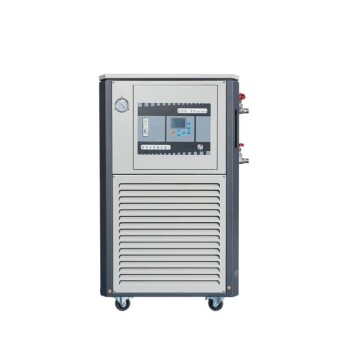
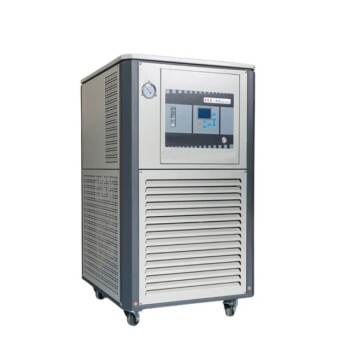
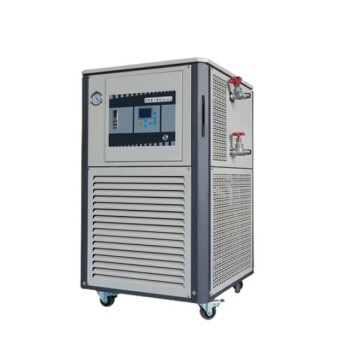
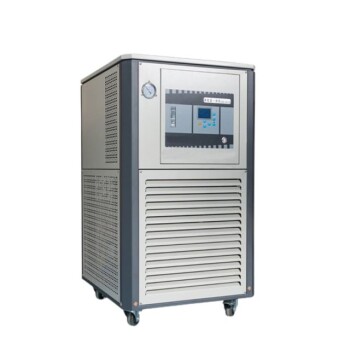
- 10L Heating Chilling Circulator Cooling Water Bath Circulator for High and Low Temperature Constant Temperature Reaction
- 5L Heating Chilling Circulator Cooling Water Bath Circulator for High and Low Temperature Constant Temperature Reaction
- 20L Heating Chilling Circulator Cooling Water Bath Circulator for High and Low Temperature Constant Temperature Reaction
People Also Ask
- What role does a magnetic stirrer with heating play in ZnO nanoparticle synthesis? Precision Control for Quality Results
- What role does a constant temperature heating magnetic stirrer play in MFC-HAp synthesis? Achieve Material Homogeneity
- What is the function of a laboratory magnetic stirrer in Ni–Cr–P electrodeposition? Optimize Ion Transport & Coating
- Why is a laboratory magnetic stirrer required for benzoic acid esters? Boost Reaction Speed & Yield with High RPM
- What role does a laboratory magnetic stirrer play in TiO2 and TiO2-Ag sol preparation? Master Chemical Kinetics