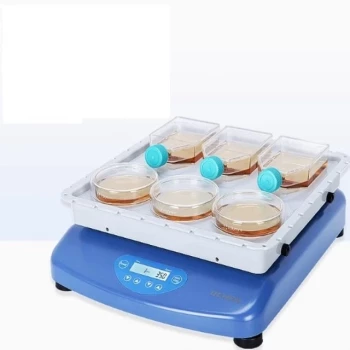
The stirrer in a Continuous Stirred-Tank Reactor (CSTR) serves as the primary mechanism for ensuring process uniformity and efficiency.
In the context of Hydrothermal Liquefaction (HTL), the stirrer’s mechanical motion is responsible for mixing reactants thoroughly and eliminating internal temperature differences. By forcing full contact between the biomass feedstock, water, and catalysts, it ensures that materials are converted uniformly, directly optimizing the final yield of biocrude oil.
Core Takeaway The stirrer is not merely for agitation; it creates the specific hydrodynamic environment required to optimize residence time. By harmonizing temperature and physical contact, it transforms a heterogeneous mixture into a uniform reaction environment, maximizing biocrude yield.
Mechanisms of Reaction Optimization
Eliminating Thermal Gradients
The HTL process relies heavily on maintaining specific, high temperatures to break down biomass. Without active intervention, large reactors naturally develop hot and cold zones.
The stirrer mitigates this by circulating the fluid continuously, ensuring the heat is distributed evenly throughout the vessel. This elimination of internal thermal gradients guarantees that all feedstock experiences the precise temperature required for liquefaction, preventing incomplete reactions.
Facilitating Multi-Phase Contact
HTL is inherently complex because it involves multiple phases: solid biomass, liquid water, and often solid or liquid catalysts.
The mechanical action of the stirrer forces these distinct phases to interact. It facilitates full contact between the reagents, ensuring that the catalyst can effectively reach the biomass surface. This contact is the prerequisite for the chemical breakdown of the feedstock.
Improving Hydrodynamic Patterns
To achieve a high yield, the flow of material inside the reactor must be controlled and predictable.
The stirrer establishes specific hydrodynamic patterns that prevent "short-circuiting" (where feed exits too quickly) or the formation of "dead zones" (where feed gets stuck). This ensures that the material spends the correct amount of designated residence time in the active reaction zone.
Accelerating Mass Transfer
While the primary goal is mixing, the physics of the stirring action also impacts the speed of the reaction at a microscopic level.
By using mechanical forced convection, the stirrer constantly refreshes the contact surface between the liquid and the solid particles. This reduces boundary layer resistance, allowing the reactants to penetrate the biomass more efficiently and accelerating the overall mass transfer rate.
Understanding the Operational Requirements
The Necessity of Uniformity
The effectiveness of the CSTR is entirely dependent on the quality of the mixing. If the stirring is inadequate, the reactor will suffer from uneven conversion rates.
In such a scenario, some biomass may remain under-reacted due to poor heat transfer, while other portions may over-react or degrade. Achieving uniform material conversion is the defining metric of a successfully tuned stirring system.
Making the Right Choice for Your Goal
To maximize the efficiency of your HTL process, you must tune the stirrer's operation to match your specific reaction targets.
- If your primary focus is Maximizing Yield: Prioritize stirring speeds that establish strong hydrodynamic patterns to ensure all biomass remains in the reactor for the full residence time.
- If your primary focus is Process Consistency: Focus on the stirrer's ability to eliminate thermal gradients, ensuring precise temperature control across the entire tank volume.
Ultimately, the stirrer transforms the CSTR from a simple vessel into a precision instrument for high-yield biocrude production.
Summary Table:
| Mechanism | Impact on HTL Process | Benefit to Research/Production |
|---|---|---|
| Thermal Uniformity | Eliminates hot/cold zones within the vessel | Prevents incomplete reactions or feedstock degradation |
| Multi-Phase Contact | Forces interaction between solids, liquids, and catalysts | Accelerates chemical breakdown of biomass |
| Hydrodynamic Control | Prevents dead zones and short-circuiting | Ensures consistent and optimized residence time |
| Mass Transfer | Reduces boundary layer resistance | Speeds up the conversion of feedstock into biocrude oil |
Elevate Your HTL Research with KINTEK Precision Engineering
At KINTEK, we understand that high-yield Hydrothermal Liquefaction requires more than just heat—it requires precise control over reaction dynamics. Our specialized high-temperature high-pressure reactors and autoclaves are designed to provide the exact hydrodynamic environment and thermal stability needed for uniform material conversion.
From advanced crushing and milling systems for feedstock preparation to high-performance high-pressure reactors for biomass conversion, KINTEK provides the comprehensive tools laboratory researchers and industrial developers need to optimize biocrude production.
Ready to maximize your reactor's efficiency? Contact us today to explore our laboratory solutions and find the perfect equipment for your specific HTL requirements.
References
- Saeed Ranjbar, F. Xavier Malcata. Hydrothermal Liquefaction: How the Holistic Approach by Nature Will Help Solve the Environmental Conundrum. DOI: 10.3390/molecules28248127
This article is also based on technical information from Kintek Solution Knowledge Base .
Related Products
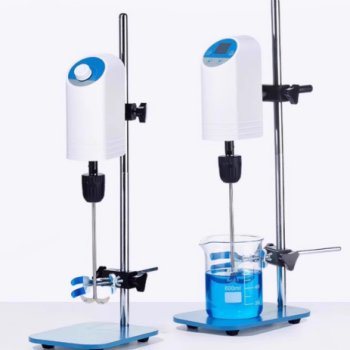
- High Performance Laboratory Stirrers for Diverse Applications
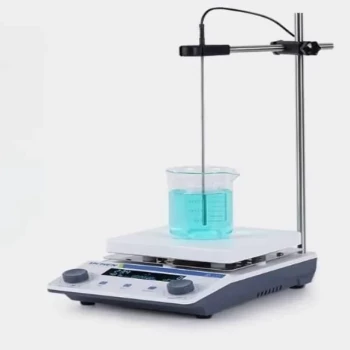
- Laboratory Small Constant Temperature Heated Magnetic Stirrer Heater and Stirrer
- High Pressure Laboratory Autoclave Reactor for Hydrothermal Synthesis
- Customizable Laboratory High Temperature High Pressure Reactors for Diverse Scientific Applications
- Benchtop High Speed Small Lab Centrifuge for Serum Separation and Low Temperature Dehydration
People Also Ask
- How does a laboratory stirrer influence MOF product quality? Master Precision in Non-Solvothermal Synthesis
- What critical role does a Laboratory Stirrer play during leaching? Enhance Titanium-Magnesium Waste Recovery
- What is the primary function of laboratory stirring equipment in the preparation of compost leachate? Optimize Extraction
- What is a laboratory mixer? A Guide to Achieving Perfect Sample Homogeneity
- What is a laboratory mixer used for? Choose the Right Tool for Liquids or Solids