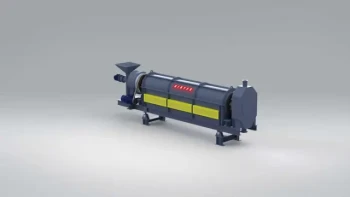
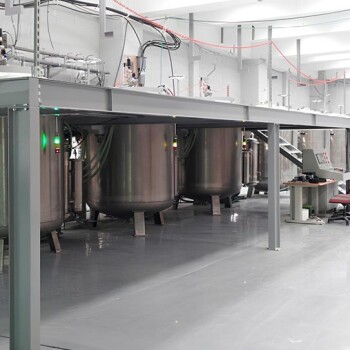
A tube furnace with nitrogen protection serves as a controlled thermal reactor that converts biomass into high-surface-area carbon through pyrolysis. By providing a precisely regulated temperature (typically between 400°C and 900°C) and a continuous flow of nitrogen, the furnace prevents the material from catching fire (combustion) while allowing it to chemically decompose into a porous carbon skeleton.
Core Takeaway: The tube furnace facilitates the transition from raw biomass to functional carbon by isolating the material from oxygen. This allows for controlled "etching" and carbonization, ensuring the final product maintains a specific pore structure rather than turning to ash.
The Role of Controlled Thermal Environments
Achieving Precise Pyrolysis Temperatures
The tube furnace provides a stable high-temperature environment required to break down complex organic polymers like lignin and cellulose. Depending on the biomass source, temperatures are usually maintained at 600°C or 800°C to ensure complete carbonization.
Managing Heating Rates and Volatiles
Consistent heating rates, such as 5°C per minute, are critical for the gradual removal of volatile components. This slow release of gases prevents structural collapse and establishes the foundation for the material's initial porosity.
The Necessity of Nitrogen Protection
Creating an Inert Atmosphere
Nitrogen is used to continuously purge the furnace tube, effectively excluding oxygen from the reaction zone. In the absence of oxygen, the biomass undergoes pyrolysis instead of oxidative combustion, preserving the carbon mass.
Supporting Chemical Activation
When using activating agents like potassium hydroxide (KOH), an inert nitrogen atmosphere is mandatory. It ensures that the chemical reaction focuses on the directional etching of carbon atoms to create a three-dimensional interpenetrating network of pores.
Facilitating Heteroatom Integration
The sealed, inert environment of the tube furnace allows for the stable integration of nitrogen and sulfur heteroatoms into the carbon lattice. This process enhances the chemical characteristics of the resulting activated carbon for specific industrial applications.
Understanding the Technical Trade-offs
Gas Flow vs. Thermal Uniformity
While a high nitrogen flow rate ensures a strictly inert atmosphere, it can lead to thermal gradients within the tube. If the gas is not pre-heated or the flow is too aggressive, it may cool the sample unevenly, affecting the quality of the carbonization.
Sealing Integrity and Contamination
The effectiveness of the process relies entirely on the sealing integrity of the tube furnace. Any oxygen leakage at high temperatures will cause the carbon skeleton to oxidize, resulting in a significant loss of material and a decrease in the specific surface area.
Batch Size and Throughput
Tube furnaces are excellent for precision and research-scale production, but they offer limited volume compared to rotary kilns. Achieving the same level of atmospheric purity in larger-scale equipment presents significantly higher engineering challenges.
Optimizing Your Biomass Processing
To achieve the best results during carbonization and activation, your approach should vary based on your material goals.
- If your primary focus is high specific surface area: Use a chemical activator like KOH within the tube furnace under a strictly maintained nitrogen flow to maximize pore etching.
- If your primary focus is structural integrity: Prioritize a slower heating rate (e.g., 5°C/min) and lower carbonization temperatures to prevent the carbon framework from becoming too brittle.
- If your primary focus is heteroatom doping: Ensure the tube furnace is perfectly sealed to facilitate the stable bonding of nitrogen or sulfur into the carbon skeleton at temperatures near 800°C.
The synergy between precise temperature control and an inert nitrogen atmosphere is the fundamental requirement for transforming raw biomass into high-performance carbon materials.
Summary Table:
| Process Phase | Role of Tube Furnace | Key Parameter/Requirement |
|---|---|---|
| Pyrolysis | Controlled thermal decomposition without oxygen | 400°C - 900°C Temperature Range |
| Activation | Facilitates chemical etching (e.g., with KOH) | Continuous Inert Nitrogen Flow |
| Pore Creation | Manages volatile release to prevent collapse | Precise Heating Rate (e.g., 5°C/min) |
| Heteroatom Doping | Enables stable bonding of N or S into lattice | High Sealing Integrity at 800°C+ |
| Atmosphere Control | Prevents oxidative combustion to ash | Effective Gas Purging & Pre-heating |
Elevate Your Material Research with KINTEK Precision
Achieving the perfect pore structure in biomass-derived carbon requires more than just heat—it requires absolute atmospheric control and thermal stability. KINTEK specializes in high-performance laboratory equipment designed for the most demanding pyrolysis and activation workflows.
Whether you are scaling up research or refining chemical activation protocols, our comprehensive range of high-temperature tube, atmosphere, and vacuum furnaces provides the sealing integrity and heating precision your project demands. Our portfolio also includes:
- High-Pressure Reactors & Autoclaves for hydrothermal carbonization.
- Crushing, Milling & Sieving Systems for biomass preparation.
- Advanced Ceramics & Crucibles for high-temperature chemical resistance.
- Electrolytic Cells & Battery Research Tools for testing your final carbon products.
Ready to optimize your carbonization process? Contact KINTEK today to discuss your specific application and discover how our specialized laboratory solutions can drive your innovation forward.
References
- Xifeng Lv, Fang Wang. Waste Plastic Polypropylene Activated Jujube Charcoal for Preparing High-Performance Phase Change Energy Storage Materials. DOI: 10.3390/nano13030552
This article is also based on technical information from Kintek Solution Knowledge Base .
Related Products
- 1200℃ Controlled Atmosphere Furnace Nitrogen Inert Atmosphere Furnace
- 1700℃ Controlled Atmosphere Furnace Nitrogen Inert Atmosphere Furnace
- 1400℃ Controlled Atmosphere Furnace with Nitrogen and Inert Atmosphere
- Controlled Nitrogen Inert Hydrogen Atmosphere Furnace
- Electric Rotary Kiln Small Rotary Furnace for Activated Carbon Regeneration
People Also Ask
- What is a controlled atmosphere furnace for heat treatment? Master Surface Chemistry and Metallurgy
- What is the necessity of a controlled atmosphere furnace for corrosion research? Replicating Realistic Industrial Risks
- Can you braze copper to brass without flux? Yes, but only under these specific conditions.
- What is the role of the furnace atmosphere? Master Precise Metallurgical Control for Your Heat Treatment
- Why is a high-temperature furnace with a controlled atmosphere required for S@MMPC? Master Precision Synthesis