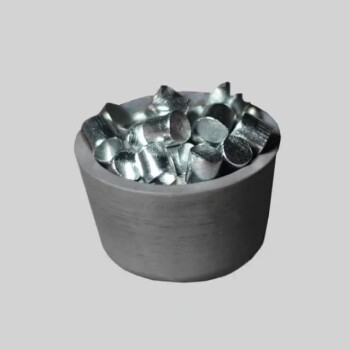
Graphite serves as the ideal containment material for vacuum distillation of high-purity magnesium due to its unique combination of thermal resilience and chemical neutrality. It specifically addresses the dual challenge of containing a heavy, molten aluminum-magnesium alloy while preventing any chemical reactions that would compromise the purity of the final product.
The core value of using a graphite crucible lies in its ability to withstand the static pressure of molten metal at 650°C without chemically interacting with the alloy, ensuring the isolation and high purity of the distilled magnesium.
Chemical Inertness and Purity
Preventing Alloy Contamination
One of the most critical requirements in refining high-purity metals is preventing the container from contaminating the contents.
Graphite is chemically inert relative to the aluminum-magnesium alloy used in this process.
Stability at Processing Temperatures
At the specific distillation temperature of approximately 650°C, graphite does not react with the molten mixture.
This non-reactivity ensures that no carbon or other impurities leach into the liquid alloy, which is essential for achieving successful separation and high purity.
Thermal and Structural Integrity
Handling High Temperatures
Vacuum distillation requires sustained elevated temperatures to vaporize the magnesium.
Graphite possesses exceptional high-temperature resistance, allowing it to maintain its form and function in this harsh thermal environment.
Withstanding Static Pressure
Molten metal creates significant internal pressure against the walls of a container.
The graphite crucible is structurally robust enough to withstand the static pressure exerted by the heavy liquid melt.
Ensuring Process Stability
By resisting both thermal shock and physical deformation, the crucible acts as a critical stabilizing component.
It ensures the liquid alloy remains securely contained throughout the distillation process, preventing leaks or structural failures that would halt production.
Operational Considerations
The Temperature-Reactivity Balance
While graphite is advantageous, its effectiveness is tied to the operational parameters described.
The material's inertness is specifically noted around the 650°C mark for this specific alloy.
Mechanical Limits
Graphite is chosen for its ability to hold static pressure, but it is not infinitely strong.
Operators must rely on the material's specific rating to ensure it can support the volume and weight of the specific charge being refined.
Making the Right Choice for Your Goal
When designing a vacuum distillation setup for magnesium, the crucible material dictates the quality of your output.
- If your primary focus is Product Purity: Rely on graphite’s chemical inertness to prevent reaction with the alloy at 650°C.
- If your primary focus is Process Safety: Leverage graphite’s structural ability to withstand the static pressure of the molten load without deformation.
Graphite provides the necessary stability to turn a volatile, high-temperature distillation process into a controlled and efficient operation.
Summary Table:
| Feature | Advantage for Magnesium Distillation | Impact on Quality |
|---|---|---|
| Chemical Inertness | No reaction with Al-Mg alloy at 650°C | Prevents impurity leaching |
| Thermal Stability | Maintains integrity under high heat | Ensures continuous production |
| Structural Strength | Withstands static pressure of molten metal | Prevents leaks and failures |
| Purity Control | Isolates distilled magnesium from contaminants | Guarantees high-purity output |
Elevate Your Metal Refining with KINTEK Precision
Maximize the purity of your high-temperature processes with KINTEK’s industry-leading laboratory solutions. Whether you are performing vacuum distillation, induction melting, or material crushing, our high-performance graphite crucibles, high-temperature furnaces, and high-pressure reactors are engineered to withstand the most demanding thermal environments.
Why choose KINTEK?
- Expertly Crafted Consumables: From ceramics to PTFE and high-purity crucibles.
- Comprehensive Lab Equipment: Including muffle, tube, and vacuum furnaces for precise temperature control.
- Targeted Solutions: Specialized tools for battery research, pellet pressing, and sample homogenization.
Don't let contamination or material failure compromise your results. Contact KINTEK today to find the perfect equipment for your laboratory and experience the difference that professional-grade materials make.
Related Products
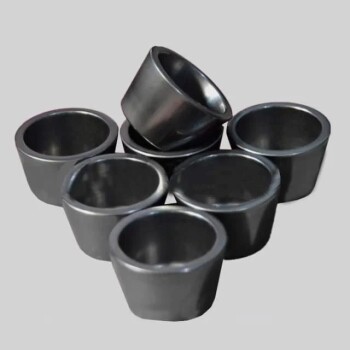
- High Purity Pure Graphite Crucible for Evaporation
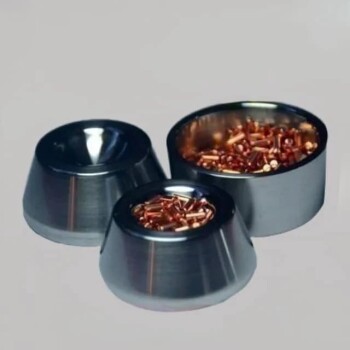
- High Purity Pure Graphite Crucible for Electron Beam Evaporation
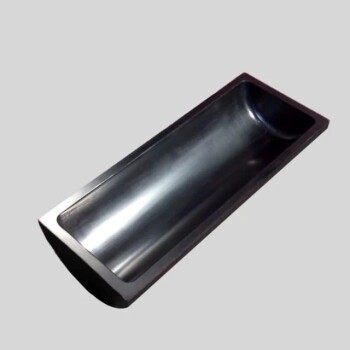
- Carbon Graphite Boat -Laboratory Tube Furnace with Cover
- Arc-Shaped Alumina Ceramic Crucible High Temperature Resistant for Engineering Advanced Fine Ceramics
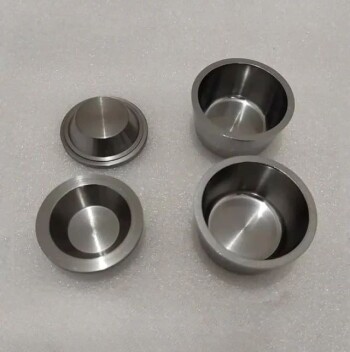
- Engineering Advanced Fine Ceramics Alumina Al2O3 Crucible With Lid Cylindrical Laboratory Crucible
People Also Ask
- Why are high-purity graphite crucibles preferred for sulfide solid electrolytes? Achieve Superior Material Purity
- Why is a high-purity graphite crucible required for Chromel-TaC composites? Ensure Peak Purity at 1400°C
- What role do high-purity graphite crucibles play in molten salt corrosion research? Ensure Reactor-Grade Precision
- Why are high-purity graphite crucibles used for magnesium distillation? Ensure 3N8 Purity & Thermal Stability
- Why is a high-purity graphite crucible ideal for nitrogen-doped graphene at 1500 °C? Maximize Purity and Stability