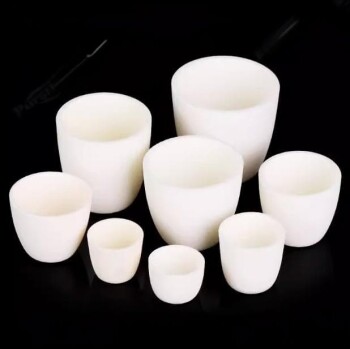
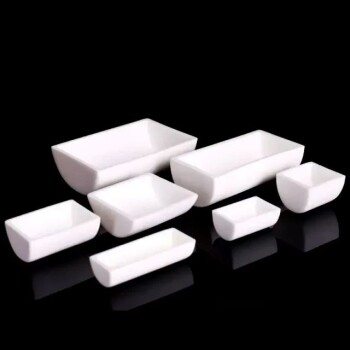
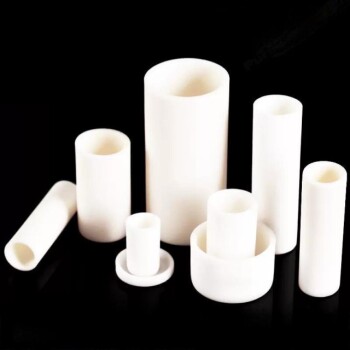
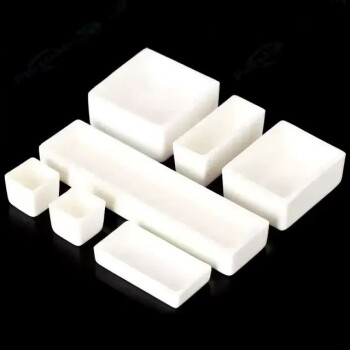
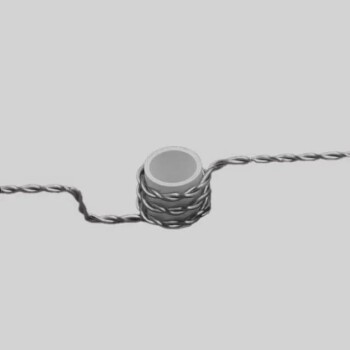
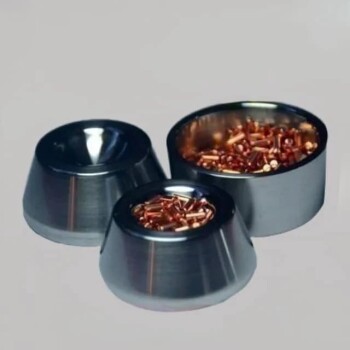
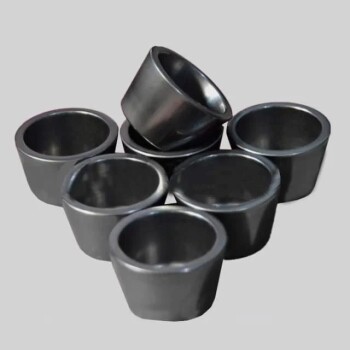
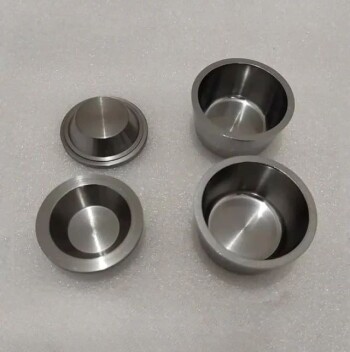
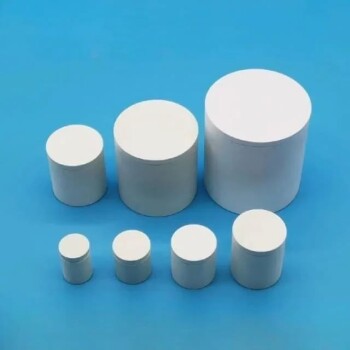
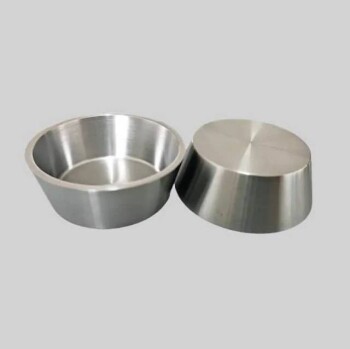
Alumina (corundum) crucibles provide a critical balance of thermal endurance and chemical purity. They are specifically engineered to withstand melting processes at temperatures around 1150°C without degrading. Their widespread adoption in vitrification is due to their ability to resist corrosive molten liquids while strictly preventing sample contamination.
Success in vitrification experiments requires a vessel that is chemically inert; alumina crucibles excel here by resisting erosion from corrosive salts while ensuring the chemical composition of the glass matrix remains unaltered.
Thermal and Chemical Stability
High Refractoriness
Alumina crucibles are characterized by high refractoriness, meaning they retain their structural integrity at elevated temperatures.
They are ideal for melting processes operating at 1150°C, a standard temperature range for many vitrification experiments.
Resistance to Corrosion
In the context of radioactive waste vitrification, the melt often contains aggressive components.
Alumina effectively resists erosion caused by molten glass liquids, which typically include corrosive salts and metal oxides that would degrade lesser materials.
Ensuring Experimental Integrity
Preventing Contamination
The validity of a vitrification experiment relies on analyzing the exact composition of the final glass product.
Alumina crucibles possess high purity, ensuring that the crucible material does not leach into the melt or introduce additional impurities to the glass composition.
Accurate Data Collection
Because the crucible prevents cross-contamination, researchers can trust the data derived from the resulting glass matrix.
This is essential for accurately determining the leaching rate and mechanical strength of the vitrified waste form.
Operational Considerations
Specific Temperature Application
While alumina is highly refractory, the provided reference specifically highlights its suitability for processes at 1150°C.
Researchers should verify that their specific experimental protocols align with this temperature range to maximize the crucible's stability.
Chemical Compatibility
These crucibles are optimized for specific corrosive environments, notably salts and metal oxides found in radioactive waste.
While they resist erosion well in this context, understanding the specific chemical interaction between your melt and the corundum structure is vital for long-term equipment life.
Making the Right Choice for Your Goal
Selecting the correct crucible is about matching material properties to your specific analytical needs.
- If your primary focus is Chemical Purity: Alumina is the superior choice to prevent foreign impurities from skewing your analysis of the glass composition.
- If your primary focus is Durability: Alumina provides the necessary resistance to erosion against aggressive molten salts and metal oxides at high heat.
By using high-purity alumina, you ensure that your research reflects the properties of the waste form itself, not the container it was melted in.
Summary Table:
| Feature | Advantage | Benefit in Vitrification |
|---|---|---|
| High Refractoriness | Stable at 1150°C+ | Maintains structural integrity during melting |
| Chemical Purity | Low leaching risk | Prevents contamination of the glass matrix |
| Corrosion Resistance | Resists aggressive salts | Withstands erosion from molten metal oxides |
| Inert Nature | Minimal interaction | Ensures accurate leaching & strength data |
Elevate Your Vitrification Research with KINTEK
Precision in material science starts with the right container. KINTEK specializes in high-performance laboratory equipment, offering premium alumina and ceramic crucibles designed to withstand the most corrosive vitrification environments. Whether you are conducting radioactive waste immobilization or advanced material synthesis, our products—ranging from high-temperature furnaces to specialized crushing and milling systems—ensure your data remains accurate and uncontaminated.
Ready to optimize your lab’s thermal processing? Contact our specialists today to discover how KINTEK’s comprehensive range of crucibles and high-temperature solutions can support your next breakthrough.
References
- S.Yu. Sayenko, Volodymyr Morgunov. Vitrification of a Simulator of Vat Residues from Liquid Radioactive Waste. DOI: 10.26565/2312-4334-2023-1-11
This article is also based on technical information from Kintek Solution Knowledge Base .
Related Products
- Arc-Shaped Alumina Ceramic Crucible High Temperature Resistant for Engineering Advanced Fine Ceramics
- Alumina Al2O3 Ceramic Crucible Semicircle Boat with Lid for Engineering Advanced Fine Ceramics
- Engineering Advanced Fine Ceramics Alumina Al2O3 Crucible With Lid Cylindrical Laboratory Crucible
- Engineering Advanced Fine Ceramics Alumina Crucibles (Al2O3) for Thermal Analysis TGA DTA
- Engineering Advanced Fine Alumina Al2O3 Ceramic Crucible for Laboratory Muffle Furnace
People Also Ask
- Why Use Alumina Crucibles & Powder Burial for NaSICON? Ensure Phase Purity and Prevent Elemental Volatilization
- What is the primary purpose of using alumina crucibles for LLTO ceramics? Optimize Your High-Temperature Sintering
- Why are alumina crucibles and mother powder essential for LATP sintering? Optimize Your Solid Electrolyte Performance
- Why are high-purity alumina crucibles used for liquid lead corrosion experiments? Ensure Data Accuracy at 550°C
- Primary considerations for choosing alumina crucibles and quartz tubes in indium intercalation: Ensure Material Purity