Plasma Chemical Vapour Deposition (PECVD) is a deposition technique defined primarily by its ability to operate at low reaction temperatures while maintaining high film quality. It utilizes electrical energy in the form of plasma to drive chemical reactions, resulting in improved film purity and density, significant energy savings, and increased manufacturing throughput compared to traditional thermal methods.
The definitive advantage of PECVD is its ability to decouple reaction energy from substrate temperature. By using plasma to activate chemical precursors, it enables the high-speed deposition of dense, high-purity films on temperature-sensitive materials, making it a critical technology for semiconductor isolation and solar cell manufacturing.
The Defining Features of PECVD
Low Reaction Temperature
The most critical feature of PECVD is its ability to operate at significantly reduced temperatures, typically between 200°C and 500°C.
Because the plasma provides the necessary activation energy to fragment chemical precursors, the substrate does not need to be heated to extreme temperatures. This allows for processing on substrates that would otherwise melt or degrade under standard Chemical Vapour Deposition (CVD) conditions.
Superior Film Quality and Density
PECVD produces films with improved purity and high density, which are essential for effective electrical insulation and protection.
The energetic species within the plasma enhance the surface mobility of the depositing material. This results in films that are not only dense but also offer excellent adhesion and "step coverage" (conformal coating) over complex, uneven surface geometries.
Efficiency and Throughput
The process is designed for high-volume manufacturing, offering energy savings and cost reduction.
High deposition rates lead to increased throughput, allowing manufacturers to process more units in less time. Furthermore, the overall energy consumption is lower because the system does not require maintaining the massive thermal budgets associated with high-temperature furnaces.
Primary Applications
Semiconductor Device Isolation
In the semiconductor industry, PECVD is the standard for creating insulating layers that prevent electrical interference between components.
Key applications identified in primary manufacturing include shallow bath isolation filling, sidewall isolation, and metal-linked media isolation. These processes ensure that conductive layers remain electrically separated, which is vital for device reliability.
Optical and Solar Technology
PECVD is extensively used to manufacture solar cells and optical coatings.
Its ability to deposit large-area, uniform films at low temperatures makes it ideal for coating photovoltaic substrates. It creates anti-reflective layers and passivation films that improve the efficiency of light capture and conversion.
Advanced Protective Coatings
Beyond electronics, PECVD is applied to create robust protective barriers, including Diamond-Like Carbon (DLC) and hydrophobic coatings.
These coatings are used in biological applications, such as protecting medical devices, and industrial applications, such as preventing corrosion on offshore pipelines or mechanical parts.
Understanding the Trade-offs
Equipment Complexity
While operation can be streamlined, the hardware required for PECVD is complex.
It requires precise control over vacuum systems, gas flow, and Radio Frequency (RF) power generators. Maintaining the stability of the plasma across large areas can be technically enhancing compared to simple thermal systems.
Potential for Plasma Damage
The same high-energy ions that allow for low-temperature processing can occasionally be a liability.
If not carefully controlled, the bombardment of the substrate by energetic plasma species can induce surface damage or introduce unwanted stress into the underlying crystal lattice of sensitive semiconductor materials.
Making the Right Choice for Your Goal
PECVD is a versatile tool, but its value depends on your specific manufacturing constraints.
- If your primary focus is Thermal Budget: Choose PECVD to deposit films on temperature-sensitive substrates (like plastics or doped wafers) without causing thermal degradation.
- If your primary focus is Throughput: Leverage PECVD for its high deposition rates and reduced cycle times to lower the cost-per-wafer in high-volume production.
- If your primary focus is Geometry: Use PECVD when you need conformal, uniform coverage over complex 3D structures or deep trenches (high aspect ratios).
Ultimately, PECVD bridges the gap between high-quality material synthesis and the practical thermal limits of modern device manufacturing.
Summary Table:
| Feature/Application | Key Details | Primary Benefits |
|---|---|---|
| Temperature Range | 200°C to 500°C | Protects heat-sensitive substrates |
| Film Properties | High density & purity | Excellent adhesion & step coverage |
| Semiconductors | Device isolation layers | Prevents electrical interference |
| Solar Technology | Anti-reflective coatings | Increases light capture efficiency |
| Industrial Use | DLC & Protective barriers | Corrosion & wear resistance |
Elevate Your Material Research with KINTEK PECVD Solutions
Are you looking to achieve superior thin-film quality without exceeding your thermal budget? KINTEK specializes in advanced laboratory equipment, including high-performance PECVD, CVD, and vacuum furnaces designed for precision semiconductor and solar research.
From high-temperature high-pressure reactors to specialized battery research tools and crushing systems, we provide the comprehensive equipment and consumables (like PTFE and ceramics) needed to optimize your manufacturing throughput. Contact us today to find the perfect deposition system for your lab!
Related Products
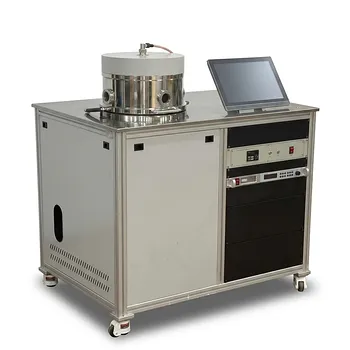
- RF PECVD System Radio Frequency Plasma-Enhanced Chemical Vapor Deposition RF PECVD
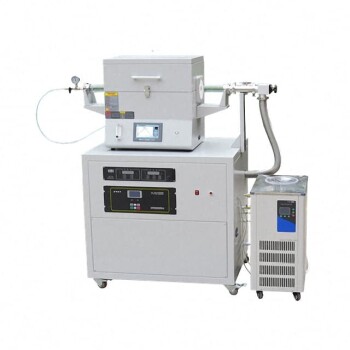
- Chemical Vapor Deposition CVD Equipment System Chamber Slide PECVD Tube Furnace with Liquid Gasifier PECVD Machine
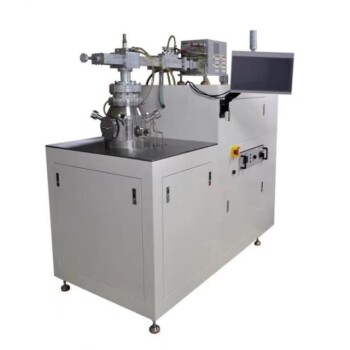
- Inclined Rotary Plasma Enhanced Chemical Vapor Deposition PECVD Equipment Tube Furnace Machine
- Inclined Rotary Plasma Enhanced Chemical Vapor Deposition PECVD Equipment Tube Furnace Machine
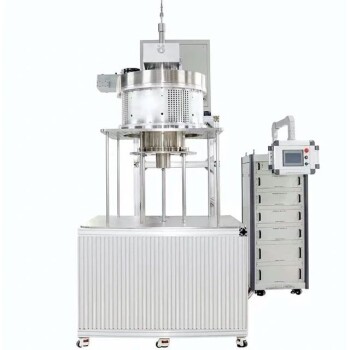
- Microwave Plasma Chemical Vapor Deposition MPCVD Machine System Reactor for Lab and Diamond Growth
People Also Ask
- What is plasma enhanced chemical vapour deposition PECVD used for? Enable Low-Temp Thin Films for Electronics & Solar
- What is the role of RF-PECVD in VFG preparation? Mastering Vertical Growth and Surface Functionality
- What is an example of PECVD? RF-PECVD for High-Quality Thin Film Deposition
- What is plasma enhanced chemical Vapour deposition process used for fabrication of? A Guide to Low-Temperature Thin Films
- What is plasma CVD? Unlock Low-Temperature Thin Film Deposition for Sensitive Materials