
The primary hazards of an induction furnace are molten metal explosions from wet charge material, severe electrical shock, exposure to powerful magnetic fields, and respiratory damage from furnace lining materials. While known for a cleaner melting process compared to combustion furnaces, their unique operation introduces a distinct set of critical safety risks that must be actively managed.
The dangers of an induction furnace are often less about the fire and fumes of traditional melting and more about the invisible forces at play: high-power electricity, potent magnetic fields, and the violent physics of a steam explosion. Understanding these specific risks is the foundation of a safe operation.
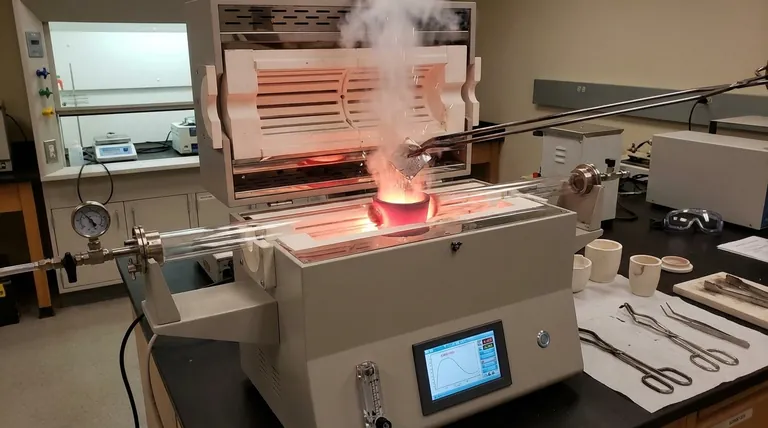
The Most Critical Hazard: Molten Metal Ejection
The single most catastrophic event in an induction furnace operation is a steam explosion. This occurs when moisture comes into contact with the molten metal bath.
The Danger of Water and Moisture
Even a small amount of trapped water, ice, or snow on scrap material (the "charge") can be deadly. When submerged in the molten bath, this moisture instantly turns to steam, expanding to over 1,600 times its original volume. This violent expansion ejects tons of molten metal from the furnace with explosive force.
Why Charge Material Scrutiny is Essential
Proper management of charge materials is the most critical safety control. All materials must be dry and inspected for any sealed, hollow objects (like pipes or containers) that could trap moisture and act as a "bomb" when heated.
Electrical and Electromagnetic Risks
Induction furnaces operate using immense electrical power, creating two distinct but related hazards: direct electrical shock and exposure to strong magnetic fields.
High-Voltage Shock Hazards
The induction coils and the power supply unit operate at high voltages and amperages. Contact can be instantly fatal. Maintenance must only be performed by trained technicians with strict lockout/tagout procedures to ensure the equipment is fully de-energized.
Exposure to Strong Magnetic Fields (EMF)
The process of induction heating generates a powerful electromagnetic field around the furnace. This field can pose a serious risk to individuals with pacemakers, insulin pumps, or other medical implants. Clearly marked safety zones must be established to prevent inadvertent exposure.
The Critical Role of the Cooling System
The induction coils themselves are cooled by water. A failure in this system is a major hazard. A water leak can introduce moisture into the melt, leading to an explosion. A blockage can cause the coils to overheat and fail catastrophically, potentially creating an electrical arc or rupture.
Hidden Respiratory and Material Hazards
While the melting process itself is clean, the furnace structure can contain materials that become hazardous, particularly during maintenance or decommissioning.
The Risk from Refractory Linings
Many furnaces use refractory linings that contain crystalline silica. Over time, the lining degrades. During removal and replacement, this can create fine dust containing respirable crystalline silica, which can cause chronic, irreversible lung disease (silicosis).
Ceramic Fiber Insulation
Some insulation materials may be made of refractory ceramic fiber. This material is classified as a possible human carcinogen, and inhaling its fibers can cause lung damage. Proper personal protective equipment (PPE) is essential when handling it.
The Legacy of Asbestos
Older furnaces may contain asbestos insulation. If this material is disturbed, it can release fibers that lead to severe health issues, including asbestosis and mesothelioma. Disposal must be handled by certified professionals.
Understanding Operational and Process Trade-offs
Beyond immediate safety threats, certain operational characteristics can be considered process hazards that impact production and quality.
The Lack of Refining Capacity
A key drawback of induction furnaces is their inability to refine metal. Unlike other furnace types, they cannot effectively remove oxides or impurities from the charge material. This means the input materials must be clean and of a known composition to produce a quality melt.
Loss of Alloying Elements
While the temperature control is excellent, some valuable alloying elements can still be lost through oxidation. This requires careful monitoring and potential re-addition of elements to the melt, affecting cost and process control.
The Myth of "No Pollution"
Induction furnaces produce significantly less smoke, dust, and waste than arc or cupola furnaces. However, they are not pollution-free. The melting of certain metals, especially those with coatings or contaminants, can still produce harmful fumes and require an effective ventilation system.
Key Safety Priorities for Your Operation
Managing the risks of an induction furnace requires a focus on training, strict procedures, and preventative maintenance.
- If your primary focus is preventing catastrophic accidents: Your number one priority is implementing and enforcing a rigorous charge material inspection and drying protocol to eliminate moisture.
- If your primary focus is protecting personnel: Establish clear EMF safety zones, provide comprehensive electrical safety training, and mandate appropriate PPE during all lining maintenance.
- If your primary focus is reliability and longevity: Create a robust preventative maintenance schedule for the water-cooling system and power supply components to prevent catastrophic failures.
Ultimately, harnessing the efficiency of an induction furnace depends entirely on respecting its unique hazards through unwavering diligence and protocol.
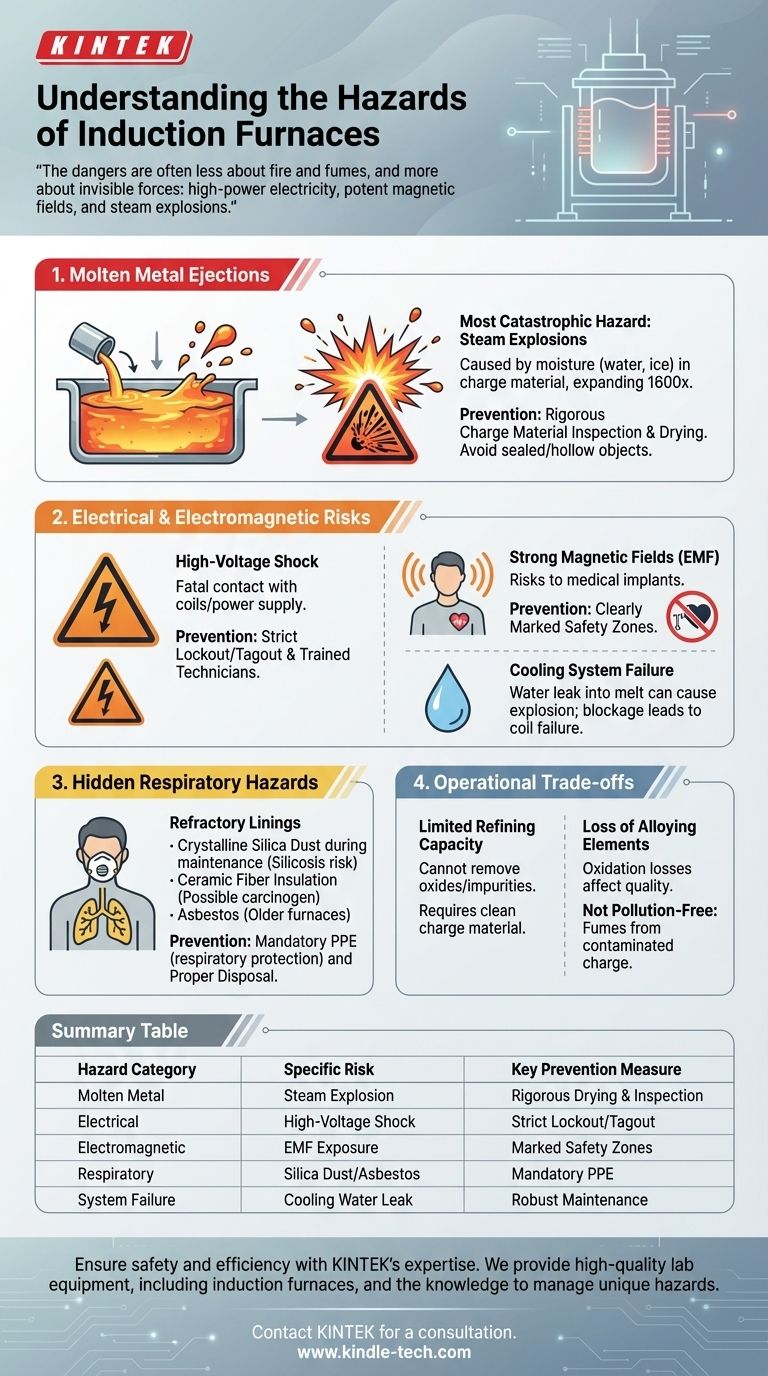
Summary Table:
| Hazard Category | Specific Risk | Key Prevention Measure |
|---|---|---|
| Molten Metal | Steam Explosion | Rigorous drying and inspection of all charge materials |
| Electrical | High-Voltage Shock | Strict lockout/tagout procedures and trained technicians |
| Electromagnetic | EMF Exposure | Clearly marked safety zones, especially for personnel with implants |
| Respiratory | Silica Dust / Asbestos | Mandatory PPE during furnace lining maintenance |
| System Failure | Cooling Water Leak | Robust preventative maintenance schedule for cooling system |
Ensure your lab's safety and operational efficiency with KINTEK's expertise. Induction furnaces offer a cleaner melting process, but their unique hazards require specialized knowledge and reliable equipment. KINTEK specializes in providing high-quality lab equipment, including induction furnaces, and the consumables and safety support you need. Our team can help you select the right equipment and establish the protocols necessary to protect your personnel and your process. Contact us today to discuss how we can support your laboratory's melting applications safely and effectively. Get in touch via our contact form for a consultation.
Visual Guide
Related Products
- 600T Vacuum Induction Hot Press Furnace for Heat Treat and Sintering
- Lab-Scale Vacuum Induction Melting Furnace
- Non Consumable Vacuum Arc Induction Melting Furnace
- Vacuum Arc Induction Melting Furnace
- Controlled Nitrogen Inert Hydrogen Atmosphere Furnace
People Also Ask
- What advantages does a vacuum hot press furnace provide for LSLBO ceramic electrolytes? Achieve 94% Relative Density
- What are the advantages of a vacuum hot press furnace for W-50%Cu? Achieve 99.6% Density at Lower Temperatures
- What role does a Vacuum Hot Press (VHP) furnace play in the densification of austenitic stainless steel 316 composites?
- What role does an induction vacuum hot pressing furnace play in sintering? Achieve 98% Density in Carbide Blocks
- Why must a high vacuum environment be maintained in a vacuum hot press furnace for IZO target preparation?



















