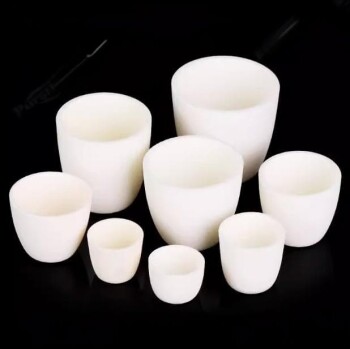
The high-temperature vacuum or atmosphere reaction retort acts as the central containment vessel within Chemical Vapor Deposition (CVD) aluminizing systems, specifically engineered to isolate the coating process. It performs three simultaneous functions: sustaining extreme thermal conditions exceeding 1050°C, maintaining a chemically stable vacuum or atmosphere, and precisely guiding reactant gases over nickel-based superalloys to ensure uniform diffusion.
The retort transforms a volatile chemical process into a controlled metallurgical reaction, holding the environment stable enough for nickel atoms to diffuse and react with aluminum over long cycles.
Creating the Optimal Reaction Environment
To understand the retort's value, you must look beyond its structure as a simple container. It is the active boundary that makes the coating chemistry possible.
Thermal Stability Under Stress
The primary function of the retort is to withstand and maintain temperatures in excess of 1050°C.
At these temperatures, standard materials degrade. The retort provides a robust barrier that holds this heat without warping or contaminating the internal atmosphere.
Chemical Isolation
Inside the retort, the environment must be chemically inert relative to the vessel walls but reactive for the components.
The retort creates a chemically stable and enclosed environment. This prevents external contaminants from interfering with the delicate ion exchange occurring on the surface of the superalloys.
Managing Gas Dynamics
While the reactant gases are created elsewhere, the retort is responsible for how those gases interact with your parts.
Guiding Reactant Flow
The retort receives a mixture of aluminum chloride (AlCl3) and hydrogen gas.
Its internal geometry is responsible for uniformly guiding this flow over the sample surfaces. Without this guidance, gas pockets or stagnation points could lead to uneven coating thicknesses.
Integration with Precursor Generation
It is important to note that the retort works in tandem with an external reaction generator.
While the generator precisely controls the concentration of AlCl3, the retort serves as the deposition chamber where this optimized gas mixture finally makes contact with the workload.
Facilitating Metallurgical Phase Transformation
The ultimate goal of the retort is not just to coat, but to facilitate a deep atomic exchange known as diffusion.
Enabling Nickel Outward Diffusion
The CVD aluminizing process is not merely painting aluminum onto a surface; it involves growing a new material layer.
The retort maintains the necessary conditions for nickel atoms to diffuse outward from the superalloy substrate.
Forming the Beta-NiAl Phase
This diffusion process is slow and exacting.
By sustaining stable conditions for process cycles of 8 hours or more, the retort ensures the nickel reacts steadily with the aluminum. This results in the formation of a uniform, protective beta-NiAl intermetallic phase on the component surface.
Understanding the Trade-offs
When evaluating retort designs or operations, you must recognize the inherent challenges in high-temperature containment.
Thermal Cycle Fatigue
Because the retort must hold temperatures above 1050°C for long durations, it is subject to significant thermal stress. Rapid cooling or heating can shorten the lifespan of the retort itself, potentially leading to leaks or vacuum loss.
Uniformity vs. Volume
There is often a trade-off between the size of the retort (batch capacity) and the uniformity of gas flow. Larger retorts increase throughput but make it more challenging to ensure the aluminum chloride gas reaches every surface of every component with equal density.
Making the Right Choice for Your Goal
The retort is the defining variable for coating consistency. Your operational focus will dictate how you prioritize its functions.
- If your primary focus is Coating Uniformity: Prioritize a retort design that emphasizes optimized gas flow guidance to ensure the AlCl3 mixture reaches complex geometries evenly.
- If your primary focus is Process Reliability: Focus on the thermal robustness of the retort material to ensure it can withstand repeated 8+ hour cycles at >1050°C without degradation.
The retort is not just a furnace; it is the precision guide that turns raw gas and heat into a critical protective barrier.
Summary Table:
| Key Function | Role in CVD Process | Impact on Quality |
|---|---|---|
| Thermal Stability | Sustains >1050°C without warping | Prevents contamination and structural failure |
| Chemical Isolation | Creates a stable, enclosed environment | Ensures pure ion exchange on superalloy surfaces |
| Gas Flow Guidance | Directs AlCl3 and H2 mixture | Achieves uniform coating thickness across parts |
| Phase Facilitation | Enables nickel outward diffusion | Forms the critical protective beta-NiAl intermetallic layer |
Elevate Your Advanced Material Processing with KINTEK
Precision in Chemical Vapor Deposition (CVD) starts with high-performance equipment. KINTEK specializes in laboratory and industrial solutions designed for the most demanding thermal environments. Whether you are coating nickel-based superalloys or conducting cutting-edge battery research, our comprehensive range of high-temperature furnaces (vacuum, tube, and atmosphere) and CVD/PECVD systems provides the reliability you need.
Our expertise extends across a full spectrum of laboratory tools, including:
- Crushing, milling, and sieving systems for material preparation.
- High-pressure reactors and autoclaves for controlled chemical synthesis.
- Precision hydraulic presses and electrolytic cells for battery and electrode development.
- Specialized consumables like PTFE, ceramics, and crucibles.
Don't let equipment limitations compromise your metallurgical outcomes. Contact KINTEK today to discuss how our tailored furnace designs and high-temperature solutions can optimize your process cycles.
References
- M. Zielińska, Р. Філіп. Microstructure and Oxidation Resistance of an Aluminide Coating on the Nickel Based Superalloy Mar M247 Deposited by the CVD Aluminizing Process. DOI: 10.2478/amm-2013-0057
This article is also based on technical information from Kintek Solution Knowledge Base .
Related Products
- 1700℃ Controlled Atmosphere Furnace Nitrogen Inert Atmosphere Furnace
- 1400℃ Controlled Atmosphere Furnace with Nitrogen and Inert Atmosphere
- Aluminized Ceramic Evaporation Boat for Thin Film Deposition
- Vacuum Heat Treat and Pressure Sintering Furnace for High Temperature Applications
- Split Chamber CVD Tube Furnace with Vacuum Station Chemical Vapor Deposition System Equipment Machine
People Also Ask
- What is a controlled atmosphere furnace for heat treatment? Master Surface Chemistry and Metallurgy
- What are the two primary purposes of using a controlled atmosphere? Master Protection vs. Material Modification
- What is the necessity of a controlled atmosphere furnace for corrosion research? Replicating Realistic Industrial Risks
- How is oxygen (O2) used in controlled furnace atmospheres? Mastering Surface Engineering for Metals
- What is the necessity of controlled atmosphere furnaces for gas corrosion? Ensure Precise Material Failure Modeling