Managing particle accumulation is the single most critical maintenance consideration for deposition systems, as these tools continuously introduce material into a closed environment. To maintain yield and tool availability, operators must focus on two competing metrics: maximizing the Mean-Time-Between-Cleaning (MTBC) to ensure longer production runs, and minimizing the Mean-Time-To-Clean (MTTC) to reduce downtime when maintenance inevitably occurs.
Core Takeaway Because deposition inherently increases particle counts over time, maintenance schedules must be dictated by your specific application's sensitivity to contamination. The ultimate operational goal is to extend the time between cleaning cycles (MTBC) while keeping the actual cleaning process (MTTC) as short as possible.
The Challenge of Particle Accumulation
The Inevitable Buildup
Deposition systems function by adding material to a substrate, but they also coat the interior surfaces of the chamber. Over time, this results in a cumulative increase in particle counts within the closed system.
Determining the Cleaning Schedule
There is no universal schedule for maintenance. The frequency of cleaning is determined primarily by your application's sensitivity to particles. Processes requiring ultra-high purity will demand more frequent intervention than less sensitive applications.
Critical Performance Metrics
Maximizing Production Time
The primary efficiency metric for maintenance is Mean-Time-Between-Cleaning (MTBC). A "long" MTBC is desirable because it indicates the system can run for extended periods without requiring intervention, directly increasing throughput.
Minimizing Downtime
The secondary metric is Mean-Time-To-Clean (MTTC). A "short" MTTC is the goal, representing a rapid return to production status once maintenance begins. Efficient procedures are essential to keep this metric low.
Operational Trade-offs and Methods
Complexity of Cleaning Procedures
The method of cleaning varies significantly by system type, creating different operational trade-offs. You must understand the specific requirements of your hardware to plan downtime effectively.
In-Situ vs. Ex-Situ Maintenance
PECVD systems often allow for in-situ plasma cleans. This is generally a simpler process performed without opening the chamber, which can help minimize MTTC.
The Physical Shield Challenge
In contrast, sputter deposition systems typically require ex-situ cleaning. This involves physically removing components, such as shields, to clean them outside the system. This is a more complex, labor-intensive process that can extend downtime if not managed efficiently.
Optimizing Your Maintenance Strategy
To balance yield with operational efficiency, you must align your maintenance protocols with both your system type and your product requirements.
- If your primary focus is high throughput: Prioritize engineering efforts on extending the Mean-Time-Between-Cleaning (MTBC) to keep the tool running longer between stops.
- If your primary focus is rapid recovery: Invest in optimizing the Mean-Time-To-Clean (MTTC), particularly for sputter systems where component removal is required.
- If your primary focus is contamination control: Base your cleaning frequency strictly on particle sensitivity data, rather than arbitrary time intervals.
Successful deposition maintenance requires treating the cleaning schedule as a dynamic variable driven by yield data rather than a static calendar event.
Summary Table:
| Metric/Factor | Objective | Impact on Operations |
|---|---|---|
| MTBC | Maximize | Extends production runs and increases tool availability. |
| MTTC | Minimize | Reduces downtime during cleaning and speeds up return-to-service. |
| Particle Sensitivity | Monitor | Defines the frequency of cleaning based on application purity needs. |
| In-Situ Cleaning | Utilize | Simplifies maintenance in PECVD systems without opening the chamber. |
| Ex-Situ Cleaning | Streamline | Essential for sputter systems; requires efficient hardware handling. |
Maximize Your Lab's Productivity with KINTEK
Don't let particle accumulation derail your research or production. At KINTEK, we specialize in high-performance laboratory equipment, including advanced CVD, PECVD, and MPCVD systems designed for reliability and ease of maintenance.
Whether you are managing complex deposition workflows or need high-precision tools like high-temperature furnaces, hydraulic presses, or specialized vacuum systems, our team provides the technical expertise and robust hardware you need to optimize your MTBC and minimize downtime.
Ready to elevate your deposition yield? Contact our specialists today to discover how our comprehensive range of equipment and consumables can support your mission-critical applications.
Related Products
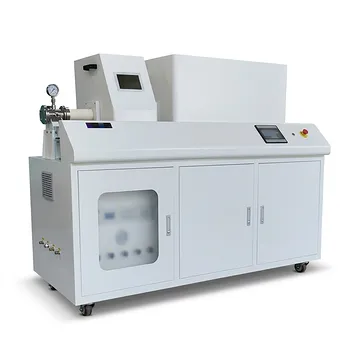
- Chemical Vapor Deposition CVD Equipment System Chamber Slide PECVD Tube Furnace with Liquid Gasifier PECVD Machine
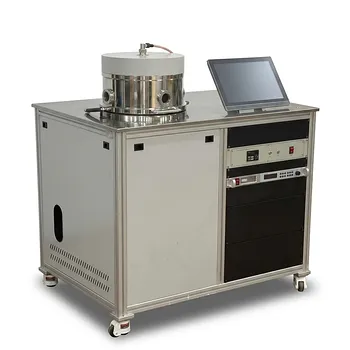
- RF PECVD System Radio Frequency Plasma-Enhanced Chemical Vapor Deposition RF PECVD
- Inclined Rotary Plasma Enhanced Chemical Vapor Deposition PECVD Equipment Tube Furnace Machine
- Customer Made Versatile CVD Tube Furnace Chemical Vapor Deposition Chamber System Equipment
- Inclined Rotary Plasma Enhanced Chemical Vapor Deposition PECVD Equipment Tube Furnace Machine
People Also Ask
- What are the advantages of chemical vapor deposition? Achieve Superior Thin Films for Your Lab
- What types of substrates are used in CVD to facilitate graphene films? Optimize Graphene Growth with the Right Catalyst
- What is the chemical vapor deposition growth process? Build Superior Thin Films from the Atom Up
- How expensive is chemical vapor deposition? Understanding the True Cost of High-Performance Coating
- Why is Chemical Vapor Deposition (CVD) equipment uniquely suited for constructing hierarchical superhydrophobic structures?