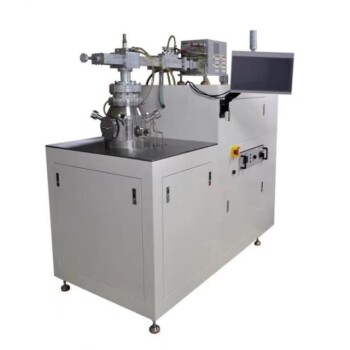
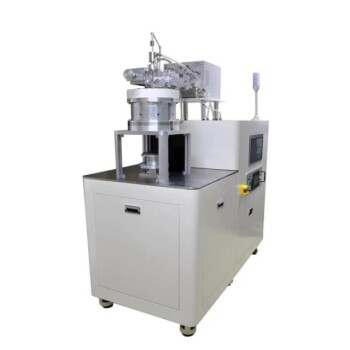
The primary function of a high-purity quartz tube in a microwave plasma reactor is to serve as the physical vessel for the plasma discharge and the sample being treated. It acts as a selectively permeable barrier, allowing microwave energy to pass through with minimal resistance while creating a contained, high-purity atmosphere for the reaction to occur.
The quartz tube functions as a critical structural interface, balancing the need for complete microwave transparency with the physical durability required to withstand the extreme thermal shock of plasma generation.
The Physical Mechanics of the Quartz Tube
Facilitating Microwave Energy Transfer
The most critical property of the quartz tube is its microwave transparency.
Because high-purity quartz has very low dielectric loss, it does not absorb significant microwave energy. This allows the electromagnetic field to pass through the tube wall without attenuation, concentrating the energy directly on the gas and sample inside to generate the plasma.
Serving as the Discharge Chamber
The tube physically defines the reaction volume.
It acts as the containment vessel where the plasma plume is ignited and sustained. By isolating the reaction from the ambient environment, it allows for the precise control of gas mixtures and pressures required for specific plasma chemistries.
Managing Thermal Extremes
Plasma generation creates rapid and intense temperature spikes.
High-purity quartz possesses exceptional thermal shock resistance. This capability ensures the tube acts as a reliable barrier that will not crack or shatter when subjected to the immediate high temperatures generated by the plasma discharge.
Maintaining Chemical and Experimental Integrity
Preserving a Contaminant-Free Environment
For high-precision applications, the material of the reactor wall must be chemically inert.
The "high-purity" designation indicates a lack of metal ions and other impurities. This ensures the tube does not release contaminants into the reaction atmosphere, which is vital when processing sensitive materials or catalysts where trace metals could alter the results.
Supporting Internal Structures
The tube serves as the housing for internal consumable components.
It provides the necessary structural support for elements such as high-purity quartz frits. These frits are often positioned within the tube's heating zone to hold catalyst beds in place, ensuring uniform gas distribution without introducing impurities.
Understanding the Trade-offs
Fragility and Handling
Despite its thermal resilience, quartz remains a brittle material.
It is mechanically fragile and susceptible to breakage from physical impact or improper installation stress. Users must handle these tubes with extreme care to avoid hairline fractures that can compromise vacuum seals or lead to failure under pressure.
Devitrification Risks
While resistant to heat, quartz is not immune to aging.
Over time, or in the presence of certain alkali contaminants at high temperatures, quartz can undergo devitrification (crystallization). This makes the tube cloudy and significantly weakens its structural integrity, eventually requiring replacement as a consumable item.
Making the Right Choice for Your Goal
When selecting or evaluating quartz tubes for your reactor, consider your specific operational parameters:
- If your primary focus is maximizing energy efficiency: Ensure the quartz grade specified has the lowest possible dielectric loss factor to prevent the tube itself from heating up and wasting microwave power.
- If your primary focus is catalytic research: Verify that the tube system accommodates high-purity frits to immobilize your catalyst bed without restricting the gas flow or introducing metal contaminants.
- If your primary focus is process purity: Prioritize quartz with certified low-metal content to prevent background contamination from the reactor walls from skewing your analytical data.
The quartz tube is the silent partner in your reactor; its quality directly dictates the stability and purity of your plasma environment.
Summary Table:
| Feature | Function in Microwave Plasma | Benefit to Researcher |
|---|---|---|
| Microwave Transparency | Minimal dielectric loss during energy transfer | Maximum power efficiency and plasma stability |
| Thermal Shock Resistance | Withstands rapid plasma temperature spikes | Prevents vessel cracking and experiment failure |
| High-Purity Composition | Chemically inert reaction environment | Eliminates trace metal contamination in samples |
| Structural Support | Houses quartz frits and catalyst beds | Ensures uniform gas distribution and secure samples |
| Physical Isolation | Contains plasma discharge and gas mixtures | Precise control over atmospheric chemistry |
Elevate Your Research Precision with KINTEK
Don’t let low-quality consumables compromise your experimental results. KINTEK specializes in high-performance laboratory equipment, providing premium high-purity quartz tubes, frits, and crucibles designed specifically for the rigors of microwave plasma and high-temperature environments.
From high-temperature furnaces (muffle, vacuum, and CVD) to advanced battery research tools and cooling solutions like ULT freezers, our comprehensive portfolio is built for durability and precision. Whether you are conducting catalytic research or high-pressure reactions, our experts are ready to help you select the ideal components for your lab.
Ready to optimize your reactor’s efficiency? Contact us today to find the perfect fit for your application!
References
- Wen‐chang Lin, Yi‐Ming Kuo. Recycling of aluminum dross for producing calcinated alumina by microwave plasma. DOI: 10.1186/s42834-022-00160-9
This article is also based on technical information from Kintek Solution Knowledge Base .
Related Products
- 1200℃ Split Tube Furnace with Quartz Tube Laboratory Tubular Furnace
- Cylindrical Resonator MPCVD Machine System Reactor for Microwave Plasma Chemical Vapor Deposition and Lab Diamond Growth
- Laboratory Rapid Thermal Processing (RTP) Quartz Tube Furnace
- 915MHz MPCVD Diamond Machine Microwave Plasma Chemical Vapor Deposition System Reactor
- Microwave Plasma Chemical Vapor Deposition MPCVD Machine System Reactor for Lab and Diamond Growth
People Also Ask
- What functions does a laboratory high-temperature tube furnace perform? Master Catalyst Synthesis & Carbonization
- What roles does a high-temperature tube furnace play in the synthesis of N/O co-doped carbon? Master Precise Doping
- Why is a high-temperature tube furnace required for the production of biochar from tobacco straw? Expert Pyrolysis Guide
- What are the primary applications of muffle and tube furnaces in photocatalysts? Optimize Metal Loading & Support Synthesis
- How does a high-temperature tube furnace influence 253MA steel? Master Microstructure & High-Temp Creep Resistance